Sign in. It’s quick, free and it’s up to you.
An account is an optional way to support the work we do. Find out more.
Sign in. It’s quick, free and it’s up to you.
An account is an optional way to support the work we do. Find out more.
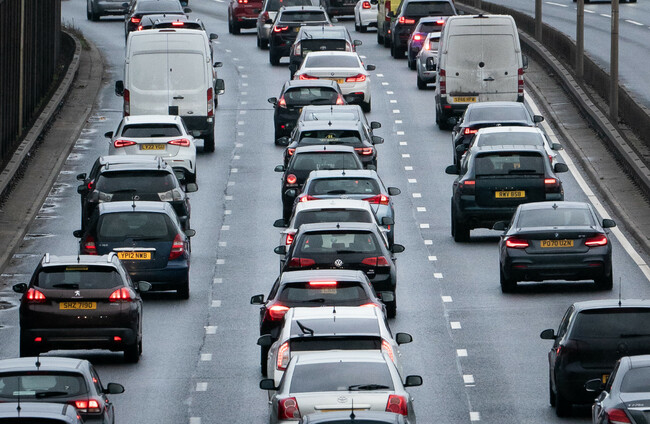
TAOISEACH LEO VARADKAR has said that congestion charges will not be implemented in this government’s lifetime.
Only following significant developments in public transport would such a charge be introduced, which the Taoiseach said is “not in the foreseeable future”.
In response to a question in the Dáil today, the Taoiseach said: “There is no proposal from this government to introduce congestion charges.”
“Perhaps at some point down the line when the metro is picking up people in Dublin airport, when the DART to Dublin 15 and Kildare is up and running, when Cork Metropolitan Transport is operating … all vehicles are electric and there’s not taxes coming in from petrol and diesel, perhaps at that time there is a case for congestion charges”, he said.
“But certainly not under this government and not in the foreseeable future.”
He said that, as a representative for a “commuter constituency” he is “very happy” to rule out such a move.
Speaking last month, Minister Eamon Ryan said that congestion charges would not be the “first response” to reducing emissions.
He added that there shouldn’t be “blaming or shaming” of people who do need to use cars, and that people who do need to use cars will benefit from a reduction.
The Taoiseach said: “What [Minister Ryan] has made clear is that we’re doing a public consultation on how we can achieve what we want to achieve when it comes to emission.”
The government says it aims to reduce the number of car journeys by 20 per cent and overall emissions by half by 2030.
Road space reallocation and more affordable public transport are key in achieving this, the Taoiseach said.
His comments come as the government today confirmed a new strategy to “free up our cities and towns”, which includes improving transport links and providing new active travel infrastructure, among other things.
The Department of Transport said it “fully recognises” that changes like car-free zones and road space reallocation will only work if sufficient public transport options are readily available, “both in urban and rural areas”.
It added: “These supports alone will not be enough to achieve our emissions targets or address gridlock, safety or air quality issues in our cities and towns, hence the need for the demand management strategy to support the 20% reduction in car kilometres and the corresponding switch to public transport and active travel.”
Minister Ryan explained: “Demand management in transport is all about improving the efficiency of the existing transportation system, by reducing travel demand rather than increasing capacity.”

To embed this post, copy the code below on your site














have your say