Sign in. It’s quick, free and it’s up to you.
An account is an optional way to support the work we do. Find out more.
Sign in. It’s quick, free and it’s up to you.
An account is an optional way to support the work we do. Find out more.
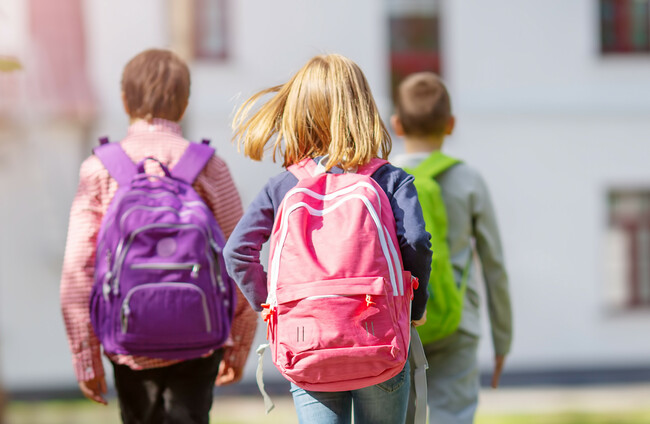
THE MAJORITY OF nine-year-olds in Ireland get on well with their parents and like their teachers, but their health and well-being are strongly linked to their family circumstances.
The long-term Government study ‘Growing up in Ireland‘ has published a new report on the lives of young people who were aged nine in 2017/2018 and who had been followed by the researchers since they were nine months old.
The latest report is based mainly on interviews with just over 8,000 nine-year-olds and their parents. The children were first surveyed when they were aged nine months, and again when they were three and five years old.
The interviews for this report were carried out in a period of economic recovery (2017/18), marking the first wave of data collected with these children and their families since the recession, but before the current Covid-19 pandemic hit.
The results throw up some interesting findings.
Nine-year-olds from more disadvantaged backgrounds were much more likely to have poorer health, higher rates of overweight/obesity, more socio-emotional difficulties and less positive views of their school subjects.
Day-to-day activities among girls and boys were quite different, with girls being much more involved in structured cultural activities (such as music and drama) and boys more engaged in team sports.
Here’s a breakdown of the main findings…
Physical health and development
Education and cognitive development
Socio-emotional development, wellbeing and relationships
Play and activities
Family structure and economic circumstance
“In terms of socio-emotional outcomes, the nine-year-old data show the majority of children enjoying relationships that are warm, close and low in conflict with their parents at this stage,” the report’s co-lead author Dr Desmond O’Mahony said.
“These are encouraging and strongly protective factors in socio-emotional development, which is going well for a large proportion of the children,” Dr O’Mahony said.
“However, figures of close to 40% of all children experiencing bullying behaviours, and low levels of well-being reported by over a quarter of children in the lowest social class, show a requirement for improvement in school and social policies to reduce the impact of economic circumstances on children’s socio-emotional development,” he said.
Co-lead author Dr Eoin McNamara noted that whilst today’s report references the experiences of the children before the Covid-19 pandemic, “it does highlight disparities along the lines of family income and social class that could potentially be magnified as a result of the pandemic and associated lockdown measures”.
Growing up in Ireland is a government-funded study of children being carried out jointly by the ESRI and Trinity College Dublin, managed by the Department of Children.
The study started in 2006 and follows the progress of a total of 8,000 children.

To embed this post, copy the code below on your site















have your say