Sign in. It’s quick, free and it’s up to you.
An account is an optional way to support the work we do. Find out more.
Sign in. It’s quick, free and it’s up to you.
An account is an optional way to support the work we do. Find out more.
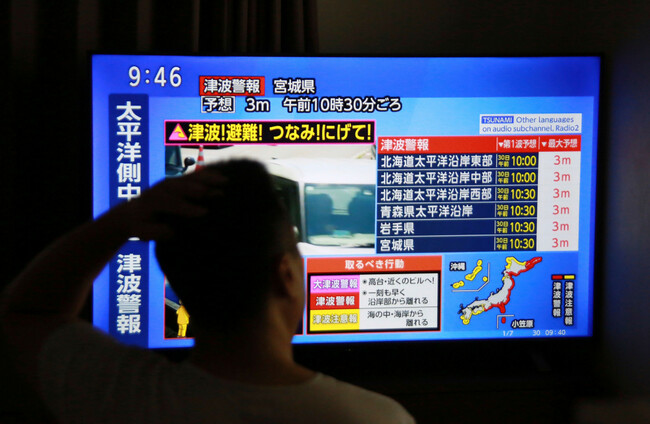
ONE OF THE strongest earthquakes ever recorded struck Russia’s sparsely populated Far East early today, causing tsunamis of up to four metres across the Pacific and sparking evacuations from Hawaii to Japan.
The magnitude 8.8 quake struck at 8.24am local time off Petropavlovsk on Russia’s remote Kamchatka peninsula and was one of the 10 biggest recorded.
The US Tsunami Warning Centers said waves exceeding three metres above the tide level were possible along some coasts of Ecuador, northwestern Hawaiian islands and Russia.
The US Tsunami Warning Centers issued a Tsunami Warning – its highest level alert – for the entire US state of Hawaii, with the first waves expected at 7.17pm local time (6.13am Irish time).
This is the latest on the scale of the earthquake from the United States Geological Survey and its precise location off Russia.
https://x.com/USGS/status/1950422157009543302
Russian authorities said a tsunami hit and flooded the port town of Severo-Kurilsk, while local media said one of between three and four metres high was recorded in the Elizovsky district of Kamchatka.
A video posted on Russian social media appeared to show buildings in the town submerged in seawater. Authorities said the population of around 2,000 people was evacuated.
Several people were injured in Russia by the quake, state media reported, but none of them seriously.
Some of the first official recordings of the tsunami have come in from Japan. The size is smaller than some of the worst forecasts but officials are still sounding caution.
A tsunami 1.3 metres reached a port in Japan’s northern Iwate prefecture at 1:52 pm local time (05.52 Irish time), Japan’s weather agency said.
The Japan Meteorological Agency kept its tsunami alerts that waves of up to three metres were expected along Japan’s Pacific coast.
Hokkaido, Japan awoke this morning to sirens warning of tsunami activity.
Brian Gaynor, a university lecturer who lives in the coastal city, told RTÉ Radio One that initial waves were not as big as expected – around 50cm – but the concern is that they’ll get bigger as time goes on.
The country is also going through a heat wave at the moment, with temperatures exceeding 30 degrees Celsius during the day.
Gaynor said that upon hearing the warning this morning, locals immediately got in their cars and went to higher ground, causing traffic jams in some areas.
He is staying at the university where he works, which is on a hill. Others have also sought shelter there, while some have gone to the nearby ski resort to wait out the waves.
Hawaii has so far “not seen a wave of consequence, which is a great relief to us,” Governor Josh Green told reporters at a press conference today.
“It’s kind of a blessing to not be reporting any damage.”
But he cautioned that “we have seen significant water recede several times in Haleiwa, and there were two waves that were measured coming through the Midway Atoll, so that’s been our concern.”
He added that tsunami activity on the Big Island would indicate what smaller islands should expect, but that it will be two to three hours before that would be clear.
“So far though, at the moment, so good,” he said.
HNL Alert: 08:16 PM 07-29-2025 - HNL Alert: Tsunami Warning 8:15PM UPDATE - Take Action NOW! Tsunami waves are currently impacting Hawaii. Info: https://t.co/YRpptHbSzb Remain outside evacuation zones. Map at https://t.co/fl1PGwu7TZ. https://t.co/z72fh63vu7 pic.twitter.com/SBO9CeV4JC
— Oahu Emergency Mgmt. (@Oahu_DEM) July 30, 2025
The latest warning in Honolulu, Hawaii, tells people in Red Zones – most of the island’s immediate coast – to evacuate or at the very least get to the fourth floor of a ten-storey building.
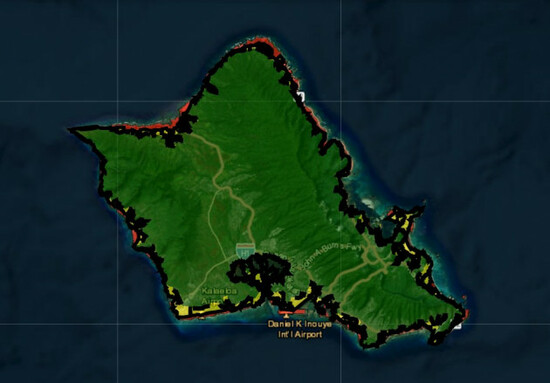
The impact of the tsunami could last for hours or perhaps more than a day, according to Dave Snider, tsunami warning coordinator with the National Tsunami Warning Centre in Alaska.
“A tsunami is not just one wave,” he said.
“It’s a series of powerful waves over a long period of time. Tsunamis cross the ocean at hundreds of miles an hour – as fast as a jet aeroplane – in deep water.
“But when they get close to the shore, they slow down and start to pile up. And that’s where that inundation problem becomes a little bit more possible there.
“In this case, because of the Earth basically sending out these huge ripples of water across the ocean, they’re going to be moving back and forth for quite a while,” which is why some communities may feel effects longer, he added.
In Severo-Kurilsk, a Russian town of about 2,000 people some 350 kilometres southwest from the earthquake’s epicentre, footage shows tsunami waves crashing through the port area and submerging the local fishing plant, according to authorities.
The waves, which were up to four metres high in some areas, reached as far as the town’s World War II monument about 400 metres from the shore line, according to Mayor Alexander Ovsyannikov.
Most of the town lies on higher ground safe from flooding, he added.
“Everyone was evacuated. There was enough time, a whole hour. So everyone was evacuated, all the people are in the tsunami safety zone,” he said at a crisis meeting with officials earlier.
Strong aftershocks with a magnitude of up to 7.5 are expected.
Parts of Canada will also feel the effects of the earthqauke, with authorities closing off most beaches in British Columbia pending a tsunami.
However, it is not expected to be the worst-affected region, and a full-scale evacuation of coastal areas has not yet been ordered.
Flights in and out of the island of Maui in Hawaii have been cancelled as a precaution.
There have been no significant waves as of yet, but residents appear to have heeded instructions to evacuate. It may be several hours before they know whether it’s safe to go home.

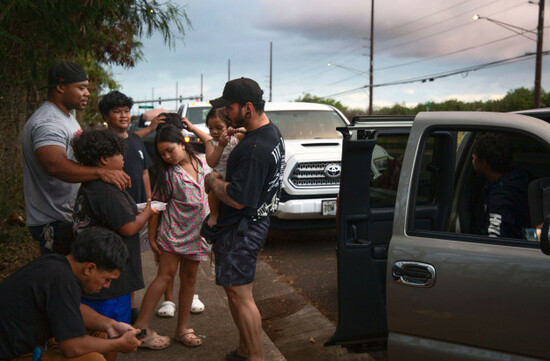
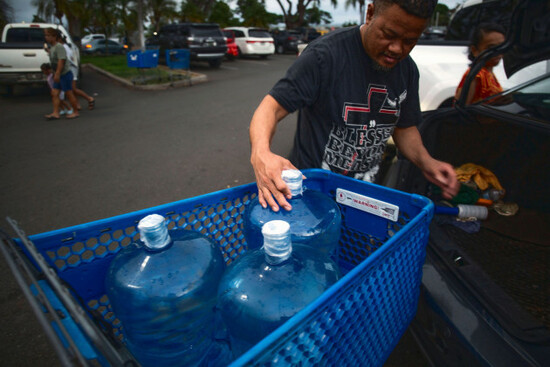
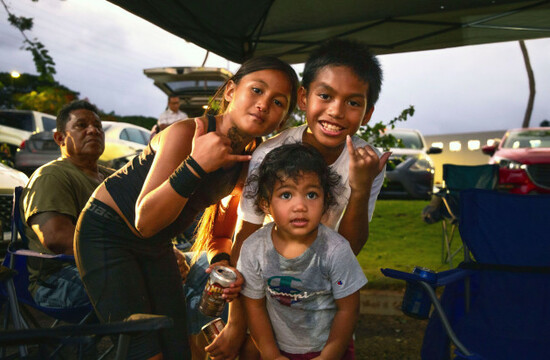
The Tsunami Warning on O’ahu island, Hawaii, has been downgraded to an Advisory and the evacuation order has been lifted.
Auhtorities said this means that dangerous tsunami waves are no longer expected to impact the state.
However, dangerous conditions are still possible in near-shore waters within the Hawaiian Islands. Residents and visitors have been urged to use extreme caution when near or on the water.
Evacuees will be relieved to know that they can now return to their homes.
HNL Alert: 10:51 PM 07-29-2025 - HNL Alert: 10:45PM UPDATE - Tsunami Warning has been downgraded to Advisory. Evacuation lifted. Safe to return evacuated areas. Info: https://t.co/YRpptHbSzb https://t.co/vf4rdeDx5j pic.twitter.com/w5nXuYbSM1
— Oahu Emergency Mgmt. (@Oahu_DEM) July 30, 2025
Los Angeles in the US state of California has reported a “rapid and damaging surge” in Port San Luis that is going “from low to high tide in just a few minutes”.
“Do not return to inundated areas as waters will recede, but could return multiple times through the next 24 hours, and the first wave may not be the largest,” the weather service said.
The Port San Luis gauge shows a rapid and damaging surge, going from low to high tide in just a few minutes. Do not return to inundated areas as waters will recede, but could return multiple times through the next 24 hours, and the first wave may not be the largest. #Tsunami pic.twitter.com/ML2XrPg4A3
— NWS Los Angeles (@NWSLosAngeles) July 30, 2025
Some city dwellers in Japan evacuated to gymnasiums for shelter in light of the tsunami warnings.
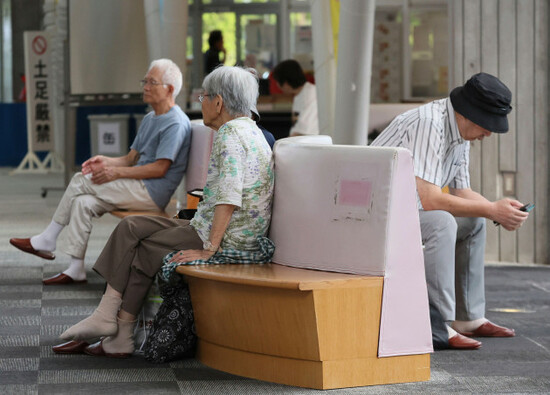


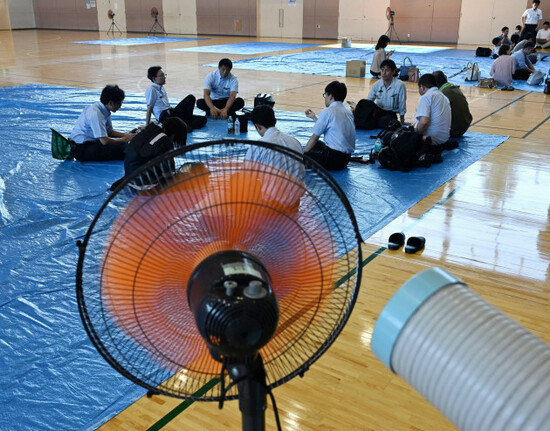
Japan’s weather agency has downgraded tsunami alerts issued for a wide swath of the archipelago following a magnitude-8.8 earthquake off Russia’s Kamchatka Peninsula, while keeping warnings unchanged for its northern areas.
Warnings for eastern Japan’s Ibaraki region all the way down to the southern Wakayama region have now been downgraded to “advisories”, Japan’s weather agency said on its website.
Authorities in Russia’s far eastern Kamchatka peninsulahave said a tsunami warning had been lifted, more than 11 hours after an 8.8 magnitude earthquake near the region’s coast prompted evacuations.
“Dear residents and visitors to the Kamchatka region, our colleagues from the State Emergency Situations Ministry have lifted the tsunami alert,” the region’s emergencies minister Sergei Lebedev said on social media.

To embed this post, copy the code below on your site













have your say