Sign in. It’s quick, free and it’s up to you.
An account is an optional way to support the work we do. Find out more.
Sign in. It’s quick, free and it’s up to you.
An account is an optional way to support the work we do. Find out more.
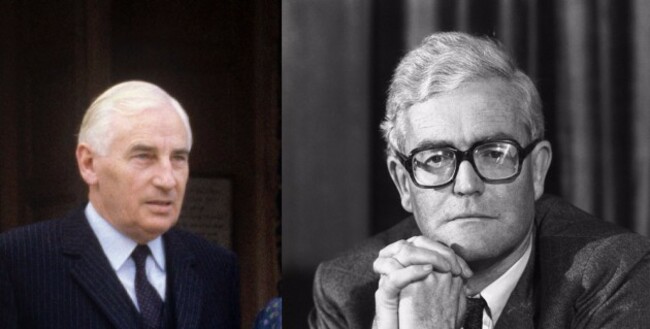
SINN FÉIN WERE a hot topic in both Ireland and Britain in 1984 and 1985.
While they practised abstentionism (ie they refused to sit elected members in either Dáil Éireann or the Houses of Parliament), the party looked like becoming a political force.
In the 1984 local elections in Ireland Gerry Adams’ party did exceptionally well.
Garret FitzGerald’s Fine Gael government had refused to acknowledge Sinn Féin so long as they professed support for the IRA, a policy in tandem with that of Margaret Thatcher in the UK.
That said, the party’s ongoing popularity meant they were the subject of intense discussion between the two governments in the build-up to the landmark Anglo Irish Agreement in November 1985.
A letter from the Irish ambassador to Britain Noel Dorr to Michael Lillis of the Department of Foreign Affairs in February 1985, released under the 30-year rule by the National Archives, details a lighter side to diplomacy at what was a generally dark time.
The letter mentions a meeting between Dorr and an adviser to Britain’s Northern Secretary Douglas Hurd, named only as Bickham.
If you’re unsure who Hurd is, you may remember his whipped-cone-haired incarnation as one of Spitting Image’s most memorable puppets:
Bickham mentioned in the course of conversation that after his first meeting with Minister for Foreign Affairs Peter Barry, Hurd had such a hangover that “he had to be taken out and walked around the park the next day”.
Which goes to show that even if Thatcher’s government often cowed their Irish counterparts into submission, at least we could still out-drink them.
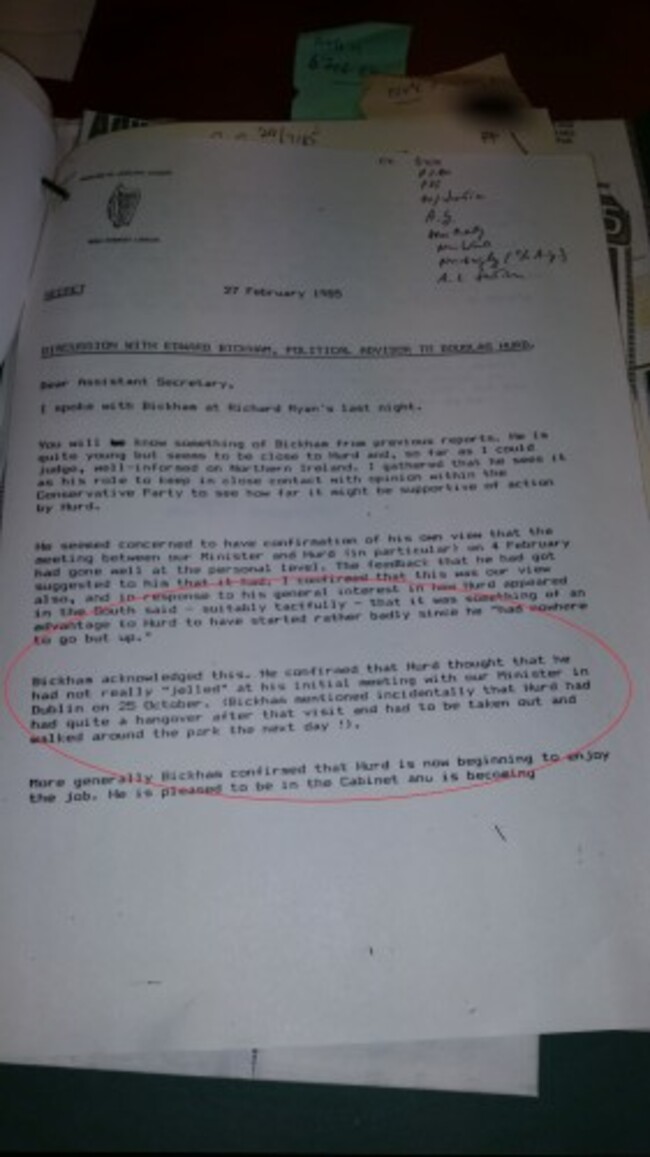
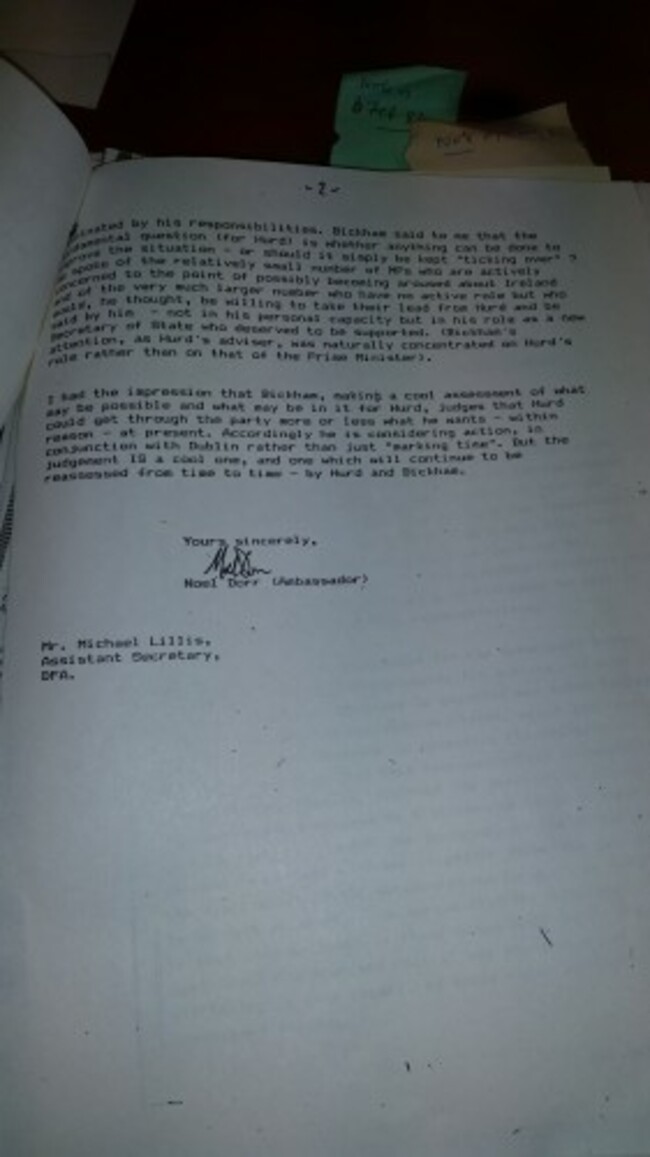
Dorr further mentioned to Hurd’s adviser that it was as well that he (Hurd) had been doing such a bad job as Northern Secretary since landing the role in September 1984, as now he “had nowhere to go but up”.
Peter Barry remained as foreign affairs minister until 1987, and was a key figure in the negotiation of the Anglo Irish Agreement.
Hurd meanwhile was gone from his post by September 1985, replaced by Tom King.
See National Archives file 2015/89/61

To embed this post, copy the code below on your site















have your say