Sign in. It’s quick, free and it’s up to you.
An account is an optional way to support the work we do. Find out more.
Sign in. It’s quick, free and it’s up to you.
An account is an optional way to support the work we do. Find out more.
LAST UPDATE | 12 May
AN INVESTIGATION BY the New York Times has found that the Israeli government spent at least $1 million (€850,000) on promotional campaigns linked to Eurovision voting efforts over the past two years.
The findings come as this year’s Eurovision Song Contest kicks off in Vienna without an Irish participant, following RTÉ’s decision last year to withdraw from the competition over the “appalling loss of life” caused by Israel in Gaza.
According to the New York Times, Israel’s government embraced Eurovision as a “soft power tool” during the contest in Malmö in 2024 and again last year in Basel, Switzerland.
The newspaper reported that Israeli ministries funded extensive advertising campaigns encouraging viewers across Europe to vote for Israel’s entries, despite Eurovision traditionally positioning itself as politically neutral.
The investigation found that more than $800,000 (€710,000) was spent by Israeli government departments on Eurovision-related advertising during the 2024 contest alone. Additional funding was allocated by Prime Minister Benjamin Netanyahu’s ‘hasbara’ office, a term commonly used by Israel for overseas public diplomacy and messaging efforts.
The New York Times reported that the campaigns included online advertisements in multiple languages, coordinated social media messaging, and direct calls encouraging viewers to vote the maximum number of times allowed under Eurovision rules.
Viewers are permitted to vote multiple times for the same act. Last year, the cap was 20 votes per person, with this year’s contest reducing it to 10.
The paper found that in some countries, only a few hundred people voting repeatedly would have been enough to influence the outcome of the public vote.
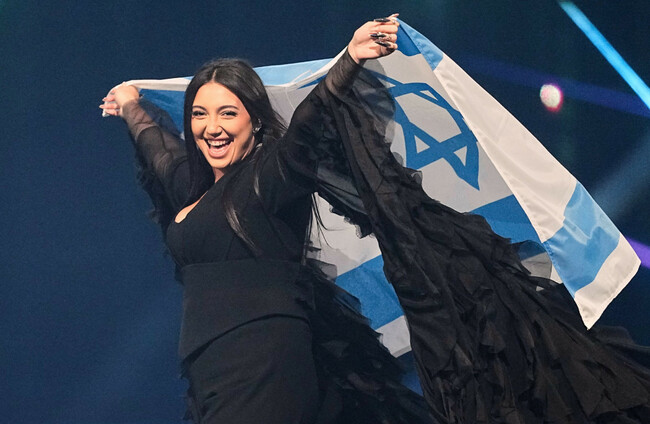
Israel’s 2025 entrant Yuval Raphael topped the televote in several countries where polling has shown strong public criticism of Israel’s actions in Gaza.
In Spain, Raphael picked up a whopping 33.34% of the televote, polling far ahead of all other candidates (Ukraine’s Ziferblat, who earned the second-highest amount of televotes in Spain, garners just 6.74% of the vote).
🇪🇸 The New York Times has obtained the Spanish televoting percentages from the Eurovision 2025 Grand Final.
— ESC Discord (@ESCdiscord) May 11, 2026
Israel received roughly one-third of the televote. According to the NYT, "It would have taken just a few hundred people, voting en masse, to secure [Israel]’s victory." pic.twitter.com/W5wDqSY0mT
Last year, RTÉ requested a breakdown of Eurovision televoting data after Spain’s public broadcaster RTVE called for an audit of the vote.
That move followed concerns over unusually strong public voting support for Israel across several European countries.
Viewers in Ireland awarded Israel 10 points in the public vote in 2024 and 2025.
The New York Times said there was no evidence of bot activity or covert manipulation, but concluded there had been a “coordinated and funded digital campaign” to mobilise support.
Eurovision organisers, the European Broadcasting Union (EBU), have denied that the campaigns affected the integrity of the result.
Contest director Martin Green told the paper that Israel’s promotional efforts had been “excessive”, but insisted that the outcome remained “true and fair”.
Speaking at a press conference this afternoon ahead of the first semi-final, Green said that Eurovision officials cannot release more transparent voting data “for security reasons”.
He went on to say that he “does not recognise the data” that the New York Times cited, as the official voting figures are not released.
The controversy has intensified wider criticism of Israel’s continued inclusion in Eurovision while Russia remains banned following its full-scale invasion of Ukraine in 2022.
Ireland, along with Spain, the Netherlands, Iceland and Slovenia, is not participating in this year’s contest.
RTÉ previously said Ireland’s participation in Eurovision had become “unconscionable given the appalling loss of lives in Gaza and the humanitarian crisis there”.
The broadcaster also cited concerns over the killing of journalists in Gaza and restrictions on international media access to the territory.
More than 73,000 Palestinians have been killed in Gaza since October 2023, according to health officials in the territory. Despite a ceasefire agreement announced last October, a further 824 Palestinians have since been killed in Israeli attacks.
The EBU has since introduced new rules aimed at limiting what it described as “disproportionate” promotional campaigns by governments or third parties.
Austrian broadcaster ORF has said that Palestinian flags will be allowed inside the Eurovision venue and that crowd booing will not be censored during broadcasts.
Executive producer Michael Kroen said organisers would “show things as they are” following criticism that crowd reactions were muted during last year’s contest in Basel.
Protests against Israel’s inclusion in the competition are also expected in Vienna this evening.
Speaking to reporters this afternoon, Green welcomed the protests.
“I think it’s a profoundly good sign of a democracy where you can have this show happening on one side of the city and a protest happening on the other side, and that they can both coexist, and again, maybe the world can learn from that,” Green said.
Meanwhile, RTÉ will not broadcast Saturday night’s Eurovision final on RTÉ One, where it has aired since 1965.
Instead, RTÉ Two will show the Father Ted episode A Song for Europe, featuring the fictional song My Lovely Horse.
The decision prompted criticism from Father Ted co-creator Graham Linehan, who accused RTÉ of using the sitcom as part of an “antisemitic political gesture”.
RTÉ declined to comment on his claims.

To embed this post, copy the code below on your site













have your say