TheJournal.ie uses cookies. By continuing to browse this site you are agreeing to our use of cookies. Click here to find out more »
Dublin: 10 °C Thursday 23 May, 2013

Poll: Should Irish people living abroad be able to vote for the presidency?

Michael D Higgins has suggested that people who emigrate should keep their voting rights. What do you think?

Image: Mark Stedman/Photocall Ireland

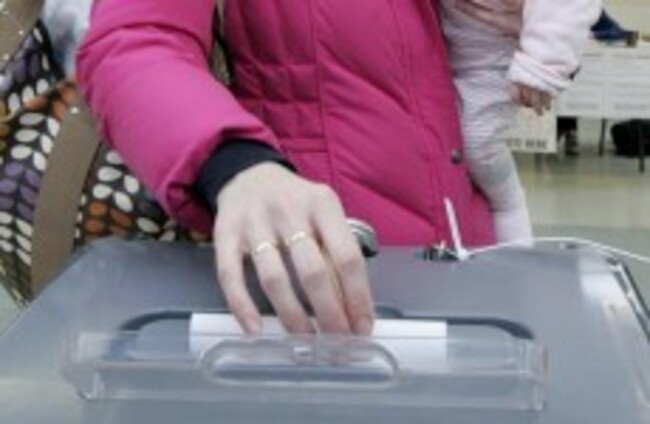
LABOUR PRESIDENTIAL candidate Michael D Higgins has said that Irish people who move abroad should be allowed to vote in future presidential elections.

In a speech at the London Irish Centre, he said members of the diaspora had made “a central contribution to the development of our country”, and that their voices should be heard at the polls. He suggested that people already on the electoral register should be able to vote in “some or all of our elections” for five or ten years after leaving Ireland.

Writing for TheJournal.ie earlier this year, emigrant rights campaigner Noreen Bowden also called for the diaspora to be given voting rights. However, critics of the idea have suggested that only those who are part of the Irish tax system should have a say at the ballot box.

So what do you think? Should Irish citizens abroad be able to vote in presidential elections?


Poll Results:


Read next:

Comments (189 Comments)

  • A lot of people have moved out of the country because they couldn’t get jobs here, left there family and friends, not because they wanted to but because the felt they had to,

    should they not have a say in who they would like to see running the country in the chance someday they would be able to return home ?

    just a thought !!

    Reply
  • I am an Irish citizen resident and working in Spain. I am not allowed vote in Spanish general elections because I am not a Spanish citizen. I am not allowed vote in Irish elections (general or other) because I am not resident in the state. Therefore I am being deprived of my right to vote in general elections in both states. There is a problem with the European model of equal rights for all citizens of the union.

    Reply
    • I’ve lived in the United States, France, Italy, Russia and the United Kingdom. Only in the UK did I have a right to vote. I didn’t feel particularly deprived when in the US, France, Italy or Russia.

      Reply
  • It’s worth repeating: voting rights abroad are standard in most European countries and in many other countries around the world.

    We’re very weird about it. Daithi’s comments up there about "these people" deciding elections is.. Well.. Weird. Anyway. Our problem is that we have a dysfunctional state with a continuous history of mass emigration. No Irish government has been able to stably provide an environment for the children of the state to prosper in the state.

    There is something deep in our psyches about being, or not being in Ireland. That statement has different meaning for us than it does for a German. There is a nasty undertone of – you’ve left and good luck. Ireland is cozy enough, but there are only so many chairs at the dance, and every twenty years or so the fat morons we elect drive the economy into a tree.

    There is a hard sort of heartlessness to the Irish view of the emigrant. We’re inured to its inevitability and thus not inclined to be overly invested in the consequences of emigration for those forced to undertake it.

    Given the scale of the diaspora – flat ballot rights couldnt work. There would have to be restrictions – tenure abroad or something springs to mind.

    But at the very least there should be a broad availability for the diaspora to vote in the presidential election. That is a simple, good, gesture, and one not likely to freak out the tin foil hat brigade like Daithi up there.

    Reply
    • Swimtwobirds – the thing is that the issue is about voting rights for citizens, not the diaspora. The diaspora is a wildly diverse ‘group’ of people – we don’t even know how big it is – the “70 million” figure is a bit of a mythical creation.

      I don’t support the right of the larger diaspora to vote, and I think few in the wider diaspora would even notice if they were granted voting rights.

      Reply
    • My opinion is as valid as any other and characterizing me as “weird, tin hat, mental” etc is unfair. Furthermore I lived abroad myself for ten years so suggesting that my attitude is “heartless” toward the emigrant is likewise unfair since I was one myself for long enough to have been there and done that, so I know what its like. and can empathize.
      My point still stands, why should someone who does not have to suffer the consequences of voting in an election in Ireland have a say in the running of the country ? Their vote can have a profound effect on my life when taken in aggregate with others, yet they never have to live with or suffer the results. That also is not fair.

      Reply
    • Stop saying this fair thing. I was born on dublin, I happen to be out of the country at the moment, we’re both Irish citizens, I read Irish newspapers, listen to Irish radio and watch Irish television about as much as you, I will likely be in Ireland again in the not too distant future. Now. If we have an upcoming election I want to vote.

      I’m not some crazy alien who is going to wreck your life with my crazy overseas voting, I’m likely going to vote labour. Unless voting labour is going to set your car on fire.

      The minute I leave the shores of the country i do not stop being a citizen. There is a decade of my tax take in the pool, there’ll be more out of me yet.

      I deserve the right to vote. You deserve the right to freak out at the mad hordes of citizens abroad who are going to destroy our democracy with their satanic postal voting ballots.

      Again daithí: this is prevalent in virtually all European states. The nightmare future you fear where we vote in the Nazis and demand ‘floral bouquets at Dublin airport’ legislation.. It is a reality across the EU.

      Fair has nothing to do with it. It has to do with what being an Irish citizen actually means.

      Reply
    • You can call me names all you like, I’m entitled to think you are being unfair in doing so. You will notice I have not replied in kind, as I have no desire to drag the conversation down any further than you have managed to. One of the reasons we practice democracy is because we want to be fair to people. So if you think as you have said “Fair has nothing to do with it” then you probably have little respect for democracy either. How very European of you, why should we blindly do what they do? Just because the Europeans do something does not mean we should follow suit. They managed to murder millions in the last century so not everything that happens in Europe is for the common good.
      Again, why should someone who does not suffer the consequences of their vote, have the same voting rights as someone who does ?

      Reply
    • Say europe, say the twentieth century, say millions murdered – not died in the field of battle – *murdered* and that’s the holocaust. That is the only reasonable inference to be drawn.

      now about your “suffer the consequences”?

      I’m a citizen of the Irish republic, as has been persuasively mentioned by others, actions by the government can directly effect citizens living abroad. to quote:

      “Older Irish emigrants (many of whom made tremendous sacrifices for this country in their working years) are particularly vulnerable regarding emigrant support policies, broadcasting support, and pensions, for example.”

      you are still directly subject, as a citizen to the consequences to a given elected government.

      more broadly, I still hold an Irish bank account, an Irish credit card, and continue to pay Irish union dues. There are many outcomes under which my finances in Ireland may be drawn by the state in the form of levies or god knows what else.

      Also – my concerns with regard to my vote may well have to do with issues outside of myself. the provision of carers allowance for an elderly parent carer springs to mind.

      You are drawing a selfish me feiner attitude to another persons right to vote. My right to vote, my action in voting is not a function of its effect on you sitting in a county in Ireland. As a citizen I have the equal right to lobby my government for specific outcomes, and to have a say in the make up of a future government.

      I have the right to vote. That right is not to be withheld by you or any other citizen. You have no more rights or privileges as a citizen than I do. The point is that under current Irish law, I am not granted the power of a citizen’s vote while overseas. That is wrong and it should change.

      I have a right to my vote.

      Reply
    • You are free to draw any inference you please, but that is in your mind not mine, and when you think about it the history of Europe over the past hundred years has been particularly bad. So why should we take pointers from them.
      I feel that I should not have to live under a political regime controlled by people who don’t live here. Why should I be forced to live under your rule of law when you are unwilling to do so yourself.? I don’t care where you keep your bank accounts, that’s your own business. Furthermore actions by the Irish Government affect people inside Ireland far more than outside.

      Reply
    • come on daithi – sure forget the political regimes controlled by people outside the island for a second ok?

      brass tacks – my father was donegal, my mother is mayo, i worked ten years in galway, and my voting district in Dunlaoire – I am myself self deeply unhappy that boyd barrett got in ahead of Ivana Batchik – thats a loss there, she’s first rate.

      My voting rights overseas should ebb pretty sharply over time, it should be gone within five to ten years, roughly two parliaments worth i think. for having put a decade’s plus worth of taxes in, worked for the state, campaigned for local representatives, and manned the local polling station myself as a teenager – it shouldn’t turn off like a light the minute I get on aer lingus.

      If its thirty years later and I’m living in Beijing – i’m off the playing field – flat fact – but there should be a held period where i can still enact the citizens right to vote on the leadership of the republic. I think something like two dail’s worth is more or less fair and reasonable. It should be said in my case – I’m over halfway done on seven years. But Daithi, The numbers involved in this scenario, spread across the republic — are not destabilising to the national vote.with the time constraints, you’re talking a small bleed in at local constituency level, where the voting is predictable to former patterns. Except for fianna fail, may they burn in hell…

      Also i think the move would be more deeply important. Its a signal from the state saying that you’re still around. One of our biggest problems is the irrevocable nature of emigration a lot of the time. Emigration needs to feel more fluid. The emigrant needs to feel habitually tied. It can’t be seen an image of the floundering state pouring out all the people it can’t support down the plughole. Giving a set number of years of transparent non residency where you retain core citizen voting rights is good in that respect. It would be viewed incredibly well by the recent emigrant. It would tie them to the parent state in a deeply good, and important fashion.

      This isn’t the fifties. Emigration isn’t a solution, it’s a bad outcome for the republic. Endowing full citizenship rights for a reasonable grace period would be good statecraft on the part of whatever government enacted it.

      I’d go further – any government that passed up the chance to do something so transformative to the basic notion of irish emigration would be a fool. In a time of little money, it would be relatively cheap.

      Reply
    • Look I have no desire to be hard nosed about this but I should not have to live in a political environment controlled in part by you when you are unwilling to live in that political environment yourself. I don’t seek to control your environment, wherever you are, so why do you want to control mine. I think if you want a measure of control in this place you should come back here and put your shoulder to the wheel like the rest of us. You want to live there and manage this place by remote but you are unwilling to accept any of the vicissitudes involved in actually being here. That’s a double standard, you want it both ways.

      Reply
    • If you are voting for or against the political representatives that control my environment and or community then you are exerting a controlling influence on my life. That’s why they call it governance. A governor is something which exerts control over a system. A steam engine for example has a governor which controls the speed of the engine in order to prevent it going out of control. So you are seeking a measure of control over life in Ireland but you are unwilling to share in that life. If you don’t want to live here why are you so interested in controlling those of us who do ?
      You can disparage my views, belittle me and suggest that I am mental but that is no substitute for reasoned discussion.

      Reply
    • “So you are seeking a measure of control over life in Ireland but you are unwilling to share in that life. If you don’t want to live here why are you so interested in controlling those of us who do ?”

      just stop.

      Reply
    • My opinion is as valid as any other. Why should I stop voicing it because you tell me to.? Its a free country !

      Reply
    • In common parlance the word progress indicates an improvement. I am happy with my definition, you are free to chose your own but I am also free to interpret the word in my way when I come across it. I don’t speak those languages so you are one a hiding to nothing with those links.

      I wish to exclude outsiders from the voting process because they are outside.

      Exactly on the Dutch Health care system you were the first person to mention it, not me, go back and check it out for yourself if you like..

      Ireland and Lithuania ?

      Eamon de Valera was most certainly not Irish.

      Being born and raised in Ireland is a cultural difference in my view..

      I have checked the post with the seven links you refer to, to make sure, and those links do not display in that post at least in Firefox, some of the text is a slightly lighter gray which I did not notice before but there are no links.

      Sorry three of the six links you sent later are in a foreign language.

      Your final comment regarding my reading ability, math ability etc have nothing to do with the issues and merely constitute yet another personal attack that is not helpful.

      Reply
  • At the moment Irish citizens in the north can have Irish passports and can become Uachtarán but cannot vote in Presidential elections. This should be changed too.

    Reply
    • Because they contribute to their states tax system and not the Republic – if you’re not going to pay for the office why should you have a say in who holds it?

      Reply
    • I think that’s a valid point for general and local elections but the President is mainly a ceremonial position that represents all Irish citizens and enabling people in the north etc. to vote could easily be done.

      Reply
    • Democracy is not a business. Whether you pay taxes or not should have no impact to your voting rights! Whether you are resident in a country is the real story. I pay taxes and lots of them, yet I don’t have a say in anything but local elections. Fortunately I can still vote with my feet, and that’s what I will be doing.

      Reply
    • You have a voice in local elections because you live here. If you didn’t live here, you wouldn’t have to live with the consequences of your vote (the tax thing is a point, but not the most important one), and really shouldn’t have that vote.

      Reply
    • There are many Northern Irish people who live in Northern Ireland, hold an Irish passport, but work in the South – particularly in the likes of Dundalk, Monaghan, Sligo, Letterkenny, etc. These people are subject to Irish taxes, subject to Irish law when inside the Republic, hold an Irish passport, are entitled to Irish social welfare as they pay their PRSI, and yet have no right to vote. Not everything is as black and white as people make out. Then there are people living in the Republic of Ireland who work in the North, pay their taxes in the North, are entitled to the UK social welfare and hold British passports, but these people are allowed to vote in all elections. Something is seriously wrong with the system. People say “no” to giving the vote to Northern Irish residents because they don’t pay taxes, etc. but the fact is we have denied the vote to those that do pay taxes and granted it to those that simply stay overnight in the Republic but pay their taxes in the North!!

      Reply
  • Voting rights abroad are standard in every other EU country and most democracies around the world. We are very unusual that we don’t have it. It all feeds in to this very Irish notion that the relationship between the State and it’s citizens is an economic one. The argument that those who do not make an economic contribution should be barred from voting is the same on that was made by those who opposed Women voting. They claimed women didn’t generally pay taxes and anyway were not sufficiently informed to make a rational voting decision. In 2011 it’s sad to see the same arguments trotted out again in relation to those who are not in Ireland on election day. Worth remember that a student doing a semester in France cannot vote. Should this person have no say how college fees are constructed on their return? Should worked seconded by his company to Dubai for 12 months have no say in how much income tax he should pay on his return? It’s kinda ridiculous when you think about it for more than 5 minutes.

    Reply
  • I am delighted to see the opinions expressed here. A strong campaign for voting rights was undertook by groups in the U.S., U.K. and Austria back in the ‘90s and early 2000’s. I had the privilege of being campaign coordinator for the Irish Emigrant Vote Campaign in New York. The fundamental campaign principal was that all Irish-born citizens have the right to vote in Irish elections – and that that right should be restored to those that have become resident abroad. As other’s have posted – this is the norm in democracies throughout the world.

    Reply
  • If you hold a irish passport and only a irish passport, your irish, period no matter where you are its not hard with modern technology to organise this, send them a bar code number etc let them vote online through the post.
    Needs to be your main passport though if dual nationality.
    Lets be honest anyone troubling to vote want’s to be part of irish culture or they wouldn’t vote.
    We have no right to block anyone with irish blood voting.

    Reply
    • What difference does it matter if you hold dual passports? Have you actually read the requirements to become a citizen? A citizen is a citizen, in a proper republic you do not have second class citizens!

      Reply
  • this is a big bone of contention for me, my wife is French living here paying tax and mortgage, irish here for over five years, doing her masters based on the Irish language, yet they expect her to pay est 900 euro for paperwork to state she is an Irish citizen, we can’t afford it so there is another lost vote for all elections.

    Reply
  • As I say every time this comes up, my wife who is American sent her ballot paper by EMAIL from Ireland for the US presidential elections all the way back in 2008. Ireland should get it together to introduce actual electronic voting and then the notion of letting people outside the jurisdiction vote becomes so much clearer. It’s supposed to be a hi-tech country, right?

    Reply
    • No other nation on earth has secure e-voting Bill.
      Your wife could send her ballot paper by email, yes, but there’s a one-word response to the assertion that that system works, and it’s “Diebold”.

      Frankly, the Irish are not the nation to develop e-Voting, the Swiss are, because they vote every week on something or other, while we defer elections until the Supreme Court gets involved…

      Reply
  • I said yes for all elections but I think for presidential, dail and European elections is a yes . But for local elections I would thing you should be living in the country to vote

    Reply
  • Lets be honest, the presidency is basically just PR for the country. With some of the candidates that were suggested they might as well have run a ‘Big Brother’ style competition… In saying that, I am Irish and have lived outside the country for several years now and despite the fact I keep on top of Irish politics I honestly believe it is not my place to vote, nothing I vote for will impact me, the only people who benefit are my family. If we start drawing these fuzzy lines we will quickly find the country being controlled by votes coming from outside, remember there is some 36 million ‘Irish-Americans’ who are potentially eligible for Irish passports, should they get a vote?

    I think the people who are living and contributing to the country and will be affected by changes should have their say, this includes people living and contributing from other nations in Ireland, be it foreign workers bringing skills and business in or students who we hope to keep.

    We lost a lot of skilled Irish to the recession(me included) and we now need to start making our country a home for others and if giving them a vote does the trick then go for it. I would love to vote in my current country, I love democracy and it sucks not contributing to something that directly affects me.

    Reply
  • If you are a citizen you have the right to vote. If you have an Irish passport you are an Irish citizen regardless of where you reside. Taking the vote from citizens is anti democratic.

    Reply
    • What about those who hold an Irish passport in addition to that of another country and have obtained their citizenship by dint of ancestry? Should they be allowed a vote too?

      Reply
    • > If you are a citizen you have the right to vote.
      Not true.

      Reply
    • Non-nationals who live here also have the right to vote in some elections, like local elections — citizenship is only required for some elections and for referendums.

      Giving the vote to citizens who are not normally resident here would be an odd thing to do, since they won’t be present for the consequences of their votes.

      Reply
    • In fact, reading the other comments, people seem to be confused about what citizenship confers in our country.
      It does NOT confer the right to vote. It means the constitution applies to you. That’s it. When the constitution says you can vote in an election, you can; if it says you can’t, you can’t; and your status as a citizen is unchanged in either case.

      As to the tax thing, it’s not that paying taxes should buy you a vote, it’s that paying taxes is a consequence of voting. If one party pledges to raise taxes, and another to lower them, then it’s not fair on those who pay those taxes for those who don’t get to vote. But it’s a narrow example at best. It’s far more useful to talk about the laws we all have to live under when we live in Ireland – because who gets voted into office has a direct impact on those. And if we have to live under those laws, we ought to have a vote in them; and it’s unfair to us to extend the vote to others who won’t be living under those laws.

      It’s basic morality.

      Reply
    • Mark, many Irish citizens who don’t live here are affected by Irish laws. To begin with, the law can affect an emigrant’s ability to return. Look at the Habitual Residence Condition, which was introduced in 2005 and which has blocked thousands of returning emigrants from getting social welfare assistance on their return – this was a law that has had devastating impact on the people affected and which they did not get to vote for. Other laws and policies that affect people that may wish to return include spousal immigration laws, economic policy, taxation, pension – and anything else that affects any Irish person planning a future in this country.

      People who intend to stay abroad are sometimes entitled to the contributory Irish pension, sometimes subject to tax, sometimes affected by policies regarding broadcasting, sometimes in need of consular protection, sometimes in need of emigrant welfare support. They are also sometimes making significant contributions to the Irish economy through business networking, FDI, philanthropy.

      Irish people living in Ireland give little thought to how their vote may affect those living abroad, but that doesn’t mean that Irish citizens living abroad are unaffected by these decisions. Irish laws do affect Irish people living abroad. By your own logic, then, they should have a vote.

      Reply
    • Mark, many Irish citizens who don’t live here are affected by Irish laws.

      That’s true; but so are non-citizens who don’t live here. Anyone seeking to immigrate, for example, or seeking asylum, is subject to laws they had no vote in. That specific example (laws which apply to those currently outside the state who will seek to enter the state in the future) is a difficult one.

      But on the other hand, we’re all subject to a constitution which most of us had no vote on when it was introduced, and to laws we had no direct vote on, so the problem isn’t going to be solved by just extending the vote geographically…

      People who intend to stay abroad are sometimes entitled to the contributory Irish pension, sometimes subject to tax, sometimes affected by policies regarding broadcasting, sometimes in need of consular protection, sometimes in need of emigrant welfare support.

      All of which is unchanged, because those are to do with their citizenship; and their voting rights are only a part of that citizenship, and it lays out where they can and cannot vote. Just because you can’t vote because of the law, doesn’t mean you don’t get consular protection if you’re a citizen!

      Reply
    • Mark – So you didn’t actually mean this comment, then “And if we have to live under those laws, we ought to have a vote in them”?

      I see.

      Reply
    • No Noreen, I mean it fully.
      I just also realise that it’s the ideal rather than the reality, and until such time as we adopt the swiss system of direct democracy, instead of the republican system we currently have, we won’t have that ideal.
      The thing is, knowing you can’t reach the ideal shouldn’t be an excuse to just give up.

      Reply
    • For example Noreen, if we extended the vote to all those who might be affected by it, how do we determine the electorate?
      Should those living abroad have to sign a legally binding contract to return in order to vote?
      Or do we give the vote to all abroad, when only 1% of them might even be considering a return to where what they voted for would affect them?

      Reply
    • “For example Noreen, if we extended the vote to all those who might be affected by it, how do we determine the electorate?”

      That’s easy. Citizenship is the generally accepted norm, and it’s a pretty sound basis. I think a vote for long-term residents is also worth exploring.

      And as I outlined above, you don’t need to be planning on returning to be affected by Irish legislation, so there’s no reason to confine it to those planning to return. Older Irish emigrants (many of whom made tremendous sacrifices for this country in their working years) are particularly vulnerable regarding emigrant support policies, broadcasting support, and pensions, for example.

      Reply
    • No, it’s not easy. If it was easy, we’d have done it already. And citizenship is neither the accepted norm, nor the legal norm. Non-citizens vote in Ireland all the time in local elections, for one thing, and the law is very clear on who can vote for another.

      And if we extend the vote to all non-resident citizens, as I said, only a small percentage of them would be returning and thus subject to the results of their vote. And as before, the services you’ve cited there do not depend on your voting rights, and we won’t be asked to vote on them anyway.

      Reply
    • Perhaps I wasn’t clear enough. Citizenship is the globally accepted norm. The vast majority of developed (and a growing number of developing) nations allow their citizens a vote, no matter where in the world they live. A few have time limits, but for most, if you’re a citizen, you get a vote. All the better that we allow permanent residents a vote as well. I don’t think the question of who should get a vote is an insurmountable obstacle, or one that needs a complicated formula to determine who is most likely to return. That’s not the issue.

      You don’t need a vote to avail of emigrant support services, et al, but as you said yourself, votes determine the politicians who determine the policies. Just as in every other aspect of public policy. You also asserted this:

      “And if we have to live under those laws, we ought to have a vote in them;”

      My point is that Irish people abroad do have to live under Irish laws and policies. By your own logic, they should have a vote in them.

      Reply
    • keyese 08/09/11 #

      if u not paying tax in this country p**s off as far as im concerned the well being of this country should be left to those of us who are keeping it a float

      Reply
    • @Mark. Nobody is extending ANYTHING! I am Irish, I can fly home and vote and come back here the next day no problem bar the pain in the arse getting the plane. I still have an Irish address.

      What part of being a citizen is your problem? If you an Irish citizen you are an Irish citizen no matter if you live on the moon or somewhere in Ireland.

      Also the term “non national” is offensive. As is having an avatar of a person aiming a weapon.

      Reply
    • That’s not an avatar Billy, that’s me. And it’s not a weapon, it’s an air rifle, used in Olympic target shooting. A weapon is something used to harm others; what’s in that photo is sports equipment.

      For someone who’s apparently concerned with how words can be offensive, you’re not exactly following your own example there.

      Reply
    • If my comments are offensive please report them.

      Reply
    • Ah I see. A boards.ie moderator. Disengaging. Deleting my account. I won’t have anything to do with you.

      Reply
    • If you were living in a fire and someone outside was turning up the heat, how would you feel ?

      Reply
  • For me, this one is obvious. It’s a big fat no! I emigrated to Vancouver. I lived over there, I worked over there, I paid my taxes over there and for all extents and purposes, I had nothing to do with Ireland other than my friends and family who lived here. Where I to be able to vote, it would have absolutely zero impact on my life over there. Why should I then be allowed to vote when someone over here, a good friend of mine, has been living here for nearly a decade, is married to an irish man, and yet cannot vote? The elections have a direct impact upon her life here, she pays all her taxes and contributes to the irish society, and yet she is not allowed to vote, while I, abroad, uncaring and uncontributing, am.

    Reply
  • @Gareth? How do you know if I do or do not pay tax in Ireland? i am either a citizen or I am not. Where in the constitution does being a citizen have anything to do with taxation? Where? Show me.

    Perhaps we (we as in you more-Irish-than-Irish) should amend the constitution and take irish citizenship away from IRISH people abroad and give them a second class passport or maybe make us wear an arm band showing how much tax we have paid. And if you are going down the taxation road explain to me how we elected a TAOISEACH who could not and still cannot prove what tax he has paid.

    And what about Irish people living in the rest of the EU? So the right to live in another country means that Lithuanians in Ireland can vote in Lithuanian elections but Mick and Paddy living in Lithuania has no say whatsoever?

    If you have an Irish passport you are an Irish citizen. If you don’t like that arrange for me to have my passport and citizenship stripped from me. I am Irish. I was born in Ireland. I am an Irish citizen. Your assertion is insulting and shows a lack of understanding as to what a citizen is.

    Reply
    • This is a ridiculous argument. There are many “Irish citizens” who were not born here and have never lived here. Are you seriously suggesting that they should they be allowed a say in the running of this country? In which case, can I have a say in the running of theirs?

      Reply
    • If you have an Irish passport you are an Irish citizen. What bit of this do you not understand. They are not Irish passport holders they are citizens. I am Irish, I don’t live in Ireland. I was born in Ireland and lived there for over 30 years. How am I less Irish than you?

      Where exactly is your point Tom?

      Reply
    • @Tom To have a passport for a country means you are a citizen. Birth has nothing to do with it, how much tax you pay does not have anything to do with it. We are all equal in a democracy, that’s the whole point, race, class, wealth, social status does not impact the rights you have as a citizen.

      But looking at some of the comments on this article, it would seen some people believe we live in a feudal system with lords, dukes, earls and kings where only the wealthy get a say, instead of a Republic.

      Reply
    • My point, Billy, is that people who do not live here, and may not have ever lived here (those who get their citizenship by dint of ancestors from the “ould sod”) should not have a say in how this country is governed. I’m not saying their citizenship should be taken away. I’m simply suggesting that the right to vote should be tied to residency, not citizenship.

      Reply
    • I’m all for the virtues of a Republic, Jedi, but I’m wary of dual-citizenships and feel that those who hold a citizenship of any other country and who do not currently reside in this country should not have the right to vote here, whether or not they are Irish citizens.

      Reply
    • If you are Irish you are a citizen. Therefore you can get an Irish passport. And if you are an Irish citizen your home country is Ireland. A very very small amount of people are dual citizens.

      My home country is IRELAND. I do not have dual citizenship. I have a VISA that I applied for for another country and I live abroad TEMPORARILY.

      Now I may RETURN to IRELAND my HOME COUNTRY in the near future and live. I have PAID my taxes and I was also BORN in Ireland. I would like to VOTE.

      I AM NOT A FOREIGNER!

      Apologies for the caps but some of the commenters on here are a bit thick and I don’t think there is even a word for people racist against their own people because they think they are foreign because they live somewhere else.

      This whole debate is mindless.

      Reply
    • Billy, nobody has said you are not Irish. Oh, and the number of dual-citizens runs into the millions. I’d prefer not to have them voting here, particularly if their citizenship was only granted on the basis of their ancestry.

      Reply
    • Millions of dual citizens? There is a diaspora of 70m people who have Irish ancestry but they CANNOT vote and they cannot apply for citizenship. They are too many generations gone to even think about it.

      I got Irish citizenship for the same reason that 99% people got citizenship. My parents and grandparents are Irish.

      4.5 million people in the 26 counties.
      1.5 million in NI
      1 million Irish passport holders abroad.
      7 million people.

      By the way Tom the patriotic Irish voter gave away any influence we ever had in successive referenda. Our vote means practically nothing. We are already run from abroad and these people don’t give a shit about the Irish.

      Reply
    • Billy, if voting is as pointless as you seem to suggest, then why the heck do you feel so strongly about being given the right to vote?

      Reply
    • Tom, you are not giving me jack shit. My vote is being taken.

      Reply
    • Billy, you took your own vote away when you decided to emigrate. Nobody took it away from you.

      Reply
    • Billy, I can see one of your comments has been deleted, presumably because of the insult in the final sentence. Just to answer your points, I can see no problem with you being allowed to vote if you are away temporarily on a short-term contract. If you decide to settle in another country permanently or even semi-permanently, then its a different matter.

      You ask what happens when I go on my holidays and there is an election? I do without voting. My holidays are far more important than choosing which gombeen will misrepresent me in the Dail.

      Reply
  • Daithi, honest to god – you are a broken record, playing in a strange house.

    Reply
  • Presidential elections only.

    The President is the representative of the citizens, so all citizens should have a say in choosing their representative.

    Dáil and local Government elections are not for choosing someone to represent citizens, they are for choosing someone to administer the country and to represent residents of particular areas. Hence, it should only be people resident in the state who decide on these issues.
    People who won’t be impacted by the actions of the Dáil shouldn’t be deciding who runs the Dáil.

    Reply
  • … but only if they have an Irish passport and pay tax. It could get complicated! … or play for the Irish team????

    Reply
  • No taxes. No representation. If you want to pay your tax here then you get to vote for what get done with it.

    Reply
    • I pay tax here and I can’t vote? Should I be able to vote? Or should I stop paying tax? The no tax, no representation argument is beyond flawed.

      Recent ex-pats should have the vote for up to three years after leaving the country, imho. Beyond that, they’re gone long term & one would question why they still needed to vote. Less than that and it’s still short term so the impact of a vote still affects them.

      It doesn’t have to be all or nothing.

      Reply
    • Well in that case, people on the dole shouldn’t be allowed to vote?

      I had to move because I couldn’t find a job, but i should still be entitled to have a say in who represents my country and my family.

      Reply
    • Mike do people on the dole not buy anything? VAT is a tax that’s a poor argument

      Reply
    • Ooh I misspelt @Garreths name. My bad. Thats an Irish education for you!

      Reply
    • David 08/09/11 #

      It is not as simple as that- What about people who have paid taxes here for years but had to leave to find work?

      Reply
    • so what about bono and tax exiles

      Reply
    • If you take paying Tax (income, vat, etc) in any form as a method to vote, then alot of people who’ve left this country should be entitled to vote. Friends and family have left the country worked and paid taxes for years, some still have bank accounts open, credits cards, there a Tax on them, send money back to other family members that are in school, this money is spent in the local economy too.

      Reply
  • Nice to see all the Little Irelander facists are up and at it this morning. Only the Pure Bred Irish should vote, is that it? Adolf would be proud of ye.

    Reply
    • I see the ill-thought-out ad-hom brigade are hard at it. A prime example of Reductio ad Hitlerum if ever I’ve seen one.

      If your comment about Little Irelander fascists includes me, then you’re way, way off-base. I’m totally in favour of *anyone* who has a demonstrable stake in this country, regardless of origin, colour or creed, having a say in the running of this country. Now, do you have a knee-jerk reaction to that?

      Reply
  • they cant sort out the ones who live here much less the ones who left. what about the vote bto get rid of the senet wasters. that wood be better comming from michael

    Reply
  • yes irish abroad should be allowed 2 vote, remember a lot of them had 2 leave this country because of d situation here pre-celtic tiger and look at d people that are leaving now and my son could b among them, at election time 2 d vote should go abroad as well

    Reply
  • Think that if you want to vote, you should be a tax payer or at the very least a permanent resident; this way you are completely aware of all the issues facing the electorate. Living overseas, as I do, does mean that you have a different perspective on life at home.

    Reply
    • So if you live abroad you get some kind of perspective and are therefore dangerous to our fragile democracy? You do know you sound very like the Chinese Communist Party?

      Ireland isn’t breaking the mould here. We are way behind in allowing our citizens be citizens.

      Its clear from the comments that most people here don’t know what a citizen is and they certainly don’t know what democracy is.

      Second class citizens it is so.

      Reply
    • Fine Gael would love to be able to put “Irish Citizen SECOND Class” on your passport which is what is being proposed here. Who do I hand my passport back to. Which self-appointed democrat here?

      Reply
  • i am happy to see that being Irish is as flexible as circumstances allow. When the place is doing well or its March 17 everyone is Irish but if you don’t pay enough tax or have wellies you aren’t Irish.

    What about tax exiles? Why not take their passports too. What about Berties? What about Bonos?

    We could create jobs with this. We could get some interns in to make second class passports and we could wake the Gardai up at the airport to turn back citizens who haven’t paid enough tax back to where they came from.

    We could take the vote from the unemployed, the sick and the old and put them all out breaking rocks and doing useful things for Ireland. This could be HUGE!

    Reply
  • Think if you want to vote in Ireland, you should be a tax payer or at the very least a permanent resident! US citizens having voting rights whilst overseas but also pay US taxes even though they don’t live in US.

    Reply
    • No, the basic requirement is to file taxes, not pay them. You only need to pay US taxes if you are making over about 90k a year. The US is also the only country in the developed world that taxes expats on income earned abroad, yet most developed nations don’t tax their expats and do allow them to vote.

      Reply
  • In principle, I’d support the idea of votes for Irish abroad. But has anyone noticed the tendency to get a bit misty-eyed and jingoistic when we’re abroad for any length of time? There seems to be some odd mind-melt that happens and we end up romanticising the Auld Sod and the the saints and scholars and Mammy’s brown bread and the soft-day-thank-God. I wonder whether it would make for very different election outcomes?

    Reply
    • No, I don’t think there’s much reason to fear that expats would have vastly different outlooks. There have been two studies/ mock elections – one in the 1990s and the other by ballotbox.ie. The results were broadly similar to the general election results.

      Reply
  • What I;m getting from this is that you are Irish so long as you pay. If you are abroad you can be Irish one day a year like the rest of the world.

    The message is loud and clear. Go, don’t come back, but send jobs and money.

    Reply
  • I think if your a citizen you should have a right to vote in all elections in this country whether you live here or not (within certain constrains). The fact that we don’t extend the voting right to citizens living or working abroad, when people may even have worked and paid tax here only to have recently emigrated because of poor governance or bad management of the economy, allows those responsible for creating the conditions which have forced hundreds of thousands of voters are to emigrate, of the hook.
    I would however be in favor of some sort of time constraint on voting rights abroad though to stop ever Tom, Dick and Harry claiming voting rights and skewing things too much e.g a person would have to have lived in Ireland for a period of say at least 3 months within the past 5 years to be eligible to vote from abroad.
    On a the issue of voting rights I would also like to see suffrage extended to those aged 16 and above for certain elections to begin with and later possibly all.

    Reply
    • 8 to 10 years? Michael D says ten, that seems more or less ok? that’s say – two elections.

      I reckon anymore than ten and then you’re off the map and out of earshot, but there should be a period of valid voting that at least covers a parliament’s worth and change.

      Reply
    • So people who don’t live here and are not members of the community should be given a measure of control over those who do ? That is not democracy James. The reason people leave is their business. And say someone returns for a three month holiday, why should that entitle them to have a say in the running of the country for the other 4 years and nine months. Have you not heard the expression, its a great place to visit but I wouldn’t want to live there ? Perhaps that should now be amended to, “its a great place to visit and I wouldn’t want to live there but I want to control the lives of everyone who does want to live there”.

      Reply
    • enough daithi. you keep rephrasing your fear of people controlling you, its a little off beam the whole thing.

      Reply
    • If we lived in the same house together and you moved to the other part of town would you still expect a say in when and for how long the window was left open each day ? Or would you relinquish control of the windows to those of us who chose to remain here ?
      And yes if you want to vote and have a say in my political life without sharing the burden or consequences of that vote, I think you are seeking to exert a measure of control over my environment without allowing me the same privilege.

      Reply
    • enough. I think the house you live in is very strange.

      Reply
    • Say what you like about it, I still live here and because of that I have a say in how that house is run.

      Reply
    • oh yes, you live in a house daithi. not a republic, a house. small windows.
      you live in, and shout from, a house of your own making. I’m sure you leave the windows open or closed and empty the bins, watch out for people who could interfere with your rights, and it is definitely nobody else’s house but your own,

      I’m sure you feel total ownership of the landscape around you. you love that landscape of yours. your house. your weird wee house.

      Reply
    • You want all the advantages of citizenship but none of the responsibility. If the house burns you can congratulate yourself for being on the other side of town while those of us who stayed try to put out the flames.

      Reply
    • Daithí – as I stated above. There are people born in Northern Ireland, live in Northern Ireland, hold an Irish passport, but work in Dundalk, Monaghan, Letterkenny, etc. These people are Irish. They pay their taxes in Ireland (Republic), they pay their PRSI, they are entitled to recieve Irish social welfare, they are even entitled to run for the Dáil and for the Presidency. But they are not allowed to vote. Then there are people living in the Republic who hold British passports, but work in Newry, Derry, Enniskillen, etc. and pay their taxes in the UK. They are not Irish, do not pay any income tax or PRSI to the Irish state and yet DO have the right to vote. Would you really assert that that is a fair system? Many Irish emigrants, while living abroad, are still subject to much Irish laws, taxes, regulations etc. Do you think these people should be subject to these laws but not allowed to have a say on what those laws are? A time limit should apply, yes, but I don’t see why we can’t do like what can be done for the Polish, Americans, British, Australians, French, Germans, etc.

      Reply
    • If people are born and living in Northern Ireland then surely they are British, like everyone else born in Britain.
      I was born in Ireland, and I live in Ireland, I don’t vote in Britain so why should British people living in Britain vote here?
      The second part of your post which describes the voting rights of foreigners living here is not the issue under discussion so I really don’t want to address it. You will recall the poll relates to Irish people living abroad. However since you bring it up, briefly and to be polite, were the issue of foreigners voting here under discussion I would see that as a security risk since it would be very easy for a foreign country to change the balance of power in Ireland by simply floating plane loads of people over here because we have such a small population. I realize this sounds far fetched but it is exactly what China did in Tibet so there is an historic precedent for this. In fact there are many such precedents. The plantations in 16th and 17th century Ireland come to mind and we still live with the effects of that today. So it is not as outlandish as it appears Qaddafi attempted to do a similar thing recently by bringing in fighters from Chad in order to swing the pendulum back in his direction in the recent Libyan crisis. Whether you arm them with a gun or the vote the result is the same.
      As to what large populations like the Polish, Americans, British, Australians, French and Germans, etc do, that’s their business and they are entitled to manage their affairs as they see fit and as suits their unique demographic and culture.

      Reply
    • No Daithí you are wrong there. Someone born in Northern Ireland, as per the GFA, has the right to be an Irish citizen, a British citizen, or to be both an Irish and a British citizen. There are people born in Northern Ireland who are not British citizens. Being born in Northern Ireland does not necessarily mean you are a British citizen. They are British nationals in that they were born in the UK. Those with Irish citizenship living in the North, whether or not they were born there, are entitled to vote in British elections. As are any Irish citizen who moves to the UK, even if they have only been there a week, but they are not entitled to vote in Irish elections. However, a British citizen is entitled to vote in Irish elections like any other Irish citizen resident in Ireland, but, unlike Irish citizens, can also vote in UK elections. By excluding Irish citizens who happen to live abroad, excluding the UK, we are denying those people the right to vote everywhere. A Spanish person living in Ireland can vote for Spanish elections. An Irish person living in Spain, however, can not vote in Spanish elections and can not vote in Irish elections. This means they have no say whatsoever in how any part of their lives are governed.

      Regarding your second point, well that is simply far-fetched. Yes it may happen in some countries to shift balances of power when in crisis or emergency situations or when trying to tip certain demographics in your favour. But the reality is that doesn’t happen in modern Ireland. However, I do not see why we can’t simply state a person must be resident in this country for a certain period of time (say 3 years), and have a right of residency. These people have a vested interest in how their lives are managed, whether it’s social welfare, taxation, laws on marriage, inheritance, etc. Likewise, we could extend the Irish vote to those Irish citizens who currently live abroad, hold an Irish passport, have significant ties with Ireland (having been born here, schooled here, or some combination, etc.) and who have not been away from Ireland more than 5 years (the length of a Dáil term). This would mean that, although there are 3 million Irish passport holders, you could reduce the number who would qualify for voting by a significant amount and restricting it to only those with a vested interest. Your logic deliberately strips all voting rights from certain groups of people while still requiring them to adhere to Irish laws and taxation. Even those Irish people who have to leave the country for a period of say 6 months are denied the right to vote unless they can pay to get home for polling day.

      Reply
    • Well as I said, I live in Ireland, I am Irish, and I don’t vote abroad. I don’t see why British people living in Britain should be voting here.

      Reply
    • Which basically means you think that Irish citizens who work in Ireland, socialise in Ireland, spend their money in Ireland, pay their taxes in Ireland, but happen to have a house located 2 miles across the border should be denied the right to decide how much tax they pay on their income, how much tax they pay on the goods they buy, and how they can socialise. I wish I lived in your black and white world Daithí. Things would be so much simpler. The reality is that Ireland is far behind in granting its citizens rights. Our citizen demands responsibilities of all its citizens but only grants rights to a select group. You also don’t think that people who have been living in Ireland for 20, 30 or even 40 years should be allowed to contribute to national politics and have a say in how their adopted country is managed. I understand what the topic headline and article are about, but the issue is a much greater one than that.

      Reply
    • The sentence ” Our citizen demands responsibilities of all its citizens but only grants rights to a select group.” should have read ” Our state demands responsibilities of all its citizens but only grants rights to a select group.”

      Reply
    • People can socialize, work play etc any where they like. If they choose to live in a foreign country they are entitled to do so. I don’t care how near or far away that foreign country is. It is still another jurisdiction and they are subject to the laws of that state. While they are visiting this state they are subject to our laws.
      What select group are we granting rights to, that you refer to, please be specific. And who are we far behind ? This is not America, Germany or any of those other places you keep referring to, so who are you comparing us to now when you say we are far behind. Maybe we are in front !

      Reply
    • Not necessarily. You do not have to be in the Republic of Ireland to subject to its laws. And just because someone is in Ireland that does not mean they are not subject to the laws of other jurisdictions either.

      But there is no point in arguing with you. You are set in your idea on what suffrage is about, which is fair enough I suppose. You are entitled to your opinion. Personally I think if you contribute to this society and if you are subject to its rules, regulations, procedures and legislation, (which covers all Irish citizens irrespective of residency in the State) then you should be entitled to vote on the policy makers who set them. Your restrictive criteria for arguing (tasking me with providing you with comparisons without being allowed to mention them, i.e. every time I mention a country to compare Ireland to your response is simply “we are not them”) leads me to believe you are not worth arguing with any further, especially seeing as how you are wearing blinkers, or simply do not know the facts, when it comes to the topic of citizenship, suffrage and residency, and the rights, responsibilities, duties and issues faced by these people.

      Reply
    • I am not a horse and do not wear blinkers. If you are unwilling to discuss further that is your right but don’t blame me for that. If I see a distinction between Ireland and other countries that is not only my right but is also self evident. That’s why we use naming conventions in order to make distinctions. I am capable of seeing the unique cultural and demographic nature of this state and you choose not to preferring to think that comparisons can be drawn with other places. Don’t blame me if I don’t agree with you. If you don’t want to talk further fine but don’t blame me for that.

      Reply
    • I never said you were a horse. Unless you do not agree with figurative language.

      You said “If you are unwilling to discuss further that is your right but don’t blame me for that.” I am willing to discuss it further – you are simply denying me that possibility. You asked me to show you comparisons without mentioning them – that is an impossible task! How do you expect me to argue the topic with you when you have ignored certain cases I mentioned, when you set impossible tasks before me, and when you insert extremely unlikely hypothetical cases as arguments into the equation? I don’t care whether or not you agree with me. If you want to argue the topic then argue the topic. The points you brought up I answered – it is your right to disagree. However many of the points I brought up you didn’t answer – I can’t agree or disagree with unanswered points. And when I compared the situation of Ireland with other countries you simply argued back by saying we are not another country and which country am I referring to – well if we’re not another country why do you want to know that (despite the fact I mentioned several). You mentioned about our unique demographic and cultural nature. What makes Ireland different to Lithuania? Or Latvia? Or Estonia? Or Finland? Or France? Or the USA? Please back up your argument with some facts rather than spurious ideas which may or may not be true, may or may not be measurable, and may or may not have a negative impact on any part of the political system here.

      And as for your comment “That’s why we use naming conventions in order to make distinctions.” – please do not be so patronising. It only highlights your own inability to argue the point by resorting to insulting the intelligence of other contributors.

      Reply
    • I said we were not the same as the countries you had already mentioned under the impression you were now going to bring some new comparison to the fore. If you chose you are free to make any point you like I did not prevent you from doing that.
      Lithuania, please tell me about this place and why they are like us and what we have in common with them. I have met people from here, they are not like me but I am open to hearing how their knowledge of Ireland befits them to understand the Irish situation better than I do and why we should apply Lithuanian law to Ireland.
      Latvia, tell me about this place so I can understand how their experience mirrors my own. Since as far as you are concerned I am ill informed then please do inform me.
      Estonia, tell me about this place and why they are like us and what we have in common with them
      Finland, it seems to me the Finns don’t even like the Irish, at least when it comes to the EU. But perhaps they know more than I do. It seems as far as you are concerned everybody knows more than we do.
      France, unlike them we are not a major imperial power historically, explain how their experience of post colonialism informs our own please.
      USA, we are not a federation, why should we take our advise from a state with such a radically different political system, different demographics and different culture and different geographical location.
      Please explain this instead of making a blanket statement that we are “well behind” these bastions of democracy. Or is it somewhere else we are well behind. Just exactly where are we well behind anyway ?

      Reply
    • You brought up the topic of Ireland having a unique demographic and cultural identity in comparison with other countries. The onus is therefore on you to provide evidence of this.

      You mentioned about applying Lithuanian law to Ireland. I never suggested we should. What I stated was that citizens of one country living in another are still subject to the laws of their home country. All Lithuanians living in Ireland are subject to the laws of Lithuania as well as the laws of Ireland. All Americans living in Ireland are subject to the laws of the USA as well as the laws of Ireland. More importantly for the topic at hand all Irish living abroad are subject to the laws of Ireland.

      Regarding the cultural similarities between Ireland and Lithuania, Latvia and Estonia. All four of these countries have a history as a colony or colonised nation. Lithuania was first colonised by the Teutons, and following a brief spell of independence was subsumed under the power of the Polish Commonwealth. Subsequently it was annexed by the Russian Empire. A brief 2 decade period of independence was quickly followed by another 6 decades of Soviet colonisation. Like Ireland, Lithuania remained a very impoverished country for most of its existence. Like Ireland, the population of Lithuania also suffers from large amounts of depression which has led to societal problems such as alcohol abuse, suicide, etc. Like Ireland, Lithuania has seen large amounts of emigration. Like Ireland, Lithuania is a predominantly Roman Catholic country even if only a small section of the population attends religious ceremonies (like Ireland). Unlike Ireland, however, the Lithuanian émigré population is entitled to vote in Lithuanian elections, once they fulfil certain criteria. Latvia, although predominantly Protestant in name, also suffers from many of the same problems Ireland faces (although not quite as severe economic problems – but then you did single out demographics and culture), but unlike Lithuania, was never an independent country until 1919, and was reabsorbed into the Soviet Union in the 1940s before reacquiring its independence in 1991. Estonia, predominantly Protestant in nature, is almost identical to Latvia in demographics and culture. All three of these countries have strong traditional values (including views on homosexuality, marriage, economics, etc.) similar to Ireland. All of them have suffered emigration. All of them grant their citizens, regardless of location, the right to vote, once those people fulfil certain criteria.

      I stated we were behind these countries because the concept of overseas voting is new(er) than the concept currently applied in Ireland. When overseas voting was introduced into these countries the concept was seen as progressive. Logically speaking, we are behind. Especially seeing as we deny certain people who have lived, worked, paid taxes, and brought up families in Ireland the majority of their life the right to vote. We deny those that are from Ireland but who may be working on contracts overseas, even for Irish companies, the right to vote. We deny many who were born in Ireland, have Irish citizenship, work in Ireland, socialise in Ireland, own Irish companies, pay their taxes in Ireland, etc. the right to vote. We grant British citizens living in Ireland, regardless of whether or not they contribute to Irish society, the right to vote, but don’t extend that privilege to other citizens. This is simply haphazard and not democratic. Democracy means rule by the people. Democracy does not mean rule by a large section of the people while excluding others.

      I never stated everyone knows more than we do. Again, you are attacking the contributor and not arguing the points. If you are making an argument please back it up. I never mentioned any cultural or demographic similarities between Ireland and the countries I mentioned – I used those countries to highlight the political system regarding suffrage used in those countries. You brought up the topic of demographics and culture – you should back it up. I asked you a question which you yet again dodged and threw back at me. There are many other points I have brought up which you have also ignored.

      Reply
    • You say “When overseas voting was introduced into these countries the concept was seen as progressive.”
      By whom, I do and did not see it as progressive and I’m imagine you were not there so what do you know about who there saw it as progressive, or how it was seen by anyone in particular? And would the opinion of these progressive people, matter to me here in Ireland as I am about to be disenfranchise by people who don’t live here and are not part of my community. Therefore that is a value judgment on your part. Just your opinion, which is no more or less valid than mine, even if you might see yourself as more “progressive” than me that also is not necessarily the case either.

      You say “Logically speaking, we are behind.”!
      Your logic fits your world view, not mine. My logic says we may be ahead.

      And yes I do argue that Ireland has a unique demographic and cultural heritage and since you ask me for a fact which would back this statement up, here is my fact. Quite simply, Ireland is full of Irish people, all the other countries you mention are not full of Irish people. That makes Ireland unique, special, different…..say it ain’t so !

      Reply
    • Grr.. no preview button allows formatting issues like that. The first link, to the overseasvotingfoundation should have read this document by overseasvotefoundation.org and <a href="http://freeport.nassauguardian.net/national_local/357366879339987.php this article from the Bahamas should have read this article from the Bahamas. There is another link there missing, but I think that’s enough.

      Reply
    • Enough what ?
      Are you suggesting that an American called Claire M Smith Phd of the “overseasvotingfoundation” is behind all this or what ? And are you saying that she is progressive or what. How long do you know her, why is she so interested in Ireland or what her opinion has to do with Ireland? Why are you showing me this?

      And Mr Kwasi Thompson, why should his opinion matter to me, he seems like a nice man but just because he is congratulating himself for being so progressive does not mean he is correct. Who does he work for and why are you showing me this ?

      Reply
    • Enough links. I thought that was fairly obvious.

      “Are you suggesting that an American called Claire M Smith Phd of the “overseasvotingfoundation” is behind all this or what ?” No I’m not suggesting that. You asked who considers overseas voting as progressive. I provided you with a list of people and organisations who do. Just because you live in a different country and just because the topic does not concern Ireland does not make the opinion any less valid. And the last time I checked you didn’t have to know someone personally to be able to read, and agree and/or disagree with their opinions. Again, please read what I wrote. You seem to be unable to do this. Now not only are you ignoring the points I make, but you are misrepresenting what I wrote and in a large amount of cases simply not reading it. You still have not answered the question about the cultural and demographic uniqueness of the Irish situation which makes it appropriate to prohibit sections of the Irish population from voting on topics directly concerning them. How many times must I ask the question?

      Here’s another example. An Irish diplomat in a foreign country, say an Irish diplomat in Russia, is entitled to vote in all Irish elections. He is an employee of the state living abroad, but paying his taxes in Ireland. Take an Irish citizen who works privately for an Irish company, but who, through the course of his work, must spend 6 months outside the country. He also pays his taxes just like the diplomat, but unlike the diplomat, he is not entitled to vote.

      Another example: an Irish man or woman who is married must emigrate to make a living. His/her spouse remains behind in Ireland to ensure the children are given an Irish education or whatever reason you can think of. The emigrant spouse is not allowed to vote on issues directly concerning him/her and his/her Irish resident family.

      There are many other examples. Some of which I mentioned but which you chose to ignore…

      Reply
    • Well if Claire M Smith Phd of the “overseasvotingfoundation” thinks your desire for overseas voting is progressive does that mean I have to agree with her or even see her opinion as relevant to Ireland? Your list had two links in it, hardly a ringing endorsement of your position and no people in that list that I know or care about. A strangers opinion which does not address Ireland is not relevant to me or Ireland. So be assured I never know nor agree with these people. Please specify which points I ignored and I will try to address them., Your view that I did not read your posts is simply false As I said before Ireland is demographically and culturally unique because it is filled with Irish people, perhaps it is you who have not read my posts. I have not prohibited anyone from voting on matters that concern them, but merely suggested that it is appropriate to exclude outsiders from the voting process.

      I don’;t think your Irish diplomat living abroad should have the vote.

      Your Irish spouse who must live abroad to feed his family cannot vote but his family back in Ireland can, I see no problem with that.

      What have I ignored ? Perhaps now you can address some of my points !

      Reply
    • Actually you are not reading what I wrote. If you did you would have noticed there were 7 links, not 2. I can not, unfortunately, dump thousands of links onto the journal.ie – it would imply not be logistically possible, as well as consume a vast amount of time.

      “does that mean I have to agree with her or even see her opinion as relevant to Ireland?” no it does not mean you have to agree with her. You asked who considered overseas voting progressive – well she is one who does. You can agree or disagree with whether or not it is a good thing. That is your opinion. The fact is it is progressive. It is the definition of moving forward, expanding, etc. It’s why we say things such as a “progressive tax system” – again progressive is the right word. You can’t deny that. What you can disagree with is whether or not such a system is good.

      “A strangers opinion which does not address Ireland is not relevant to me or Ireland.” Why not? The same concepts exist. Or do we just base all our policies on what is exclusive to Ireland? Do we never look to other countries for reference points? Last time I checked we based our HSE on the NHS in the UK. We based our cancer services on a Canadian province. Talk is afoot on basing a new health service on the Dutch model. Much is made of the Scandinavian model of social welfare and economics with aspects of it absorbed into the Irish system. Our system of elections was adopted by other countries. We all borrow other ideas from other countries. Each country offers different challenges yet we still look to them for inspiration. To reject others opinions because they do not address Ireland is unwise at best.

      A point which you have failed to address is one you yourself brought up – the issue of demographics and culture. All you have done is said is Ireland is full of Irish people. That is not addressing the issue. How are we different? What is the cultural difference which sets us aside? What are the demographics statistics or trends which makes us so different that we can’t even look to see what they do in their country?

      “I have not prohibited anyone from voting on matters that concern them, but merely suggested that it is appropriate to exclude outsiders from the voting process.” Yes you have. Many doctors come from Pakistan, Bangladesh, the Philippines, etc. They stay here for decades typically, but are never given the right to vote on matters such as taxation, residency, social welfare, health policy, etc. Yet they work in the areas providing healthcare, they pay their taxes, they reside here and build lives here.

      “I don’;t think your Irish diplomat living abroad should have the vote.” Well the fact is he does have that right, while the contract worker doesn’t. Does this not strike you as being unfair and undemocratic?

      The point about the Irish citizen in Spain – you never answered that one. How does that person get represented?

      To be honest – I can see that your opinions are based on an extreme case of xenophobia as illustrated by posts by you further up. Regarding your points – all answered, what little of them there were. You simply hashed out the same lines over and over again and then just nitpicked with what I wrote or chose to ignore the points I made, simply because you have no substance to your argument. (If you did you would have given these points and backed them up).

      Reply
    • Here is your post copied and pasted from above, I only see two links
      Grr.. no preview button allows formatting issues like that. The first link, to the overseasvotingfoundation should have read this document by overseasvotefoundation.org and <a href="http://freeport.nassauguardian.net/national_local/357366879339987.php this article from the Bahamas should have read this article from the Bahamas. There is another link there missing, but I think that’s enough.

      Reply
    • No it’s not. That is an addendum or a correction if you wish. You just proved the point that you do not read what I write. If you read the post directly above it you will see that I also included the following links (in addition to the link from overseasvotingfoundation.org):
      1) New African Analysis
      2) The Ukrainian Progressive Socialist Part
      3) The Estonian Parliament
      4) A Finnish blogger
      5) An article from the St. Kitts-Nevis Observer
      6) And from the Nassau Guardian in the Bahamas

      Seeing as how you didn’t read that post and missed those links I suppose I can also assume you didn’t read any of the other content in that post.

      Reply
    • To you it is a fact that it is progressive but to me it is not a fact and your saying so does not make it so.

      “A strangers opinion which does not address Ireland is not relevant to me or Ireland because that person is not from Ireland and does not have our understanding or context.” The Dutch can do what they like with their health system, I think we should not copy it because it is already running into trouble.

      The difference is we are Irish with all that that entails. If you can’t see any difference I can’t help you.

      If doctors come from Pakistan, Bangladesh, the Philippines, and want the vote they can apply for citizenship. I am not prohibiting anyone.

      The Irish diplomat living abroad and the contract worker should both be denied voting in this country and that is fair and democratic in my view.

      The Irish citizen in Spain should not vote in Ireland like any other outsider

      I have answered all your points here, anymore ? And I would appreciate if you would not call me names.

      Reply
    • PLEASE LOOK UP THE DEFINITION OF PROGRESSIVE. Progressive is not an opinion. It is fact. Matters such as this can be one of three categories: regressive, conservative, or progressive. Regressive means going back to a system which existed previously. Conservative means maintaining the current system. Progressive means creating a new system or altering parts of it in a way not yet done before.

      “The Dutch can do what they like with their health system, I think we should not copy it because it is already running into trouble.” That is your opinion. But it is still relevant as it is being actively looked at. It may not be relevant to you, but it is to Ireland, even if the implementation of it in the Netherlands never addressed Ireland.

      “The difference is we are Irish with all that that entails.” I highlighted the similarities. You have yet to highlight the differences. I know there are some, but seeing as you brought it up you should mention them.

      “The Irish diplomat living abroad and the contract worker should both be denied voting in this country and that is fair and democratic in my view.” So you don’t think they should have the responsibilities either, or are you one of these “I’ll take but I’ll never give” people.

      “I have answered all your points here, anymore ?” No you haven’t – you have still to address the issue of differences in culture and demographics.

      “And I would appreciate if you would not call me names.” I’m simply calling a spade a spade. If you display xenophobic characteristics then, by definition, you are a xenophobe. You seem to be terrified that anyone other than an Irish citizen living in Ireland would be entitled to vote and that those abroad who would be given the vote might be persuaded by some powerful evil other entity. This means you view only Irish people living in Ireland as above others. This is the very definition of xenophobia.

      Reply
    • I looked it up here is what I found….”Promoting or favoring progress toward better conditions or new policies, ideas, or methods: a progressive politician; progressive business leadership”….I don’t think this describes voting rights abroad. I think the conditions that will result from this will not be better or “favor progress” as my voting power will be diluted by that of outsiders who don’t share my interests.. Therefore while to you it is a fact that it is progress, to me it is not.

      The Dutch health care system introduces a layer of profit into their costs called insurance which naturally will make their system more expensive in time. When you introduce a middleman you raise the cost of goods and services, usually.

      Being Irish means you have experienced at least some of the following, you have been born, raised, tutored, laughed, cried, been frustrated, got rained on, played Hurley, eaten floury potatoes, got the humor, begrudged someone, wore an anorak or a rain coat, and all the many things that distinguish us from outsiders. It does not mean that we are better or worse than other people but it does mean we are different. Being different is healthy and because we are different we very often think and feel differently, because we are Irish.

      ( “So you don’t think they should have the responsibilities either, or are you one of these “I’ll take but I’ll never give” people.”)
      Sorry I have no clue what your saying here, can you be more clear please.

      (“I have answered all your points here, anymore ?” No you haven’t – you have still to address the issue of differences in culture and demographics.)
      I repeat, for the third time we are Irish that is the difference, please see above.

      I think your xenophobe comment is a rude and unfair personal attack. Xenophobia is defined as “an unreasonable fear or hatred of foreigners or strangers. That is simply not true, I know myself better than you do, and I would appreciate it if you would stop making personal attacks like this especially as you do not know me well enough to arrive at such a conclusion. I have been polite to you and I expect the same in return

      Reply
    • I see you looked up one definition of “progressive”. It can also mean “Gradually advancing in extent; increasing” – in this case extending or increasing in numbers the amount of people eligible to vote. Politically it can also mean “liberal”. “Progressive” in the sense you have described is only one of a number of translations and is not the meaning used in any of the links I gave, nor is it the meaning I meant – something which I illustrated over and over again.

      “I think the conditions that will result from this will not be better or “favor progress” as my voting power will be diluted by that of outsiders who don’t share my interests.” Does that mean if you prefer the centre-right that those of the left should also be excluded – they too do not share your interests.

      Regarding the Dutch healthcare system – I don’t care about the ins and outs of it. The fact is it is being looked at. This means it is relevant. What can you not comprehend here?

      “Being Irish means you have experienced at least some of the following, you have been born, raised, tutored, laughed, cried, been frustrated, got rained on, played Hurley, eaten floury potatoes, got the humor, begrudged someone, wore an anorak or a rain coat” I have several friends from St. Petersburg (I lived there for a while). One in particular, Irina, has, rather surprisingly, also laughed, cried been frustrated, got rained on, lifted a hurl, eaten floury potatoes, gotten Irish humour, begrudged someone, worn an anorak and a raincoat. I however, have never played hurling and I have never worn an anorak. Even if it did it would not be a cultural identifier. Being born in Ireland, being raised in Ireland, being tutored in Ireland are not cultural or demographic markers. So please do expand on your point. I really would like to know, considering your vehement determination that we are so different that we can’t even look elsewhere for inspiration on anything and considering your obviously superior knowledge on the matter, what the cultural and demographic differences are. You mentioned some cultural items there but apart from the Hurl, all can be observed in the countries I mentioned. You failed to provide ANY demographic differences.

      “So you don’t think they should have the responsibilities either, or are you one of these “I’ll take but I’ll never give” people.” In other words, you’ll gladly take their tax money, but you won’t allow them to have input into how that money is spent.

      “I think your xenophobe comment is a rude and unfair personal attack.” That is your opinion, personally I don’t see it that way. If you were damning homosexuals I would call you a homophobe. If you were attacking someone based on the colour of their skin I would call you racist. If you were demanding liberal and egalitarian principles I would call you a liberal. If you were preaching about Jesus Christ I would call you Christian. It’s realy that simple. Again you have focussed on one narrow definition of xenophobia. Xenophobia also includes those who exhalt one culture above their own. It also includes those who regard their own culture as being separate from others and one which should not be interfered with.

      Reply
    • I only looked it up because you asked me to. The word progressive contains the word “progress”, that’s good enough for me. I don’t need to look it up because the root of the word is contained within it. Are you going to make me look up the word progress now or can we agree that it involves some kind of improvement. You say it is not the meaning used in the two links you gave, but you did not write those articles, I think, and therefore your interpretation is not perhaps the definitive one. I like the word progress because its pretty clear what it means and it clearly points to a definitive meaning for the word progressive. Progress !.

      (” Does that mean if you prefer the centre-right that those of the left should also be excluded – they too do not share your interests.”) No I merely wish to exclude outsiders from the voting process.

      (Regarding the Dutch healthcare system – I don’t care about the ins and outs of it. The fact is it is being looked at. This means it is relevant. What can you not comprehend here?)
      No need to get rude, I am not as stupid as you seem to think. If as you say it is relevant then I am within my rights to offer an opinion. No harm done..its just my opinion and you did after all bring the subject up not me.

      http://en.wikipedia.org/wiki/Demographics_of_the_Republic_of_Ireland
      Here is a demographic run down on Ireland. If you can post links so can I.
      Just because your fiend Irina, has laughed, cried been frustrated, got rained on, lifted a hurl, eaten floury potatoes, gotten Irish humour, begrudged someone, worn an anorak and a raincoat does not mean she can vote unless she is in Ireland and is a citizen.. I think being born in Ireland, being raised in Ireland, being tutored in Ireland are a part of Irish cultural. I would not be the same person If I was born, raised or tutored elsewhere. We are the sum of our experiences and mine is of Ireland which clearly means I am culturally Irish. Of course we can look elsewhere for ideas but we are not obliged to take them on board if they are not a good fit. And yes we are different in my view, you seem to think otherwise.

      If the diplomat and the other guy don’t live here that is their choice not mine. They can come home anytime they like and take a forensic interest in how their tax money is spent..

      I have not damned anyone foreign or stranger. I have not damned anyone. I take you xenophobe comment as a personal and negative attack. If you were trying to be positive when you made it I could not detect that.

      Reply
    • That new list of links is the first time I have seen them. How can I read them until you post them. If you go farther up the page you will see that your original posting only had two links.

      Reply
    • And most of those 7 links are in a foreign language, give me a break !

      Reply
    • Progressive is simply the adjective of the word “progress”. The word progress also does not necessarily mean “improvement”. “Progress, n 1) A moving or going forward; a proceeding onward; an advance. 2) A journey of state; a circuit; especially, one made by a sovereign through parts of his or her own dominions. 3) The advance or growth of modern, industrialized society, its technology, and its trappings.” Nowhere in that definition does it suggest improvement. Regarding the meaning of the word in the articles – are you seriously contending that I can not read English. The use of the word together with the context gives the reader the meaning. The Estonian, Finnish and Russian language articles use words which translate as “progress” but which don’t have any meaning other than “moving forward”, “change”, etc.

      “No I merely wish to exclude outsiders from the voting process.” – why? Why should those with a vested interest in the country, and who contribute to this country, and who pay for this country, be denied the right to have a say in how it’s run?

      “(Regarding the Dutch healthcare system – I don’t care about the ins and outs of it. The fact is it is being looked at. This means it is relevant. What can you not comprehend here?)
      No need to get rude, I am not as stupid as you seem to think. If as you say it is relevant then I am within my rights to offer an opinion. No harm done..its just my opinion and you did after all bring the subject up not me.” Actually you brought up the subject. You stated “A strangers opinion which does not address Ireland is not relevant to me or Ireland.” I then used the fact that Ireland was using “a strangers opinion” in the analysis of the Dutch health system as a point in case to show you that strangers’ opinions do indeed have relevance.

      Having compared the Irish and Lithuanian demographics I can see nothing which really stands out as uniquely Irish, except the male life expectancy and the fertility rate.

      “I think being born in Ireland, being raised in Ireland, being tutored in Ireland are a part of Irish cultural” so Eamon de Valera was not Irish and should never have been allowed to vote? He was born to a Cuban father in Manhattan. He instantly misses one of your criteria.

      ” And yes we are different in my view, you seem to think otherwise.” – no I never said that. What I asked you to do was show me the differences. You failed. Being born and raised in Ireland is not a cultural or demographic difference.

      “That new list of links is the first time I have seen them. How can I read them until you post them. If you go farther up the page you will see that your original posting only had two links.” Incorrect. If you like I can take a screenshot and e-mail it to you. I clearly had 7 links, although the formatting broke on two of them. You simply did not read the post. It was directly above the “grr..” post.

      “And most of those 7 links are in a foreign language, give me a break !” 3/7 is not equal to a majority.

      So now we have established you can’t read others comments, you attack other contributors when you can’t come up with your own points, you ignore large sections of text, you repeat points over and over again as if that somehow will magically turn them into information, you can’t add. You can’t use a dictionary. What’s the point.

      Go dté tú slán!

      Reply
    • In common parlance the word progress indicates an improvement. I am happy with my definition, you are free to chose your own but I am also free to interpret the word in my way when I come across it. I don’t speak those languages so you are one a hiding to nothing with those links.

      I wish to exclude outsiders from the voting process because they are outside.

      Exactly on the Dutch Health care system you were the first person to mention it, not me, go back and check it out for yourself if you like..

      Ireland and Lithuania ?

      Eamon de Valera was most certainly not Irish.

      Being born and raised in Ireland is a cultural difference in my view..

      I have checked the post with the seven links you refer to, to make sure, and those links do not display in that post at least in Firefox, some of the text is a slightly lighter gray which I did not notice before but there are no links.

      Sorry three of the six links you sent later are in a foreign language.

      Your final comment regarding my reading ability, math ability etc have nothing to do with the issues and merely constitute yet another personal attack that is not helpful.

      Reply
    • I have just now also looked for those links in the post you mentioned using Internet Explorer 9 as well as Firefox and again can see no links. I tried hovering my curser over the text and again no reaction. I can’t be expected to be able to read links that are not visible to me so I submit that your accusation that I cannot read and specifically did not read that post is unfounded since all of the text in that post is plain text in my browsers.

      Reply
    • I’m not arguing with you any more as it is pointless.

      However…
      ” I can’t be expected to be able to read links that are not visible to me so I submit that your accusation that I cannot read and specifically did not read that post is unfounded since all of the text in that post is plain text in my browsers.” If you follow this link you will see a screenshot of the links I pointed you to on the original post which you ignored. The link is here. Those in blue are the incorrectly formatted links. 5 other perfectly working links are also available, and are available irrespective of what browser you use.

      Reply
    • Thanks for posting the screen shot. Those links are not visible or available to me on this site. And in your screen shot the post I made which should be between your two posts is not visible either so whats going on here , Its all getting a bit smoke and mirrors. Are those links still visible to you on this site ? How can you expect me to read stuff I never saw ?

      Reply
    • I also notice that your small post at the bottom of the screenshot was made 6 hours ago according to the screenshot and when I scroll up this page the same post is also marked at 6 hours ago, My post above it is marked at 7 hours ago and your post upon which there is supposed to be those links is marked at 8 hours ago.
      Since the screenshot clearly shows both your posts, and my post was between the two of them at 7 hours, why does my post not show up on the screenshot ?

      Reply
    • It now seems that the link to your screenshot does not work anymore, can you replace it please

      Reply
    • I’m almost sorry I started this whole debate now

      Reply
    • Why James, you gave an honest opinion without rancor or sarcasm, you did not call anyone any names or engage in any personal attacks. You have nothing to be sorry about. If anything I should be sorry in that I may have upset you in defending my position. If I have upset you in any way please accept my apology.

      Reply
  • Fools have ran us into the ground and the resulting emigration from that in the ’50′s and 80′s and now have spread us far and wide. I think once you hold a passport you should be able to vote in all elections. We have a very bad form of democracy as it is, giving the decisions to the wider diaspora might improve us as a nation in the medium term.

    Reply
  • The tax argument isn’t to be ignored. If you have no financial stake in the country, you can vote for all sorts of wacky spending initiatives that you think sound good, but which you don’t have to pay for. And being a welfare recipient also gives you that financial stake, so the idea that it wouldn’t exclude welfare recipients would apply.

    However, the President has no day over public finances and the argument can’t apply there. And as the President is the representative of the Irish people rather than the administrator of a country, votes for emigrants (and Irish citizens in the North) should be allowed.

    Similarly, the Seanad has no power to veto finance bills, so there could be a panel established to allow emigrants to return some Seanad representatives. This would at least allow some input into national policy. That all comes with a proviso that we don’t abolish the Seanad.

    Reply
    • Unemployed people pay tax, vat for a start and many others. How can u say things like that, we r supposed 2 b all equal but some think there above others. When they themselves may end up the same as 450k others.Don’t think it can’t happen!!!.I hope it doesn’t ,don’t b so inconsiderate

      Reply
    • I’m not arguing that.

      I’m saying that because spending on some items could impact spending on social welfare, that social welfare recipients also have a stake in the financial management of the country and have an interest in seeing money spent wisely. Your point about VAT is a good back up to that.

      People who live abroad and are neither tax payers nor welfare recipients don’t have that stake and only consider the spending side of government.

      Now, clearly as Irish citizens there are other aspects of Irish policy that they have every right to be concerned with, but not the day to day administration of the country. That’s where the Seanad proposal comes in.

      Reply
    • You realise that we are one of the few countries in the world not to give citizen living abroad the right to vote? Unless all those countries e.g. US, UK, Germany, Switzerland have ended up with whacky laws, your point is lost.

      Reply
  • I don’t believe that Irish people who live outside the state should have a vote. It would make very strange democracy if the majority of the "majority" didn’t live in Ireland but could vote-in politicians who may not suit the needs of those of us who live here. Not good.

    Reply
    • So my point again is that the Irish passport is only a travel document.

      As soon as your arse is raised off the floor on the plane you are no longer an Irish citizen but some dude with an Irish passport.

      Should we also lose access to Irish embassies and consulates abroad while you’re at it. And if we come home to look after elderly parents will we have to apply for a visa to come home?

      Irish people abroad are IRISH PEOPLE just like you.

      Reply
    • Yeah but they don’t live here.

      Reply
    • So by that logic Irish people abroad are not Irish?

      Look, are we citizens or not? Make up your mind. I want to know if I am Irish or not? Being born, raised, educated and having worked in Ireland is obviously not enough for you.

      If I’m not a citizen then you’re not a citizen and you should be deported.

      Reply
    • I never said that Irish people living abroad were not Irish and I never said they were not citizens all I said is that they do not live here and therefore are out of touch with the life here and do not have to live with the democratic choices they make if they could vote here. I would have to live with their choices and I think that’s undemocratic. Why should they be allowed to vote on issues that effect my life but not theirs ?

      Reply
    • Decisions you make affect me and my family. If I can’t come home who will look after my parents when they get old?

      Reply
    • Its up to you to come home if you want to, Your being in China is not my doing, you got yourself over there and can come home any time you like.

      Reply
    • But is it home? Is there a place for second class citizens? Will I have to sit in the corner and earn back the right to live in my own country? Whats to stop you taking the vote from people who have lived abroad for any amount of time?

      Reply
    • It is home and you are not a second class citizen, you just don’t live here anymore and that’s a pity since it seems to me you really care about the place. I think it would be better if you came home because the country needs people who actually give a damn. We need people like you !.

      Reply
  • Michael D WAS NEVER BOTHERED ABOUT IRISH IMMIGRANTS BEFORE –WHY THIS SUDDEN CONCERN ?I THINK WE ALL KNOW THE ANSWER TO THAT ONE

    Reply
  • Oh my God, will ye all calm down!

    Reply
  • A lot of people have to emigrate due to the economic conditions of the country, in a few months I will probably count myself among them. Most of the people I know who have emigrated, especially in the past few years have done so out of necessity. I think they are still entitled to their votes.

    Not to forget that students who take a semester abroad also cannot vote if they are not in Ireland for an election, which is really unfair

    Reply
  • There are now more Irish abroad than in Ireland, what kind of a democracy would we have if someone decided to organize those people against us ?

    Reply
    • Tad paranoid there Daithí.

      Reply
    • I’m not calling you names, have you no better thing to say ? The fact is there are more Irish people outside the country than in it and they can be used, as the Iraqi diaspora was used, against us.

      Reply
    • “these people” you refer to are IRISH people not foreigners.

      Reply
    • Yeah but they are no living here and so are out of touch with daily life here.

      Reply
    • Thats bullshit. I’m in China and I’m well up to speed with what an unholy mess has been made of the country.

      Reply
    • You may be “up to speed” as you say but you don’t have to live with it do you ?

      Reply
    • I had to live with it.

      This is why I left.

      Reply
    • Yeah and now that you left you don’t have to live with it anymore so why do you want to control factors that directly effect me since I am still here ? Why do you want control over the minutia of my life when you are not even in the country any more ?

      Reply
    • Ah now here. I am not some kind of puppet master lifting your hands and making you do funny things. I don’t control the minutiae of anyones life.

      I’m just an ordinary Irish person with ordinary Irish things like a bank account, a car, parents, possessions, relations and things to go back for.

      In all that is is holy why are you afraid of democracy? What are you afraid of and why is your fear directed towards fellow Irish citizens when the real danger comes from whatever the EU and IMF thinks of next. Undemocratic and not voted for institutions that will have a more profound effect on your life than all of the Irish abroad voting together and making Dana the next president.

      DeValera wasn’t Irish born and he was president.

      Reply
    • Ha! A better one maybe? Bunch of people with a perspective beyond a tiny island & a lot more experience than most of the shower currently running the joint – personally, I think that’s a great idea. Now, who shall we get to mobilise this army of terrifying Ex-Pat marauders? Liam Neeson? He’d only be great.

      Reply
    • If you are voting for people who make law in this country then you have an effect on my day to day life without having to suffer the consequences of your actions.

      Reply
    • And do you expect to change my mind by hurling remarks like that at me ?

      Reply
    • Daithi, that’s just numerically wrong. The Department of Foreign Affairs says there are about 3 million Irish citizens abroad (Irish passport holders), including 1 million Irish-born abroad. “These people” are our fellow citizens. The assertion that “they” could be organised against “us” is just bizarre. “These people” are as part of the Irish Nation as you are, according to our constitution.

      Reply
    • I never mentioned any number so thank you for bringing that up. Obviously 3 million people can make a profound difference to the political landscape of this country. Even one million would be enough to make seismic changes here. As someone who lives here, I will have to live with the consequences of that, they will not. I think that 3 million should move back here and then vote. Then they would have a genuine stake in the running of the country because it would directly effect them, as well as me.

      Reply
    • Noreen, I’m not against giving the vote to the 1 million Irish-born who are abroad, provided that they have not taken up any other citizenship.

      I am very much against giving any say in the running of this country to anyone who gained Irish citizenship solely because their great-grandfather was Irish and who has only ever seen this country from the comfort of their hotels and tour-buses. Can you give me a good reason why I should?

      Reply
  • People who do not live here do not share our immediate understanding of the issues involved in daily life here and therefore should not be allowed to vote here. Also they are vulnerable to influences from outside the state and can be a kind of political fifth column during war time or in extreme times.

    Reply
    • “Vulnerable to influences from outside the state” anyone who reads a newspaper, watches TV or uses the internet is influenced by ideas from outside the state. North Korea is a more suitable state for that kind of thinking.

      Reply
    • The Iraqi diaspora were used to drum up support for an invasion after nine eleven. Even if we are influenced by foreign media we still live inside the country and so have first hand knowledge of what it means to be Irish on a daily basis. I lived abroad for 10 years and in my experience, no matter how you try to stay in touch with the old country you are still an outsider and still out of touch.

      Reply
    • If I used the Irish version of my Irish name would it make me more Irish? Irish enough to be considered Irish in Ireland?

      Also when has Ireland been in a war? We are a neutral country. Surely a purebred Irishman living in Ireland would know this already.

      Reply
    • War is always a possibility. Any examination of the past century will reveal how common place it is. We spent 80% of the past thousand years under occupation Billy. Id say that’s a fairly high batting average and we could easily find ourselves at war again considering that as a country on the edge of the Atlantic we do occupy a rather strategic position between Europe and America. We also control a huge section of the continental shelf and therefore are well positioned to control all shipping along the west coast of Europe. Ireland is a desirable place from a military standpoint.

      Reply
    • If Ireland were stupid enough to go into a war it would be over in about 2 hours. We would be destroyed.

      Reply
    • I’m regretting getting into this quagmire but we would defend our coast with what exactly?

      We have 8 patrol ships 7 propeller planes and an army of 8’500. We have no defence. Spain, the UK or France could take Ireland tomorrow if they wanted to.

      Reply
    • Exactly my point, war isn’t always a choice. Our control of the internal affairs of the country is tenuous enough as it is.

      Reply
    • We have no control over where the country is going. We gave all of that away in the Maastricht, Nice and Lisbon treaties.

      Voting in Ireland has been reduced to cosmetic issues.

      We are controlled from Europe by the EU. Before this we were controlled from the Vatican and to some extent still are by the constitution that they approved.

      Attacking Irish people for wanting to vote is attacking your fellow citizen while passively taking whatever is demanded by unelected foreign powers be it in the Vatican or in the EU.

      Reply
    • I agree with you, we are controlled from Europe and the Vatican. I’m not attacking anyone Billy. Why don’t you come home and make a difference ?

      Reply

Add New Comment