Sign in. It’s quick, free and it’s up to you.
An account is an optional way to support the work we do. Find out more.
Sign in. It’s quick, free and it’s up to you.
An account is an optional way to support the work we do. Find out more.

LAST UPDATE | 11 Nov 2024
TRUMP’S VICTORY IN the US presidential election marked November 6th as a bad day for public health. With his lack of support for robust public health infrastructure, his trampling all over the climate, social and environmental impacts of big business, and his support of the market at any cost, the outlook for health and well-being under his leadership looks bleak.
In contrast, November 7th was a spectacularly good day for public health. Minister for Health, Stephen Donnelly announced the passing of legislation that will increase the minimum legal age of the sale of tobacco products to 21 years of age. On enactment, Ireland will become the first country in the EU to raise its age of sale to 21, helping young people avoid a lifetime of addiction and illness that tobacco smoking brings. The measure is hoped to accelerate the decline in adult smoking, which has remained at 18% for several years, and to reduce smoking prevalence among children to zero.
Minister Donnelly said that Ireland has been a world leader in tackling smoking, beginning with the workplace smoking ban in 2004 and continuing with ‘a range of measures including restrictions around the sale, advertising and packaging of smoking products to make them less attractive and less available to people.’
On the same day, a second pronouncement of major portent helped to quell some of the despair felt at the prospect of four years of Donald Trump at the helm in the US.
Australian Prime Minister, Anthony Albanese announced that before the end of 2024, legislation would be introduced to ensure that Australian teens will have to be 16 or older to use online social media. Even better, the government will hold platforms responsible and accountable to ensure compliance.
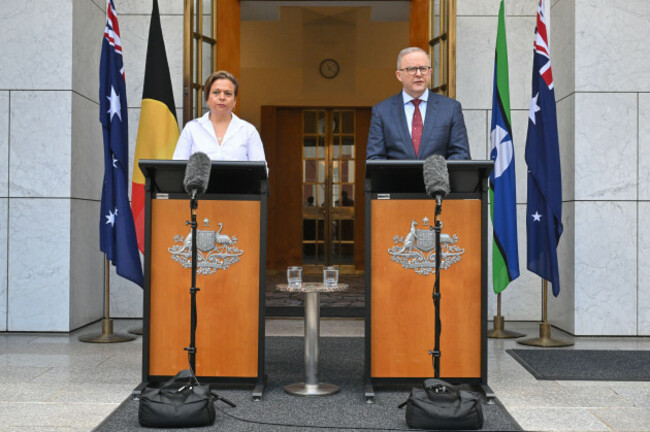
This move would finally see one government showing the political courage to protect children and young teens that could act as a template for governments across the globe, including the Irish government to follow suit. The ripple of concern about teen access to social media is gaining momentum and not a moment too soon.
The new legislation would ensure that social media platforms would be penalised for breaching the age limit, but underage children and their parents would not.
‘Social media is doing harm to our kids and I’m calling time on it,’ the Prime Minister said, adding that the legislation would take effect 12 months after the law had passed.
‘The onus will be on social media platforms to demonstrate they are taking reasonable steps to prevent access. The onus won’t be on parents or young people,’ Mr Albanese said.
Head of Safety at Meta, Antigone Davis, the company behind Facebook and Instagram said its platforms would respect any age limitations the government wanted to introduce while predictably suggesting that it might be better if parents controlled the apps that their children can use, that would be a ‘simple and effective solution.’
Elon Musk’s X (formerly Twitter) did not immediately respond to a request for comment and TikTok declined to comment.
Last September, UK TV Presenter Kirstie Allsopp caused a media storm for allowing her teenage son to go inter-railing around Europe, suggesting that children are being exposed to more dangers on their mobile phones than they could ever be through travel.
In defence of her actions, she referred to Jonathan Haidt, author of the New York Times bestseller The Anxious Generation where the social psychologist suggested that the toxic combination of mobile phones and risk-averse parenting are at the root of plummeting mental health in teens and young adults.
‘Technology has created a great rewiring of childhood,’ Haidt said.
‘Think of all the exciting things you ever did. Think of all the trouble you got in. Think of all the adventures you had. Think of all the flirting, the fun. Now take 80 per cent of it and replace it with screen time. And that’s kind of what happened to people born after 1995.’
Online pornography is a real and very disturbing issue when it comes to access to social media. A paper published by the UK Children’s Commissioner last year made very clear the extent of the problem. The report does not make for easy reading, but the Commissioner said, ‘nor should it.’
The report stated; ‘I truly believe we will look back in 20 years and be shocked by the content to which children were exposed. Let me be absolutely clear: online pornography is not equivalent to a ‘top shelf’ magazine. The adult content parents may have accessed in their youth could be considered ‘quaint’ in comparison to today’s world of online pornography. Depictions of degradation, sexual coercion and aggression are commonplace and disproportionately targeted against teenage girls.’
The average age at which children first see pornography is 13. By age nine, one in ten had seen pornography. This increased to one in four (27%) by age 11 and one in two by age 13.
The majority had encountered violent pornography by age 18. Twitter (now X) was the online platform where it was most likely encountered by young people. Other mainstream platforms, Instagram and Snapchat ‘rank closely after dedicated pornography sites.’
With this type of data emerging from young people themselves, we are deluding ourselves when we listen to mainstream social media platforms suggesting that their content is not harming young teens.
Prof Haidt states that the evidence is very clear: 13, the current (and unenforced) minimum age for opening an account on social media platforms, is too low.
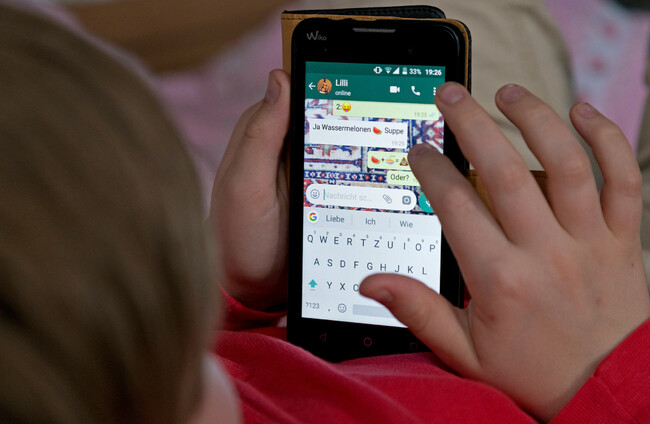
Apart from access to pornography, since the iPhone release in 2007, teens changed from tapping out messages to friends mainly one person at a time to ‘spending most of their waking hours consuming content from strangers as well as friends, playing mobile games, watching videos and posting on social media.’
This means losing out on all those other skills, experiences, interactions, brain connections and life lessons that are a vital part of progression into mature adulthood.
Robust age verification measures would take the very real pressure off parents to allow their kids and teens access to social media, to ensure they are not excluded from social activities that everyone else is involved in. Teens won’t feel excluded if everyone else is in the same boat.
A level playing field where no young teenagers are on social media takes the pressure off everyone – teenagers and parents alike.
Global markets are supported by governments to drive growth. But growth must be tempered by wellbeing for every age, income group and ethnicity. Prime Minister Albanese has set the ball rolling for governments across the globe to mandate social media platforms to protect teenagers from access to social media.
Our government leaders have shown leadership and political courage in taking on the impact of tobacco on the health of young teens by raising the legal age of smoking from 18 to 21.
It is time for a similar level of exuberance and political ambition to ensure that online platforms are mandated to protect young teenagers from the irrevocable harms to mental health that ensue from unrestricted access to social media.
Dr Catherine Conlon is a public health doctor and former director of human health and nutrition, safefood.
To embed this post, copy the code below on your site














have your say