TheJournal.ie uses cookies. By continuing to browse this site you are agreeing to our use of cookies. Click here to find out more »
Dublin: 11 °C Sunday 19 May, 2013

Column: Universities in crisis because they have no support

Irish universities fell out of the top 100 institutions rankings today but, writes Stephen Donnelly TD, without a bold, ambitious vision from Government they’ll never get back into them.

Stephen Donnelly

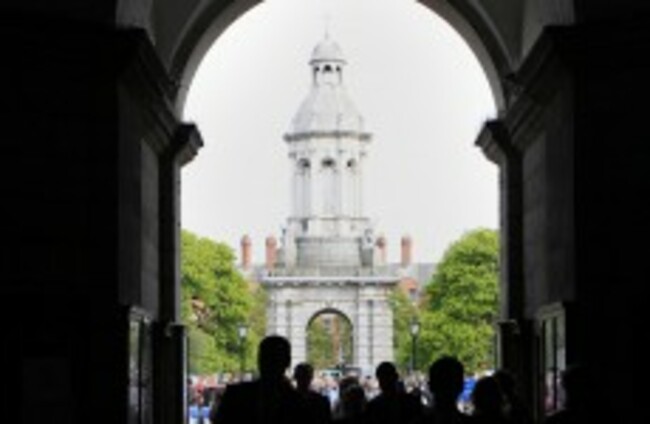
OUR UNIVERSITIES ARE in crisis. Ireland no longer has a single university rated in the top 100 in the world, according to the Times Higher Education rankings just released. In the last year University College Dublin has slipped from 94th place to 159th. Trinity College Dublin has fallen from 76th to 117th. In 2009 it was ranked 43rd.

Why is this happening? Partly because Irish universities are being asked to educate more and more students with less and less money.* This means that class sizes are increasing, research posts are disappearing, and teaching supports are shrinking – all things measured by the rankings. It is also partly because the Irish Government refuses to set a bold, ambitious vision, and refuses to give the senior management teams in the universities the tools and freedoms they need to drive performance.

In October last I raised the issue of falling university rankings in the Dáil, and the response I got said it all. Instead of accepting that our universities were facing a crisis, Ciarán Cannon, the Minister of State at the Department of Education and Skills, said that if you looked at the rankings another way, we were doing just fine. For me, it was tantamount to saying that if you turned the rankings upside-down, we were actually moving up the page. When I asked what ideas the Government could take from Oxford, Cambridge and the Ivy League colleges in the US like Harvard, which are consistently ranked in the top 10 globally, he responded that he considered the Ivy League colleges to be “incredibly elitist”.

Government doesn’t even aspire to excellence for our universities

Not only does this Government not aspire for excellence in our universities, it actually turns its nose up at some of the very best in the world. This is small-minded, ill-informed, defensive and anti-intellectual. It is not so much bad policy as non-policy: it’s not that Government strategy for achieving excellence for our universities is wrong, it’s that they don’t even aspire to excellence.

This Government needs to start working with the universities to find them the funding they need and to support them in making the other changes required to realise this vision. What are some of those changes?

  • We must emphasise teaching. Delivering superb teaching to our students is not taken seriously in many universities in Ireland in terms of career advancement. There is very little formal feedback from students. There are few penalties for doing a bad job. This is a huge problem – academic staff must be trained, incentivised and held accountable for the standard of teaching which they deliver.
  • The universities need more, not less, money. This Government should play a greater role in helping the universities to fundraise. Some of the universities that do very well in the United States, for example, have extremely sophisticated fund-raising mechanisms in place for their alumni which should be implemented here.
  • If the fees must rise, I would like to see the Government provide grants along the lines of the United Kingdom model whereby a very low, or zero, interest grant is made, which the graduates only pays back when their salary reaches a certain amount.
  • The professional management within the universities must be given the freedom and the authority to motivate their staff, find the best staff, pay what is required to get the best staff and then hold that staff accountable to ensure change happens.
  • We must stop accepting “average” as good enough. Singapore, with a population of five million people, has two universities in the global top 100. Switzerland has three. The Netherlands has five. It is entirely within our ability to have some of the best universities, at undergraduate and post-graduate level, on earth.

* Budget 2012 imposed a cumulative 6 per cent drop in funding for universities between 2012 and 2015 (starting with 2 per cent in 2012). Factor in inflation at 2 per cent per year (the most recent reported rate was 2.2 per cent), totalling 8 per cent, and the cut in real terms, to 2015, becomes, roughly 14 per cent. At the same time, student numbers are projected to increase by 18 per cent, or 30,000, by 2014.

Stephen Donnelly is an independent TD for Wicklow and East Carlow

Irish colleges miss out in list of top 100 reputable universities>

Read previous columns by Stephen Donnelly>

Read next:

Comments (39 Comments)

  • I’m all for bringing in a student loan system like the one that exists in the UK. It allows people to invest in their own education without having the heavy burden of immediate loan repayments upon graduation. I guess the system would be a long term investment by the government if they did set it up. But I think they’re more into increasing fees and quick fixes these days…

    Reply
  • Yet more sense from Stephen Donnelly

    Reply
    • While much of what he says seems fair, looking to “the government” for a solution is pointless. If we want world class Universities they’re going to have to do it for themselves (and surely we have more intellectual horsepower in the universities than in the Dail!)

      Reply
    • Ciaro 15/03/12 #

      Stuff sacks of money into the universities, what does this solve? What about assessing lecturers and sacking the useless ones, or those that never turn up for work and still trouser a pension (David Norris?)

      Reply
  • On a personal note, my course has suffered massively from the fact that they’re not allowed to replace leaving teachers, or sabbaticals, or illness. We’ve managed to fill the gaps with visiting teachers contracted for a term, but the discontinuity makes us students suffer. The library only has enough staff to cover one shift, so we’re well looked after for the office hours, but there’s no access to off-shelf material outside of those hours. Print journals, books with only one copy, even lending services, are heavily restricted. It’s a joke.

    Trinity are trying to make up the gap by increasing tourism, so any renovations or building work only happens during term time. Can’t have them seeing the pulled-up cobbles during the summer, can we?

    Extrapolating this, I can imagine all education has similar troubles.

    Reply
    • p.s. those rankings aren’t everything, especially when you’re comparing countries with education-for-all, like Ireland, and education-for-the-rich, like the UK and the US. I’d much rather have our model, any day.

      Reply
    • Rankings are very very important in my opinion. A higher ranking is essential for funding proposals, international student attraction, potential collaborators and so on

      Reply
    • The UK doesn’t have an education for the rich system. What makes you think that?

      Reply
    • skeolawn 15/03/12 #

      @Ruby: you’d rather have “our model” but how do you propose to fund it if you’re not content with the situation you describe above?

      The US system works pretty well, and it’s not just for the rich. It’s expensive but there are many ways to fund college for those who are capable.

      Reply
  • How can you rate an entire University, for pete’s sake? A university might have a world-class engineering faculty and a rubbish faculty of philosophy. All that this “Top of the Pops” list tells us is “how like Harvard these universities are”. The best thing Irish universities can do here is stop trying to compete with other universities and walk their own path (which they did before they got roped into this game). The quality of education and research (you can’t have one without the other: each feeds, inspires, and invigorates the other) has fallen because the attention of lecturers etc. is continually distracted by this “competition” juvenilia.

    Excellence is a comparative notion. If you’re excellent, it just means you’re no worse than the others. If you want to lead, you ignore the status quo and go your own way. The sole goal of a university is the unwavering pursuit of perfection. Regardless of what society wants.

    Don’t worry: I’m perfectly aware that writing this was a complete waste of time.

    Reply
  • This has been a trend in the US, England and elsewhere. Education as a means to open the mind in the broadest sense doesn’t suit the capitalist system which is dominant. This is as much to do with ideology as economics.

    What is most under threat is the arts. poetry and painting has no economic worth so what’s the point?

    We are more than work fodder.

    Reply
  • Too true in the context of most of the content that we see on FB and Utoob, and the general media… Lowest common denominator sensationalism.

    In this frame it’s all too easy to forget that, in terms of comfort of lifestyle which modern technologies bring us, and the quality of life, government, and freedom in our society and markets here (which are all a lot higher than you might believe, if you haven’t travelled around the world!), so much of this comes from people who were educated at higher levels in various specialist fields.

    So let’s not forget and sideline the importance of quality education across the board!

    Reply
  • It’s all well and good saying we need more money (and it’s not that we didn’t already know we had a funding problem) but how do we do it?

    Even if you radically cut high wages and get alumni funding, you’re still left with a massive hole.

    The state is broke and has no means to increase its share of funding only leaving students left to foot the bill.

    It’s not an easy situation, no matter which way you look at it.

    Reply
  • alan 15/03/12 #

    ‘and refuses to give the senior management teams in the universities the tools and freedoms they need to drive performance.’

    thank god this man isn’t in charge of education

    Reply
  • Great saddle young bright Irish kids with 100,000 in debt before they even get a job. The US system might be well funded but at a terrible cost to society. Student debt is crippling a generation already struggling to get on the career ladder. The student loan system has essentially turned 3rd level education into a business, the higher fees have created an extra exclusivity and perceived value for some institutions for the cost reason only. I’m sure the argument for keeping low fees would be touted in Ireland if it was to be proposed but history in the US has shown ever increasing fees and higher debt levels for students. Narrower focused courses in profitable fields and a lesser class spread for enrollees. Ireland may not have the “elite” status universities but can provide a wider spread of excellent graduates across most social classes.

    Reply
    • Where does the figure of 100,000 Euro debt come from?

      Just wondering, it may well be true, but it seems like a lot.

      Reply
    • It’s because once you introduce a zero interest loan system, with collateral provided by the state (if you can’t pay the loan, they’ll pay it for you), Universities see no reason to remain affordable. No matter what they charge, they’ll get the money after all. The quality will increase, but the prices will continue to rise – and so inevitably will the pay packets of all the teachers.

      Reply
  • They should pay their senior lecturers less. They are amongst the highest paid in the world

    Reply
  • skeolawn 16/03/12 #

    Value for money is a consideration. Graduates of liberal arts and other broadly based degrees have always found it challenging to decide what career to follow once they complete college. That’s a choice and the risk you take.

    Ireland manifestly does not provide a wider spread of excellent graduates compared to the US. That’s just nonsense. The US system is highly competitive and attracts the best and brightest from the world. From what I’ve seen, standards are high. People in the US criticise the system very harshly. That’s an indicator that they are not complacent about education, rather than an indicator of shortcomings. Ireland could do well to learn from this.

    As for social inclusion, the groundwork for college starts early – both in terms of education and also in terms of self belief and confidence. The US has relatively good supports for both of these compared to Ireland, and there are excellent scholarship programs. By contrast, “Free fees” in Ireland have mostly benefited the middle classses. It’s a transfer of finance support from the weakest in Irish society to those who don’t need it anyway. The money would be better spent on improving literacy and numeracy at an early stage in the school system.

    Reply
    • Scholarships for the sports or academically gifted. A shrinking middle class and even smaller upper class. That leaves a large swath of people in the US without the means of further education or more likely crippling debt due to high fees.

      Reply
    • skeolawn 17/03/12 #

      Fall 2011: A record 19.7 million students are expected to attend American colleges and universities

      http://nces.ed.gov/fastfacts/display.asp?id=372

      For the 2009–10 academic year, the average annual price for undergraduate tuition, room, and board was estimated to be $12,804 at public institutions (including $4,751 for in-state tuition) and $32,184 at private institutions (source) .

      Reply
  • If University lecturers as so snowed under with their 24×7 jobs, where does Colm McCarthy find time for his many roles?

    Professor Des Fitzgerald, vice president of UCD. “earns” €263,000 a year, that’s the registration fees of 131 students. Leech amongst many other leeches.

    Reply
  • What Stephen Donnelly is basically saying is radically increase fees the state keep pumping money but don’t reform within.q

    Reply
  • University Lecturers have less teaching hours much more time off and are better paid than even Secondary School teachers
    The average is 10 hours lecturing a week FYI
    Ask any student in college today how many classes are ‘amalgamated’ in the average week because the Lecturer doesn’t show
    Have you seen how much the heads of our colleges are paid even more than some Semi-State CEOs
    Wake up and smell the coffee the party is over and the University’s are going to have to row in like the rest of us

    Reply
    • AlMar 15/03/12 #

      The work of lecturers involves considerably more than being in the classroom. Any academics I know (and i know a lot) work extremely long hours, bring work home with them and often work weekends as well. Of course, there are also dossers, just as you will find in every organisation.

      Reply
    • There is much more to a University Lecturers job than just 10 hours lecturing. For instance, publishing in top-tier journal and conference outlets, engaging in research projects both within the college and also in collaborating with industry etc

      Reply
    • University despite the common misconception have very little to do with teaching so it is pointless comparing them to secondary schools?

      Reply
    • Jeff 16/03/12 #

      Anoghus, what “University Lecturers job than just 10 hours lecturing. For instance, publishing in top-tier journal and conference outlets, engaging in research projects both within the college and also in collaborating with industry etc” examples please?. If they where doing all this then I think they would have a higher ranking … Like MIT, Harvard etc, most of our academics at best edit other peoples research little if any original research done in Ireland in the areas of business / finance etc some & tenure has become a license to sit on your ass or become a TV / Media pundit.

      Reply
    • @Jeff: I can speak only from perspective of what I’ve seen. The Sociology department in UCC (which I am in no way affiliated with just to mention) is regarded as providing huge contributions in their field.
      Also, there in the information systems (IS) discipline there are numerous lectures I know of in UCC who consistently publish research in journals that are ranked A+ worldwide.

      You mentioned “most of our academics at best edit other peoples research little if any original research done in Ireland in the areas of business / finance”; that is a load of horse manure! I’d like to see you try and get a piece of research through the door of any one of these A+ journals and see just how difficult it is!

      I appreciate that there certainly are lecturers that do no more than “sit on [their] ass”; but lets be clear, there are many significant contributors to many important scholarly and practitioner collaboration endeavors

      Reply
  • It is all BS this smart economy stuff. Just another ruse by the educated in the public sector to siphon more money off from tax revenue. Irish governments have been pouring money into higher education for twenty years and a Singapore or South Korea on the Atlantic Ireland ain’t. How many are unemployed? If the universities are so important to driving the economy, the private sector, how come so few of their staff are willing to ship themselves into the private sector? The incentives in Ireland are nuts. They are completely skewed towards the professions and the public service.

    Reply
    • I think the issue is more related to the quality of graduate we are pushing out the doors. Recent years has seen top companies slate the quality of graduates. Its simply too easy to swan through Universities without actually becoming a quality well educated graduate. People may say this is harsh and I can hear the crys of people saying that being harsher with grading will marginalize…get over it, once you get to an interview stage with a prospective employer what do they do??Marginalize based on their perception of your quality!

      Reply
    • Yes, we need more quality graduates. The boom years saw a dramatic decline. Why would you seriously study engineering (hard work) when you could do very well as an Estate Agent (spiv). I’ll bet that “free” college is also a factor.

      Reply
    • You are right Adam, “free” college is definitely a factor too. Students were able to spend tax payers money dossing lectures and under-achieving but still being pushed out the door with a third level qualification, unreal!!

      Reply
    • sorry meant to say skeolawn you are right

      Reply
  • start looking at companies for funding for courses, let them pay towards education of prospective staff.

    Reply

Add New Comment