Sign in. It’s quick, free and it’s up to you.
An account is an optional way to support the work we do. Find out more.
Sign in. It’s quick, free and it’s up to you.
An account is an optional way to support the work we do. Find out more.

THEY SAY THAT health is something you only appreciate once you get sick – and I a inclined to agree. Ten years ago, out of the blue, my menopause hit me. I was 43 years old and it seemed like my health was changing for the worse from one day to the next. Now that I look back, I realise that several symptoms had actually been affecting me for a while – a few years, probably – but I didn’t connect the dots and understand that this was, in fact menopause.
At the time, these symptoms seemed unrelated. Frequent waking in the night, hot flushes, joint aches, brain fog, lack of concentration, feeling anxious and more emotional than usual. I now know that these ‘unrelated’ issues were all classic menopause symptoms.
Everyone’s experience of menopause is different. Some really struggle, while others seem to sail through this life stage. Menopause is such an individual journey, and that’s part of why it’s so important to educate yourself early on: you need to know what to expect. Many women, however, arrive at this life stage unprepared.
Why? Because menopause has been shrouded in secrecy and taboo for decades – despite the fact that it directly affects 50 per cent of the population (and indirectly affects the other 50 per cent). Women can be in denial about what’s happening to them, but there’s nothing to be ashamed of; it is a natural part of life, as much so as puberty and pregnancy.
A good diet will lay the foundations for greatly improved menopause symptom management. Optimised nutrition is also fundamental to future-proofing your health and reducing known risk factors for chronic disease.
How you nourish your body at this life stage will directly affect both the frequency and severity of your menopause symptoms. If ever you needed a good reason to prioritise your nutrition, this is it.
This is my life stage too, and I want many of the same things that you do – more energy, better-quality sleep, better memory and concentration and to maintain a healthy weight. But trying to figure all of this out on your own is not easy; there is a lot of conflicting information out there. A reliable source of evidence-based information, explaining the nutrients to optimise now and paired with delicious-tasting recipes containing an effective dose of those beneficial nutrients – this kind of practical resource is the missing piece of the menopause puzzle.
So many of my clients were coming to me with symptoms similar to my own but were unaware of what they needed to eat to effectively nourish themselves. Despite the recent increased awareness around menopause, there was still no menopause-specific medicinal cookbook for Irish women – and that’s the reason that I wrote this one!
As a practising nutritional therapist and medicinal chef – certified in lifestyle medicine, plant-based nutrition, fermentation and raw-food mastery – tasty, healthy food is my passion. I understand how great nutrition can completely transform your health. In my online nutrition clinic, I focus predominantly on women’s health with an emphasis on menopause. I’m an accredited menopause educator from the Menopause Charity, qualified to advise women on the various treatment options available to manage the symptoms of menopause. I offer practical cooking demos to help women take action in the kitchen to future-proof their health.
Menopause is a time in women’s lives when we are often freer to explore more of what we want to do: learn a new skill, start a new career, travel more … the Chinese call this the ‘second spring’. I love this take on menopause because it epitomises a new, exciting and positive life that is just beginning for us! Now is the time to look after yourself and prioritise your health, so that you can add quality of life to this next stage.
My goal in writing my cookbook and nutritional manual was to provide tasty, medicinal recipes that nourish your body and transform your mid-life health. I have included lots of variety and fresh flavour combinations to inspire you and get you into the kitchen.
There are over 100 delicious health-focused recipes, optimised in eight categories.
I call these categories my Meno 8, and they are:
Each section of the book is dedicated to one of these eight categories and explains why they are a crucial part of your healthy menopause diet, including referenced health claims and the recommended daily amount (RDA). The recipes have been designed to provide benefits beyond basic nutrition – to help you balance your hormones, feel energised and maintain a healthy weight.
Each recipe is packed full of nutrients and active properties that help to strengthen your bones, support your liver detoxification processes, enhance your energy levels, balance your hormones and improve your digestion.
The recipes have all been analysed using professional software to track 16 important nutrients. Highlighting the RDA and milligram/gram weight of each nutrient, this information is displayed as an easy-to-read bar chart at the bottom of every recipe. This will enable you to achieve your RDA of each nutrient and to balance your hormones.
As I’ve already mentioned, menopause is often the stage of our lives when we start to develop niggling health issues. It’s when the years of wear and tear on our body become apparent, and unless we take action, at best, we may not feel like ourselves, and at worst we can get sick. Either outcome will impact our quality of life. My goal is to show you how to include all the important nutrients daily, in effective doses. Simply put, I want to help you to use food as your pharmacy.
The transition to menopause can be a bumpy one, and many women focus on the more overwhelming symptoms, such as hot flushes, night sweats, mood swings, anxiety and problems with memory and concentration.
However, during this life stage, we also find ourselves at an increased risk for conditions that cannot be ignored.
I call these the Big Four because they are serious, chronic health conditions that have the potential to shorten our life. Having said that, they are all lifestyle-related diseases. This means that we have some control over them – we can make effective changes to reduce our risk. Good nutrition is the foundation of this. Nothing will positively impact our long-term health and well-being more than a really good diet.
Cardiovascular disease
The elephant in the menopause room is cardiovascular disease. Why? Because the risk of heart attacks is five times higher after menopause than before, and heart disease is the leading cause of death for females over the age of 70.
We really need to protect our heart health during this life stage. You can read more about this in the heart health section in part two.
Type 2 diabetes
At this life stage, women are also at an increased risk for type 2 diabetes – and this carries with it a greater risk of cardiovascular disease, so the two are intrinsically linked.
Type 2 diabetes is a condition of blood sugar dysregulation and carbohydrate metabolism – an issue that is common in menopausal women. This is because the way we metabolise carbohydrates changes, with our body not responding to the insulin that is being produced – insulin is effectively broken.
How does insulin work?
Insulin’s job is to remove glucose (from the food we have just eaten) from the bloodstream and deliver it to the cells to create energy.
When our body is no longer responding effectively to the insulin that is being produced, it can be likened to a spluttering car, out of fuel, struggling to get going. No wonder we often feel tired at this life stage: we can’t get glucose into our cells.
High-GL foods
When we regularly consume high-GL foods – that is, refined carbohydrates, sugar and starch – we can become insulin-insensitive or pre-diabetic over time.
This means that insulin no longer works properly, and we will likely experience multiple daily glucose spikes.
These continuous glucose spikes can damage our arteries, as well as our good cholesterol – a process known as glycosylation. Damaged cholesterol leads to elevated LDL cholesterol (the bad type), and our kidney function can become impaired, raising blood pressure.
A change in diet can be very effective in increasing our insulin sensitivity, and it can even reverse this pre-diabetic condition. A survey2 carried out at the Harvard School of Public Health in 2006 showed that a high-GL diet (that is, a diet high in refined carbohydrates, sugar and starch) doubles the risk of heart disease in comparison to a low-GL diet (or a diet rich in whole foods or fibre-rich foods).
You can learn more about the benefits of a low-GL diet in part two, but here are some simple steps that I would recommend to reduce your intake of high-GL foods:
Osteoporosis
Irrespective of diet, lifestyle or environmental factors, our risk for osteoporosis naturally increases during menopause, as a result of our loss of oestrogen. This risk is often underestimated by women and even healthcare professionals.
Osteoporosis means an increased risk of bone fractures or breaks. It might not be life-threatening, but a hip fracture or a broken bone (followed by months of recovery and rehab) would have a massive impact on our independence – now and 10 years from now.
We all want to remain active and mobile in our 50s, 60s, 70s and beyond, so strengthening our bones has to be a priority now.
The new WHO guidelines for osteoporosis prevention recommend a two-pronged
approach:
Alzheimer’s disease and dementia
Multiple studies have shown that oestrogen is very important for brain function. Without oestrogen, the female brain functions sub-optimally.
This would certainly explain why, around the time of menopause, we often suffer from poor memory and concentration, anxiety and depression, as well as a whole host of other nervous-system issues.
Leading neuroscientist Dr Lisa Mosconi explains the fundamental differences in how the female brain ages in comparison to the male brain in her book The XX Brain. Women have a greater risk of stroke and depression than men, for example, and are also twice as likely as men to develop Alzheimer’s disease, which Mosconi suggests may be due in part to differences in hormones.
Bearing these differences in mind, we must use all the tools at our disposal to reduce our risk of Alzheimer’s disease and dementia.
A key intervention in the fight against dementia is the quality of our diet. Research tells us that a diet rich in antioxidants can improve our cognitive function. We also know that blood-sugar control and improving insulin sensitivity are important steps in the prevention of Alzheimer’s disease. In fact, Alzheimer’s is sometimes referred to as type 3 diabetes because of its close association with blood-sugar dysregulation.
As we age, we can struggle to digest and absorb animal proteins, leading to nutrient deficiencies. These nutrient deficiencies (for example, B vitamins and trace minerals such as zinc) have been linked to Alzheimer’s disease. One thing that we can make an effort to eat more of is turmeric, nature’s most potent anti-inflammatory! Anecdotal evidence shows that an elderly population in rural India eating large amounts of turmeric had 4.4 times less incidence of Alzheimer’s disease than Americans of similar age.
Brain health
One of the four chronic health conditions I refer to in part one, osteoporosis, is defined as the loss of bone mass, leading to fragility and an increased risk of fractures.
The risk factors for osteoporosis include:
The window of time to be concerned about is the few years before and the few years after our last period – usually from age 48 to 54.
During this time, women may experience their most rapid decline in bone density and their greatest increase in osteoporosis risk (after the age of 70, women experience a natural decline in bone density and their risk of osteoporosis may further increase).
Hip fractures are very common in postmenopausal women. This is because the neck of the thigh bone increases in size as we age, which in turn increases the likelihood that our thigh bone will buckle and misplace.
Weight gain (which is also very common at this life stage) can further compound the problem by increasing the load on our bones, at a time when our bones are losing strength.
Recovery from a hip fracture can be slow, and this affects our physical health, with a loss of independence and mobility (some women may have to convalesce in a nursing home, either temporarily or long term), but it can also lead to a decline in our mental health.
Let’s do some myth-busting about bones and our calcium intake. As a result of microscopic damage from daily physical activity, our bones also go through a continuous renewal process known as bone turnover. Think of it as an ongoing house renovation, with both the demolition team and the builders in at the same time. Bone turnover involves breaking down and replacing areas of damage, followed by removal and the process of forming new bone. This work is carried out by our osteoclast and osteoblast cells.
Usually, for women up to the age of 30, the re-formation of bone outweighs the breaking down process. However, in menopause, the opposite is true. Bone loss is accelerated, and
we can lose as much as 20 per cent of our bone mass. This can manifest as bone loss in other areas of the body – such as deterioration in our jaw, contributing to problems with our teeth.
How do you find out if your bones are okay?
Get a DEXA scan (a type of X-ray) to confirm how much bone tissue you have. Your DEXA results are issued as a T-score, comparing your bones to those of a young healthy person.
Consider a diagnosis of osteopenia a yellow card: it is a warning to make changes and to place more emphasis on a healthy diet and lifestyle to strengthen your bones.
Osteoporosis can be a real blow to our health and quality of life, so it’s worth doing all you can to minimise the risk and prevent it.
What you can do
If you want to reduce your osteoporosis risk in order to remain independent, mobile and active in your later years, now is the time to optimise your diet and focus on healthy lifestyle choices.
Make a conscious effort to increase your daily calcium intake from dietary sources and remember that vitamin D increases the uptake and absorption of calcium, so get your cardio outdoors in nature for the double win – weight-bearing exercise and vitamin D!
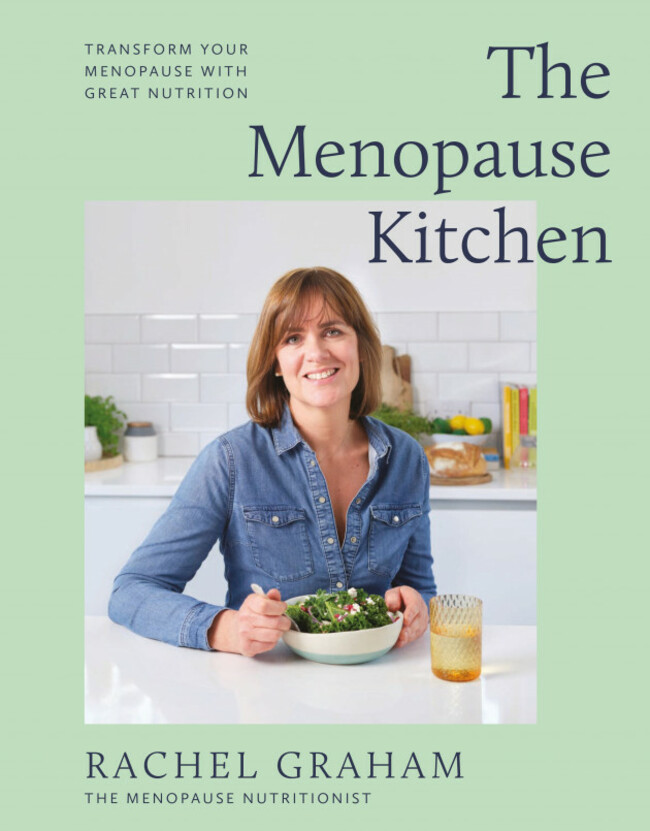
Rachel Graham is a practising Nutritional Therapist & Medicinal Chef with over 25 years of experience in food. Certified in lifestyle medicine, plant-based nutrition, fermentation and raw food mastery, she works predominantly in Women’s Health with an emphasis on Menopause. She is also an accredited Menopause educator from The British Menopause Charity. Her new book, The Menopause Kitchen is out now, published by Gill Books.
To embed this post, copy the code below on your site














have your say