Sign in. It’s quick, free and it’s up to you.
An account is an optional way to support the work we do. Find out more.
Sign in. It’s quick, free and it’s up to you.
An account is an optional way to support the work we do. Find out more.
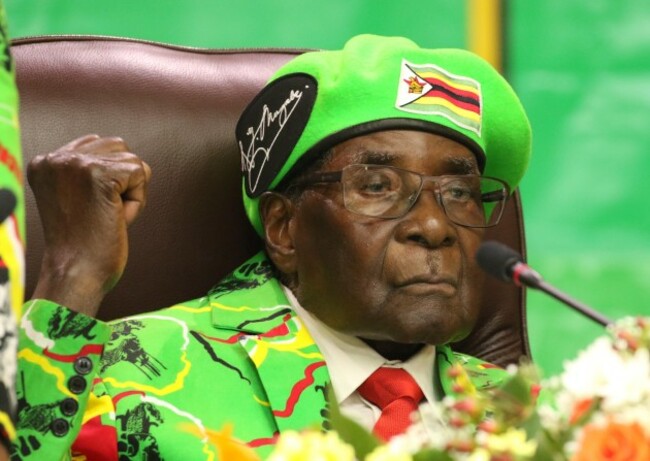
THIS MORNING, ZIMBABWE’S military appeared to be in control of the country while its President Robert Mugabe and his family’s whereabouts were unknown for a number of hours today.
Mugabe is a controversial figure who is both hailed as a revolutionary who helped free Zimbabwe from British colonialism, and as a dictator responsible for corruption and human rights abuses.
The 93-year-old has held power since independence from Britain in 1987, despite constant calls for his resignation to roll in a new era for the country. Now it seems that the country’s military have staged an abrupt end to his leadership.
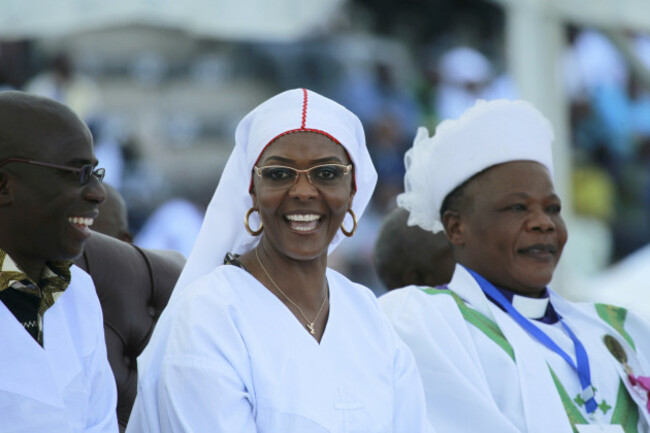
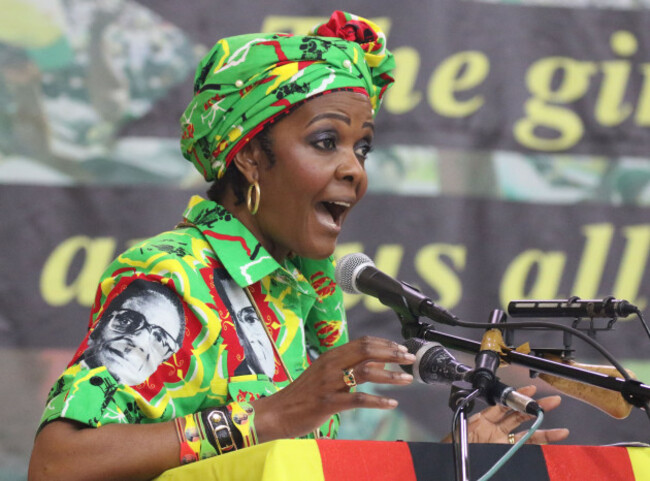
His wife Grace Mugabe, 41 years his junior, has also been embroiled in the controversy, with some accusing her of having too much influence over their country’s leader.
In the early hours of this morning, prolonged gunfire was heard near Mugabe’s private residence, and there have been no statements from him or his family.
Late this morning, the BBC reported that the South African president Jacob Zuma spoke to Mugabe, and that he “was confined to his home but said he was fine”.
In what has become a tumultuous 24 hours, army generals stormed the country’s state broadcaster, the Zimbabwe Broadcasting Corporation (ZBC), to deny claims that their actions amounted to a military coup d’état, and vowed to target corrupt “criminals” close to President Robert Mugabe.
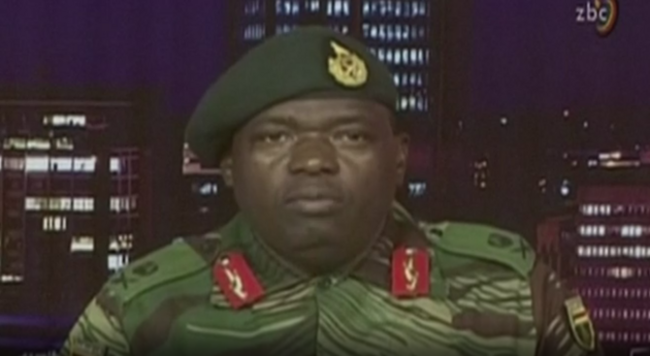
“We wish to assure the nation that his excellency the president… and his family are safe and sound and their security is guaranteed,” Major General Sibusiso Moyo said, slowly reading out a statement.
We are only targeting criminals around him who are committing crimes… As soon as we have accomplished our mission we expect that the situation will return to normalcy.
“We have made it abundantly clear that this is not a military takeover of government.”
So technically, Mugabe is still the leader of Zimbabwe, although he has been temporarily replaced overnight as the head of his party Zanu-PF.
Tensions between the veteran leader and the military, which has long helped prop up his authoritarian rule, have erupted in the public in recent days.
Mugabe’s ruling ZANU-PF party yesterday accused army chief General Constantino Chiwenga of “treasonable conduct” after he criticised Mugabe for sacking vice president Emmerson Mnangagwa.
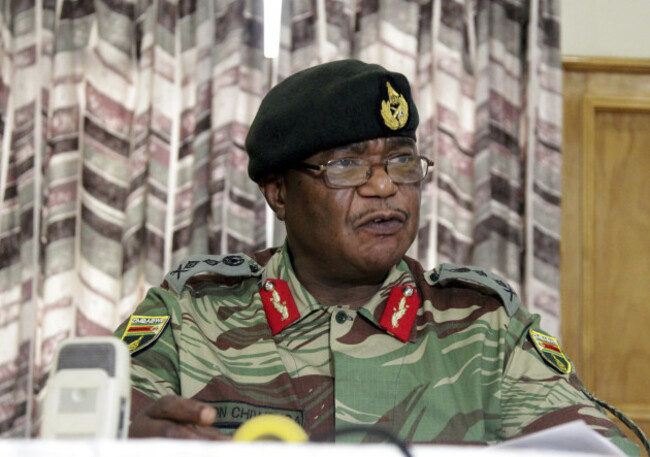
Mnangagwa’s dismissal left Mugabe’s wife Grace, aged 52, in prime position to succeed her husband as the next president – a succession strongly opposed by senior ranks in the military.
The US embassy warned its citizens in the country to “shelter in place” due to “ongoing political uncertainty”.
Armoured vehicles in the capital alarmed residents as Chiwenga had warned of possible military intervention. The army’s spokesman was not available to comment.
So what happens next?
“The government’s silence on the military deployments seem to confirm that President Mugabe has lost control of the situation,” Robert Besseling, of the London-based EXX Africa risk consultancy, said.
Any coup would be likely to involve the imposition of a curfew.
The main indicator of a broader outbreak of violence would be the reaction of the Presidential Guard, which remains loyal to President Mugabe.
Mugabe is the world’s oldest head of state, but his poor health has fuelled a bitter succession battle as potential replacements jockey for position. In speeches this year, Mugabe has often slurred his words, mumbled and paused for long periods.
His lengthy rule has been marked by brutal repression of dissent, mass emigration, vote-rigging and economic collapse since land reforms in 2000.
The main opposition MDC party called for civilian rule to be protected.
“No one wants to see a coup… If the army takes over that will be undesirable. It will bring democracy to a halt,” shadow defence minister Gift Chimanikire, told AFP.
Grace’s ambitions
Speculation has been rife in Harare that Mugabe could seek to remove Chiwenga, who is seen as an ally of ousted Mnangagwa.
Mnangagwa, 75, was widely viewed as Mugabe’s most loyal lieutenant, having worked alongside him for decades.
Earlier this year the country was gripped by a bizarre spat between Grace and Mnangagwa that included an alleged ice-cream poisoning incident that laid bare the pair’s rivalry.
Grace Mugabe has become increasingly active in public life in what many say was a process to help her eventually take the top job.
She was granted diplomatic immunity in South Africa in August after she allegedly assaulted a model at an expensive Johannesburg hotel where the couple’s two sons were staying.
As the economy collapsed, Zimbabwe was engulfed by hyperinflation and was forced to abandon its own currency in 2009 in favour of the US dollar.
The country, which has an unemployment rate of over 90%, is due to hold elections next year with Mugabe pledging to stand for office again.
- © AFP 2017, With reporting from Gráinne Ní Aodha

To embed this post, copy the code below on your site













have your say