Sign in. It’s quick, free and it’s up to you.
An account is an optional way to support the work we do. Find out more.
Sign in. It’s quick, free and it’s up to you.
An account is an optional way to support the work we do. Find out more.
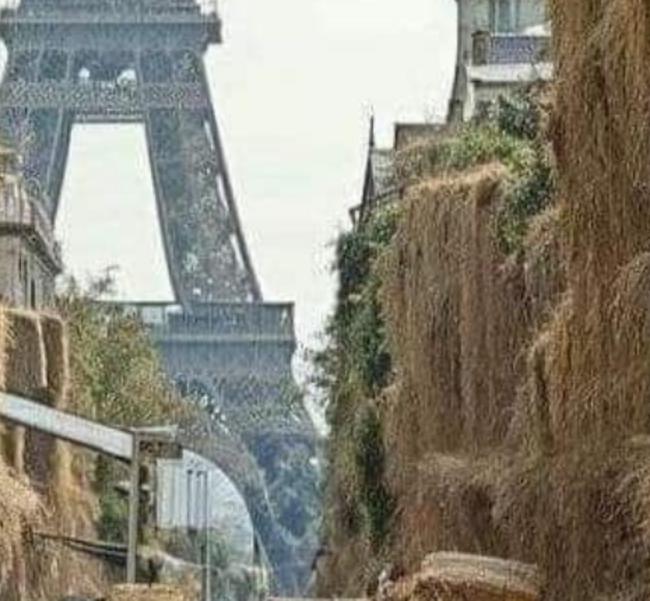
AN IMAGE OF giant hay bales stacked on a road near the Eiffel Tower has spread online amid protests by farmers in the French capital.
The image has been shared across social media, including in a post on a Facebook page for a former Irish television show. However, it is not real: it has been generated by Artificial Intelligence.
The features seen in the picture do not accurately match that of real-life Paris, and there are multiple tell-tale signs that the image was generated by AI.
Farmers in France had been blockading motorways around Paris to protest against various complaints, ranging from rising costs and inflation to unhappiness with carbon-cutting targets, fuel prices, and bureaucracy.
Roadblocks were removed in early February after the government announced concessions to the farmers, including promises to increase funding and ease regulations.
However, the protests led to one particular image going viral: the sight of haystacks piled high on a road in front of the Eiffel Tower.
The image was shared more than 14,000 times on Facebook, including on the verified Facebook page of Damo & Ivor, a comedy show that was turned into an RTÉ sitcom as well as a movie.
The show’s Facebook page regularly shares conspiracy theories, as well as suggestions that migrants are dangerous, and the page’s operator has recently encouraged his followers to boycott paying the TV licence, claiming that it pays for “propaganda”.
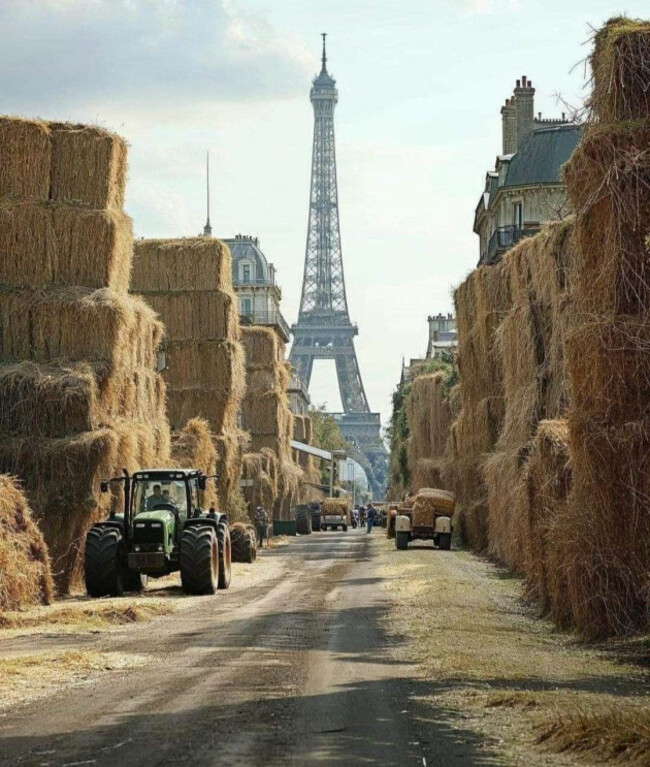
However, the photo from Paris is not real, and there are obvious indications that it was created by an AI image generator.
While the Eiffel Tower can be seen from a wide area in Paris, the details in the picture narrow down the possible areas where it could have been taken considerably.
The picture shows a major road directly running toward the tower; however, as map of the area shows, there are few candidates for such a road.
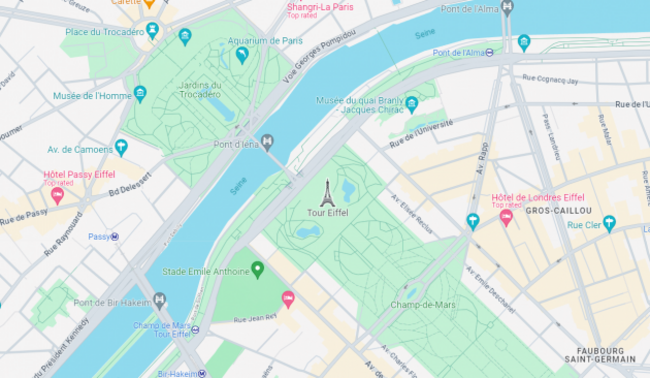
To the south east, the Champ de Mars, a giant green space, dominates the landscape, leaving no room for roads.
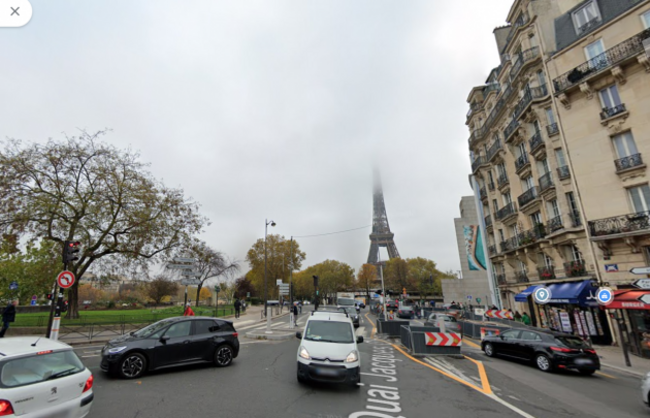
To the southwest, the narrow Rue Buenos-Ayres and sections of the Quai de Grenelle may line up with the tower.
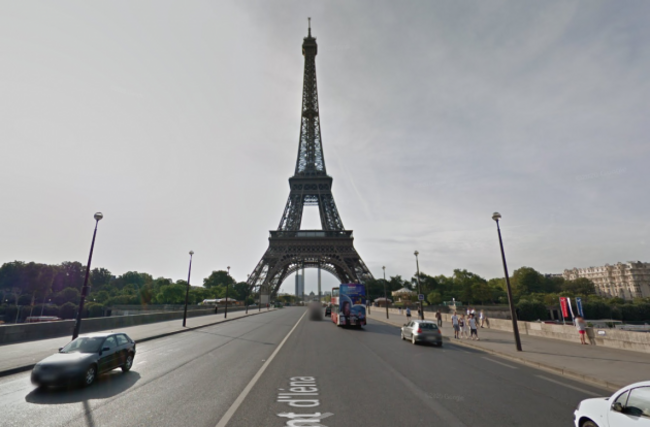
To the northwest, the Pont d’Iéna, a bridge, lines up with the tower.
And to to the northeast, only a tiny section of the Rue de l’Université is in line with the side of the Eiffel Tower.
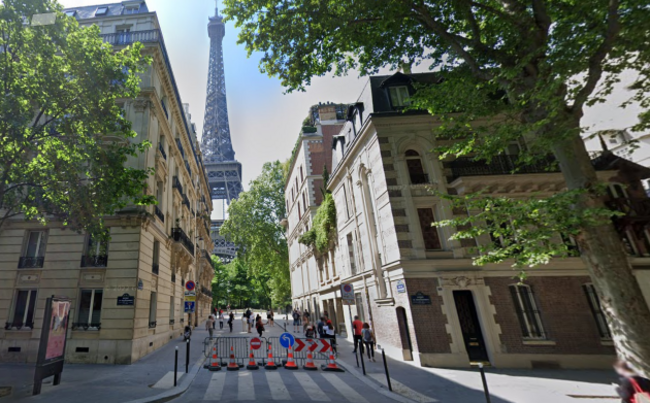
Google Street View images of those areas show that none are wide roads with ornate buildings on both sides, as seen in the AI-generated picture.
There are also subtle indications that the tower seen in the photo does not match the real Eiffel Tower.
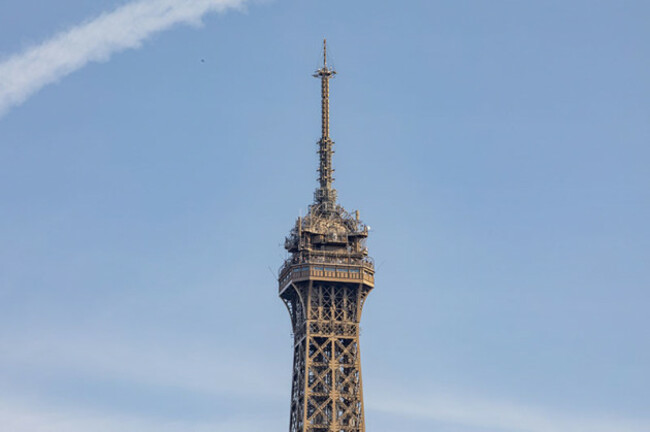
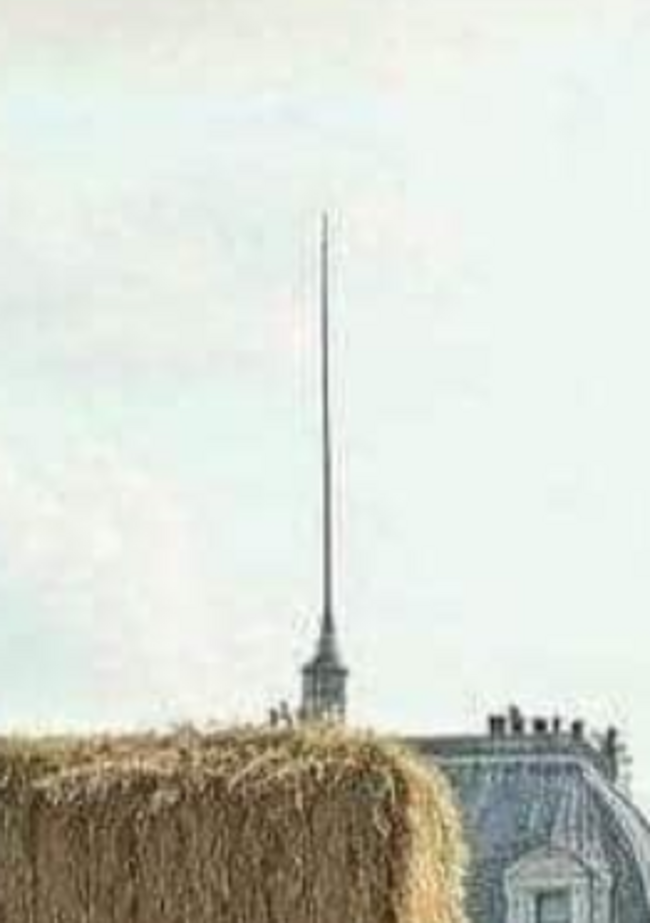
While the general layout appears to be correct, there are subtle differences when you focus on on the spire: the real version appears to consist of three distinct sections, each one thinner than the one below it, whereas the AI-version simplifies this into a smooth parabolic curve.
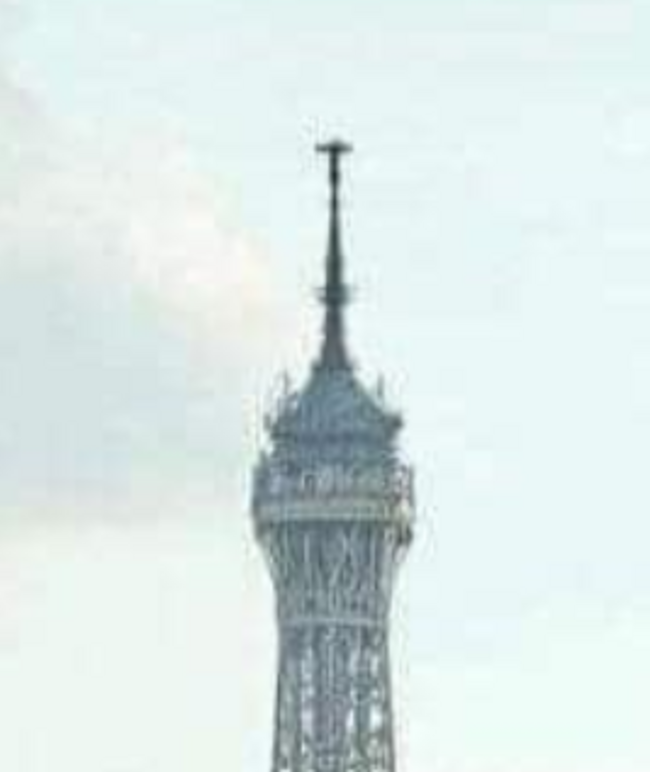
However, while this could be a composite image, made by a person using software such as Photoshop, there are a number of glitches which indicate that it was instead generated by Artificial Intelligence.
For example, in order to generate images of haystacks, a large number of real photos of haystacks would have to be processed by computers and turned into code, which would allow an AI be able to create images in a similar pattern.
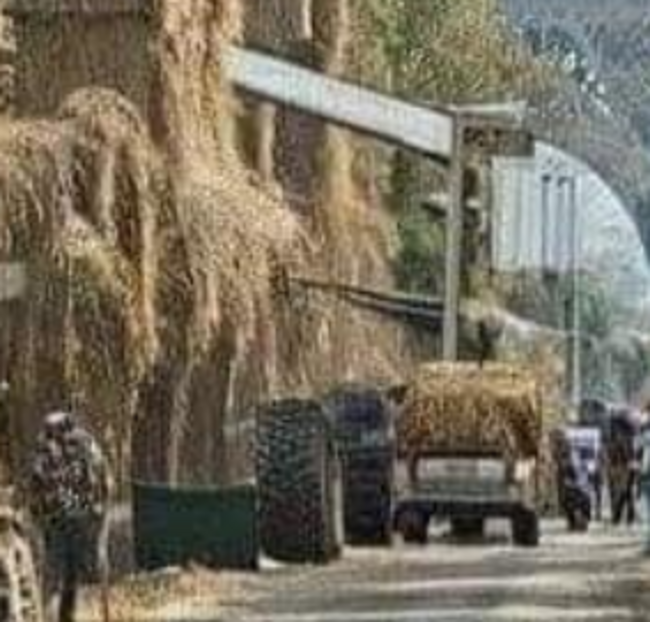
Some additional details from those original images of haystacks might also appear in the new AI-generated image, even though they wouldn’t really make sense in this context – such as, for example, if there had been green foliage in an original photo that the AI was basing its modelling on.
Such artifacts can be seen in the Paris image.
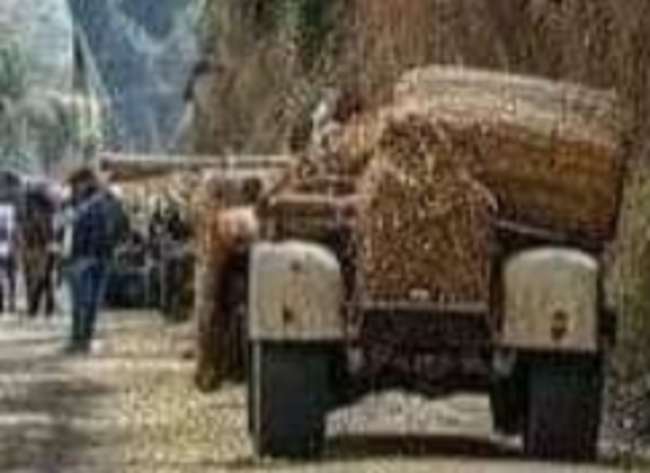
Other tell-tale signs include an image of a man in the distance, who, due to perspective from his position, appears to be much taller than a large tractor in the foreground.
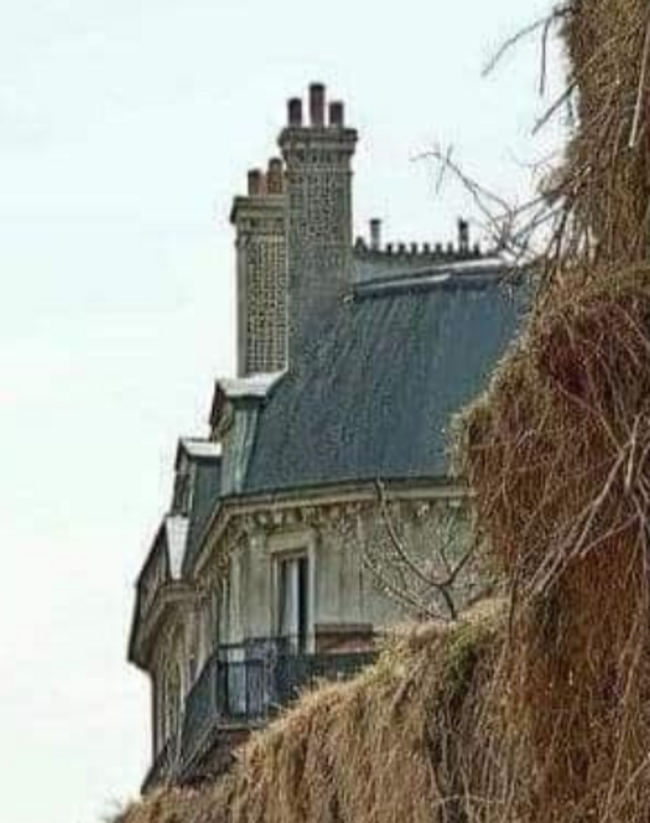
Similarly, architectural details in the picture don’t appear to make any sense either practically, or geometrically, such as overlapping dormer windows, sharp edges on rounded rooftops, and chimneys which would have to cut through a balcony door.
Finally, there are masses of shapes that, while unremarkable at a glance, simply do not appear to depict any real object in Paris – similar to details in early impressionist paintings, which also depicted Parisian scenes.
These elements all point to the image being a fake.
The Journal FactCheck is a signatory to the International Fact-Checking Network’s Code of Principles. You can read it here. For information on how FactCheck works, what the verdicts mean, and how you can take part, check out our Reader’s Guide here. You can read about the team of editors and reporters who work on the factchecks here.

To embed this post, copy the code below on your site










have your say