Sign in. It’s quick, free and it’s up to you.
An account is an optional way to support the work we do. Find out more.
Sign in. It’s quick, free and it’s up to you.
An account is an optional way to support the work we do. Find out more.
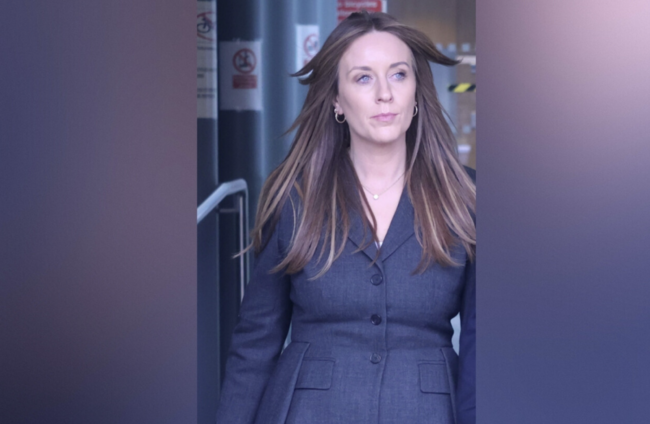
THERE HAVE BEEN calls for short-term prison sentences to be abolished, as the early release of Alison Chawke this week prompts a renewed interest in Ireland’s overcrowded prisons.
On Wednesday, it was reported that Chawke, the daughter of prominent publican Charlie Chawke, was released from prison after serving 28 days of her sentence for her part in an assault on two men at a luxury Limerick hotel in 2023.
The 41-year-old, who was jailed alongside her brother Bill Chawke, was sentenced to two years and two months in the female wing of Limerick prison, with the final 14 months of the sentence suspended.
Her release has prompted calls for a complete overhaul of Ireland’s “creaking” prison system, which is currently operating far beyond capacity, with many prisoners forced to sleep on mattresses on the floor.
Limerick women’s prison is one of the most overcrowded facilities in the country, currently operating at 161% capacity.
Chawke’s early release comes under the community return scheme, an incentivised scheme for the supervised release of qualifying prisoners who complete unpaid community work as a condition of their release.
The programme was developed to reduce prison overcrowding and to aid with reintegration into society. Prisoners must apply for the scheme and be deemed eligible.
Speaking to The Journal, Labour TD for Limerick City, Conor Sheehan said he was not surprised to hear that Chawke had been released early given the current constraints on the prison system.
“We only have so much capacity in our prison estate. That’s a fact. And unless we generate additional capacity in the estate, then people like her are going to have to be released quickly,” Sheehan said.
Sheehan argued that prison has a role for a “minority of very dangerous people” but that as the system currently operates, “there’s an awful lot of people in prison who have no business being there”.
He contended that short-term prison sentences of less than one year should be abolished entirely and replaced with community service orders.
This is a view shared by the Irish Penal Reform Trust (IPRT).
Niamh McCormack, legal and public affairs manager at the IPRT, told The Journal that replacing short-term sentences with community service orders would have the dual benefit of significantly reducing prison overcrowding and improving rehabilitation, particularly for women.
McCormack said temporary and early relief mechanisms have essentially become an “emergency valve” for Ireland’s under-pressure prison system.
Looking at the overcrowding issue more widely, she said it is simply a manifestation of all the other systemic issues in how Ireland deals with those who commit crimes.
“If we look at community service orders, we would say that they should replace short-term sentences because short-term sentences have been shown to not work and to not help with rehabilitation and to disproportionately destabilise someone’s life.
“And so, if we replace short-term sentences with community service orders, for example, those would have an instant relief on the prison population,” McCormack said.
In 2024, 67% of the prison population were serving short-term sentences of less than a year.
McCormack said this approach would require greater investment from the government into the Probation Service, something the IPRT is calling for as part of the upcoming Budget.
McCormack noted that another way the government could respond to the overcrowding crisis would be to change the laws related to bail.
“Given there’s about 20% of the prison population that are on remand in custody awaiting trial, there needs to be measures brought in to reduce the remand population, particularly for women who are statistically less likely to commit violent offences, and are less likely to be able to afford bail even when they’re granted it,” she said.
The IPRT is calling for the introduction of a bail supervision scheme and the abolition of cash bail, particularly for women.
She said this is because some women currently incarcerated in Ireland are there because they can’t afford €30 cash bail.
“It is important, I think, that we look under the hood and look at what’s actually happening that’s creating this overcrowding [in prisons],” McCormack said.
“Particularly, women in the system, they are less likely to commit violent offences. They are more likely to be sent to prison for less violent offences, and for remand, even when they don’t pose a threat to the community, because there’s nowhere else to ‘put them’,” she added.
The Irish Prison Service publishes daily figures related to Ireland’s prisoner population.
Today, 13 August 2026, 5,619 people are in custody across the State. Some 339 of these people are sleeping on mattresses on the floor.
Last year, 190 people were released early under the community release scheme, while 113 have been released under the scheme in the first six months of 2026.

To embed this post, copy the code below on your site













have your say