Sign in. It’s quick, free and it’s up to you.
An account is an optional way to support the work we do. Find out more.
Sign in. It’s quick, free and it’s up to you.
An account is an optional way to support the work we do. Find out more.
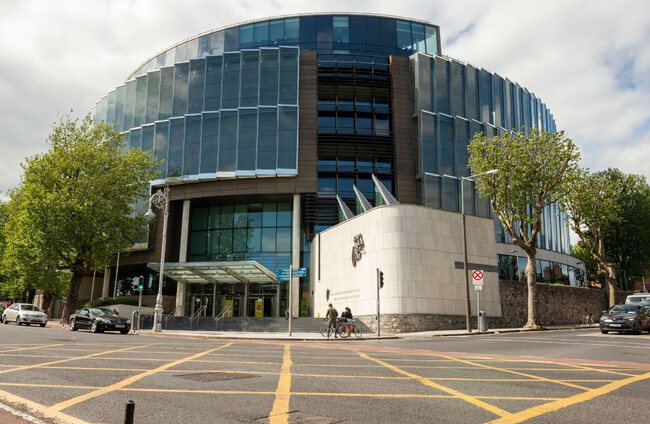
RIAD BOUCHAKER, WHO is charged with assaulting a care worker and attempting to murder three children on Parnell Square in Dublin, is fit to enter a plea and stand trial, a consultant forensic psychiatrist for the State has told a hearing at the Central Criminal Court.
The expert witness told Judge Tony Hunt today that despite the accused having a serious neurocognitive disorder, he is satisfied that Bouchaker can be accommodated at trial, where questions can be repeated, made simpler or closed questions put to him.
The prosecution psychiatrist said he is satisfied that the accused understands the serious offences he is charged with, appreciates the different pleas available to him and can make a proper defence.
The court is assessing whether Bouchaker (51), of no fixed abode, is fit to stand trial. The hearing was told before Christmas that there is “a divergence” between psychiatrists for the defence and State on that issue.
Last month, defence lawyers for the accused argued before the Central Criminal Court that their client is suffering from a mental disorder, namely moderate dementia, and is unfit to stand trial.
Karl Finnegan with Carol Doherty BL, prosecuting, previously said there was CCTV footage showing what appeared to be an attack on a line of children who were about to progress to their creche.
He said when the creche manager became aware of the alleged attack on the children, she had shouted and moved to protect them but suffered a stab wound.
Finnegan said four children had suffered stab wounds that day and one of them had life altering injuries. He said the scene was “one of chaos” at the time and emergency services were called.
On 18 December last, a consultant forensic psychiatrist for the defence said the accused man, who has a complex medical history, had suffered a brain injury “in the course of members of the public intervening” on the day of the alleged offence on 23 November.
She also said that the accused man had surgery for a benign brain tumour in 2021, while a bone flap was removed some few months later due to infection.
The defence expert witness said that, should the accused be deemed unfit to stand trial by the court, he would be reviewed on a six-month basis by the mental health criminal law review board.
However, a consultant forensic psychiatrist for the State today said they found that Bouchaker was fit to plead and to stand trial.
The expert witness said there was nothing in his evidence which should in any way diminish the gravity of the accused’s complex medical history, but that this was a different matter to the nature of entering a plea.
He said that while Bouchaker does have a serious brain injury which affects his attention and concentration, fitting the clinical features of the disorder, the accused may be kept “on target” and participate in the trial process, where appropriate levels are taken to use closed questions.
Hunt said it was his understanding that the evidence from the defence psychiatrist was that the accused was unfit to plead, as he was not able to weigh up choices.
The State psychiatrist said that, despite the accused having significant problems, he found Bouchaker was able to understand choices and was capable of weighing up what had happened that day.
The witness found the accused had a neurocognitive disorder, which has an effect on his ability to sustain attention and concentration.
The prosecution psychiatrist said that the accused understands the difference between a plea of guilty, not guilty and not guilty by reason of insanity.
He said Bouchaker seems willing to participate with his legal team and whilst he may have some difficulty following proceedings, he suggested that the court may be able to address this with an interpreter and by restricting questions to a closed format.
Finnegan put it to the witness that he and the defence psychiatrist had reached different conclusions regarding the accused’s fitness to stand trial. “Is there a specific reason why you have arrived at a different conclusion given the similarity of what you had to work with?” asked counsel.
The psychiatrist said that when he became aware of the accused’s brain injury, he had anticipated he would be in agreement with the defence psychiatrist. However, the witness said the accused had been very conversational in their interactions and he was also puzzled to see how well Bouchaker performed in other arenas.
Earlier under cross-examination today, the defence psychiatrist agreed with Finnegan that in her evidence Bouchaker had complained of difficulties with his memory function, which the witness felt was relevant to his capacity.
The witness said it was her opinion that the accused engaged in “confabulation” in all assessments and was filling in gaps in his memory. She said the accused would not be in a position to give evidence at trial or be cross-examined, which goes directly to his fitness to stand trial.
She said the accused was unable to focus on questions in their assessments and was not able to weigh up or appreciate the different choices or the different pleas available to him in court. She said he struggled to keep on topic, spoke about irrelevant issues and was unable to answer questions accurately.
Finnegan put it to the witness that while there might be “rambling” involved, the accused seemed to know exactly what he did that day and what happened.
The witness said the accused had confabulated pieces and it was very concerning for a patient not to know they have a right to plead guilty, not guilty or not guilty by reason of insanity. She said this was below the standard required for fitness to stand trial.
She said the confabulation identified was both clear evidence of a brain injury and that the accused would not be able to give evidence or be cross-examined in relation to events.
The witness said it was the extent of the neurocognitive disorder where the psychiatrist’s difference lay. She felt the accused had been suffering from mild dementia, but the further head injury met the criteria for moderate dementia.
She said the accused’s level of dysfunction would be beyond what an appointed intermediary would be able to help him through at trial.
In re-examination, the defence psychiatrist told the accused’s barrister that it was an extremely difficult, long and complex process to interview Bouchaker. She said that because of his extensive brain damage, the accused man was not a reliable historian and added in pieces of information.
A lawyer for Bouchaker previously said it was agreed between the parties that no one is canvassing for the defence of not guilty by reason of insanity.
Hunt adjourned the matter to tomorrow, when the State’s psychiatrist will continue giving evidence.
The judge has ordered that legal representatives for the accused and the identities of the doctors giving evidence are not to be named in media reports.
Bouchaker is charged with the attempted murder of two girls and one boy, as well as with assault causing serious harm to a care worker. He is also charged with three counts of assault causing harm to two other young children and a passerby, who had intervened to assist, as well as one count of the production of a knife.
The incident occurred at Parnell Square East on the afternoon of 23 November, 2023.
To embed this post, copy the code below on your site













have your say