Sign in. It’s quick, free and it’s up to you.
An account is an optional way to support the work we do. Find out more.
Sign in. It’s quick, free and it’s up to you.
An account is an optional way to support the work we do. Find out more.
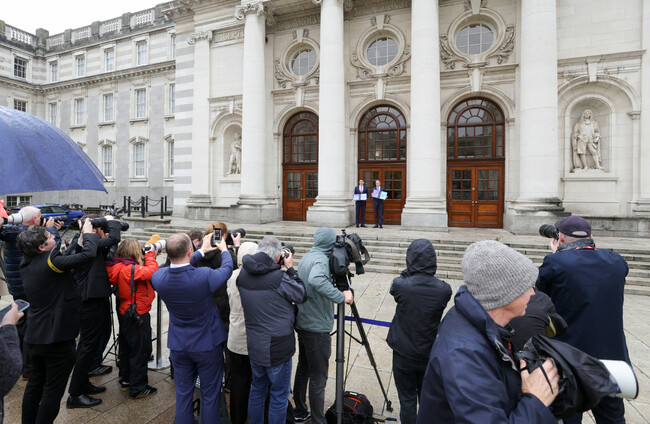

THANK GOD THAT’S over with.
Or at least almost over with. One or two more podcasts, a slew of Sunday newspaper coverage and the final rapprochement of the latest RTÉ funding schemozzle, and we’ll be done with the budget media circus for another year.
And what a dull circus it is. Apart from the more excitable political wonks, and the poor, overlooked Irish Fiscal Advisory Council, it feels like the budget is a political set piece for the political classes, by the political classes and because of the political classes. For everyone else it’s like transfer deadline day with no surprises, and where no team really gets what they need.
It also feels increasingly anachronistic. Ireland has one of the world’s most globalised economies, we’re awash with corporate tax receipts, we have (or should have) reliable demographic information to inform societal needs and capital allocation. And yet our national finances are still presented like Moses coming down from the mountain at the start of October with stone tablets onto which the finance bill has been carved. And an entire budget-industrial complex has evolved around this.
It starts months ahead of the budget with politicians and media engaging in a jamboree of kite-flying around potential initiatives. Sadly, the focus of most pre-budget reportage has become who’s going to get what.
Politicians get to road-test policies and initiatives and the media gets good content: there’s the potential for a bit of money back in our pockets, not to mention compelling characters – mean ministers and populist politicians.
The downside is that the media focuses on who will win and who will lose in the budget. There’s less interest in counter-cyclical fiscal policy and more interest in peddling initiatives that will benefit one group over another.
Another facet of the budget-industrial complex is that every organisation and lobby group is obliged to produce a pre-budget submission, and add to the noise by talking its own book. Accountancy firms, business groups, charities, landlords, renters, farmers, publicans, restaurateurs, developers and every organisation capable of opening a Microsoft Word doc submits its wishlist to political Santa.
Then the budget happens, with wall-to-wall media coverage for one or two days and some obligatory rituals like the Ministers for Finance and Public Expenditure appearing on radio talk shows. After that, the media and consultancy firms produce budget analysis. There are breakfast briefings. Taxpayers learn what the costly budget measures mean to them – which for most, isn’t much.
It’s a shame that the public discourse around the budget has become less about managing public finances and more of an annual giveaway that’s destined to disappoint.
The sad truth is that changes that cost the state a fortune, will make only a small difference to households, especially if the cost of living continues to rise.
Analysis of this year’s budget shows that a single person on the minimum wage will be better off to the tune of about €30 per week; a married couple earning €140,000 will have about €25 more a week.
Yes, every little helps, and the government should be lauded for helping those on minimum wage, the squeezed middle and all the other facets of society they’ve tried to accommodate. But when media coverage frames the budget as gifts from the government, rather than economic policy, it’s easy to lose sight of the bigger picture.
Good budgeting should be about managing the nation’s finances for the long term, not handing out annual treats.
That means matching permanent spending commitments with reliable tax revenues, rather than huge returns from multinational corporations.
It means keeping spending growth within what the economy can sustain, producing credible forecasts and holding departments accountable for overruns.
It means judging public investment by what it delivers, whether that’s homes built, hospital waiting lists reduced or better educational outcomes, rather than the size of the cheque announced.
Above all, it means planning decades ahead for an ageing population, infrastructure needs and future economic shocks, while saving enough during the good years to protect public services during the bad ones.
The measure of a successful budget shouldn’t be how many people get something in the first week of October, but whether the country is better equipped for the next 20 years.
It’s clear that these are concerns for the government and the civil service. But in media terms, long-term fiscal planning is a sorry subset of the overall narrative; well behind the winners and losers, the name-calling and the soundbites.
Ireland has ageing demographics, a housing shortage, infrastructure deficits, demands for increased defence spending, climate commitments and public services – and tax receipts of which a substantial portion is regarded by the government itself as potentially transient.
These are not €10-a-week questions. They are questions about what kind of state Ireland wants to operate in 10, 20 or 30 years. Yet the incentives for media and politicians tend to drag everything back to the eternal question: what’s in it for me?
Perhaps it is time to demote budget day. Ireland already operates medium-term expenditure plans and multiannual capital programmes. So maybe we should replace some of the annual circus with greater scrutiny of five-year spending plans, long-term liabilities and whether programmes actually work.
Give the Oireachtas more opportunities to examine expenditure throughout the year. The government could spend less time explaining what it’s spending this year, and more time explaining what we are getting for it.
It would undoubtedly be less exciting for the media and the political anoraks. But maybe that would be better for the rest of us.
Ireland has spent 30 years transforming itself into a modern economy while retaining a fiscal ritual from the age of evening newspapers. We no longer need the Minister for Finance to come down from the mountain once a year carrying the nation’s finances on two stone tablets. Maybe we need to make budgets dull again.
Steve Dempsey is a media and technology expert and commentator.
To embed this post, copy the code below on your site













have your say