Sign in. It’s quick, free and it’s up to you.
An account is an optional way to support the work we do. Find out more.
Sign in. It’s quick, free and it’s up to you.
An account is an optional way to support the work we do. Find out more.

AS AN ANAESTHESIOLOGIST and intensive care doctor for more than 25 years, I know how difficult it can be to get a vein. As part of any routine anaesthetic, putting a drip into a vein and making sure it is where it’s meant to be, is vital. It is the only way of ensuring that any medication needed will be effective.
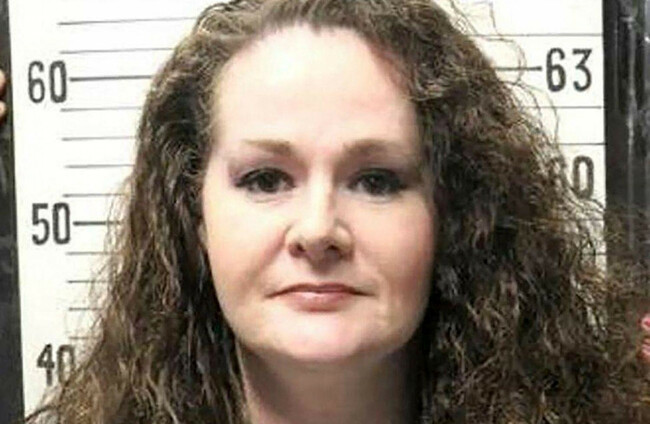
The botched attempt to end the life of Christa Pike in the US state of Tennessee points to medication not administered correctly to the convicted murderer. Media reports described her as being strapped to a trolley while querying why her arm felt strange. The attempt was abandoned after more than an hour, and the US state has paused further executions. She is now awake as the sedative medication has worn off.
Executions in the US are not a rare event. There has been an average of 25 each year since 2021, placing them firmly in the list of countries that continue to use the death penalty. More than 50 countries retain the death penalty in law, with some reserving it for specific circumstances such as the deliberate killing of a police officer. Countries where execution is carried out include China, Iran, Yemen and the US. No country in the EU allows the death penalty.
The administration of a lethal medication is chosen as the method of execution because it is considered by proponents of the penalty to be more humane than the electric chair, hanging or stoning to death. The drugs used are a mixture of agents commonly used by doctors and nurses trained to give anaesthesia.
The drug sodium pentothal is a barbiturate which renders a person unconscious. It may be given with a different drug to stop breathing and muscles moving, and a further medicine to stop the human heart from beating. We routinely use these kinds of medicines.
The essential difference between these medicines being used in an operating room compared with an execution is that no one steps in to support life after the drugs have been given. It is this step which ends the person’s life, and it is this deliberate denial of skilled assistance which creates the ethical problem for doctors and nurses. Preservation of life is our core objective in healthcare, unless a decision has been made to allow a natural death.
The use of these powerful drugs requires a trained provider. Medical professionals trained in giving these medicines know how to give them safely and reliably and can manage the consequences. When a patient receives a barbiturate or a medicine to stop breathing in the intensive care unit they are on life support and every heartbeat is monitored. The attempted execution in Tennessee suggests a lack of experience or training.
Doctors don’t generally participate in executions due to the obvious moral conflict. Our primary purpose is to preserve life, unless medical futility has been demonstrated. The World Medical Association states that is completely unethical for doctors to participate in capital punishment in any way. This includes preparing for executions, training executioners, monitoring vital signs, or certifying death.
The UN also explicitly states that it is a gross contravention of medical ethics for health personnel, particularly physicians, to engage in or facilitate any form of punishment or execution. Despite this guidance, it is possible that in some countries doctors do participate in capital punishment. If a country has decided to execute its citizens, the moral code has been abandoned.
The same powerful medicines can be used to end a person’s life in legally assisted dying. The key differences between both situations are ethical and legal. In assisted dying, lethal medication is prescribed for a person who wishes to end their lives and whose overall prognosis is limited and of poor quality. Some lethal medicines may be taken by a patient with or without medical supervision. A further important distinction is that the person has capacity to make the decision, and they give themselves the drug, either by mouth or by a pump connected to a drip in a vein.
There is no longer any ethical or legal dilemma in Ireland around capital punishment. The last execution was carried out in Mountjoy Prison more than 70 years ago. In tandem with a lack of public support for execution, there is an awareness that miscarriages of justice can occur in rare circumstances, making execution even more reprehensible.
Christa Pike has been on death row ever for three decades, awaiting her fate. The family of the woman that she killed have also lived with numerous appeals on Pike’s sentence.
Capital punishment is wrong even when smoothly carried out with medications. The cruelty of a bungled effort to execute Christa Pike ought not to distract us from the inherent immorality of execution itself.
Dr Suzanne Crowe, consultant in paediatric intensive care.
To embed this post, copy the code below on your site
















have your say