Sign in. It’s quick, free and it’s up to you.
An account is an optional way to support the work we do. Find out more.
Sign in. It’s quick, free and it’s up to you.
An account is an optional way to support the work we do. Find out more.

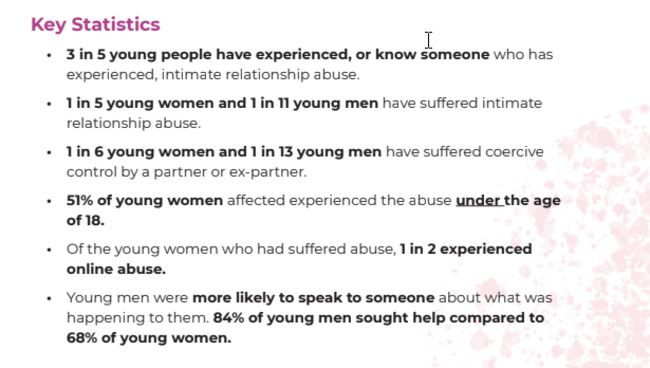
ONE IN FIVE WOMEN have experienced some form of abuse from a current or former partner with 51% under 18 when the abuse started, according to a recent survey.
A Women’s Aid report launching today on young people’s experience of intimate relationship abuse in Ireland highlights the “alarming levels” of intimate relationship abuse experienced by young women in the country.
The survey conducted by RedC, based on a sample of 500 18-25-year-olds, found that 60% of respondents had either personally experienced or know someone aged 25 or younger who has experienced abuse by a current or former partner.
The majority of young women who suffered abuse in relationships said that the experience had a “severe” impact on them.
Research also found that 1 in 2 young women abused by a partner experiences abuse online, including constant messaging, hacking of email and social media accounts and the taking, sharing and threatening to share intimate images without consent.
“We know that the abuse that takes place online can be particularly devastating given the ‘always on’ nature of life online. It is draining, can often feel inescapable and can be difficult to block a persistent abuser from making contact,” Sarah Benson, chief executive of Women’s Aid said.
It is not a reasonable solution to ask a young person being abused to ‘opt out’ or ‘switch off’. This only isolates people ever more mand they should never suffer or be further excluded because of the actions of the perpetrator.
Justice Minister Helen McEntee has said she hopes that legislation will be passed by the end of the year making image-based abuse illegal.
Under proposals approved by Cabinet yesterday, the distribution or publication of intimate images without consent and with intent to cause harm could carry a maximum penalty of an unlimited fine and/or seven years imprisonment.
When the practice is illegal, it puts an obligation on online platforms to remove such content, McEntee said, adding that there has been “a grey area” around that to date.
‘Responsibility lies with the perpetrator’
Benson said that today’s report only scratches the surface of this huge problem in Irish society.
“We need regulation, we need legislation, we need more in-depth research and extensive education and awareness campaigns – including in schools,” she said.
Most of all, as a community we need to ensure responsibility lies with the perpetrator and to say loudly and clearly to anyone affected by intimate relationship abuse that yes, it’s abuse; it is never okay; it is not your fault, and you will be believed and supported.
Women’s Aid also launched its awareness campaign today about safety orders for young women who are experiencing dating abuse.
The Too Into You campaign aims to inform young women about key danger signs of dating abuse and how to combat online stalking and digital abuse, as well as how to apply for an aforementioned order if needed.
Signs of dating abuse include when a partner tells you he hates your friends and that you spend too much time with them; he texts constantly and gets angry when you ignore him; he tells you how to dress; he makes you feel guilty for not spending all your free time with him; he has a bad temper, is physically or sexually violent or threatens you.
Laws brought at last year under the Domestic Violence Act 2018 mean women experiencing abuse in dating relationships can now apply for safety and protection orders to protect themselves from an abusive partner or former partner.
However, the organisation believes that regulation and legislation still lags badly behind the fast-paced digital world.
“Urgent measures are needed to prevent intimate relationship abuse occurring as well as
combatting the vast amount of misogyny and vitriol that women, in general, are subjected to every day online,” Benson said.
She called for the Harassment, Harmful Communications and Related Offences Bill 2017 to be urgently progressed and enacted to criminalise image-based sexual abuse and other forms of online harassment and stalking.
“We also believe that an Online Safety Commissioner should be established through the enactment of the Online Safety and Media Regulation Bill 2019 and accessible civil remedies be put in place for victims.”
Any woman who is afraid of her partner or husband can contact the 24-hour Women’s Aid national freephone helpline on 1800 341 900. Women who feel they are in immediate danger, can get support here.
Men experiencing domestic violence can contact Amen via 046 902 3718 or online.

To embed this post, copy the code below on your site















have your say