Sign in. It’s quick, free and it’s up to you.
An account is an optional way to support the work we do. Find out more.
Sign in. It’s quick, free and it’s up to you.
An account is an optional way to support the work we do. Find out more.

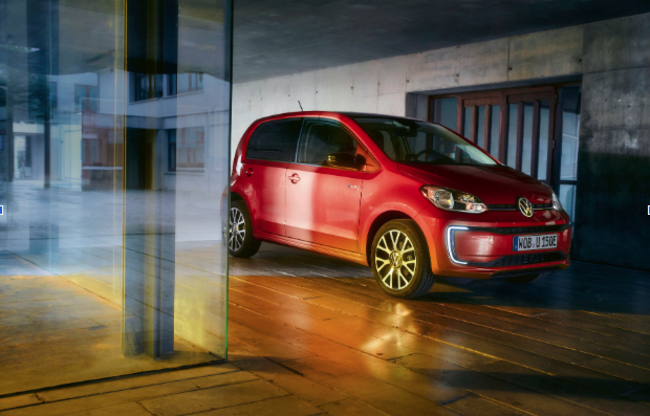
MY OWN ELECTRIC car is a 2023 Volkswagen eUp.
It is small, it is slow by modern standards, and if you ask it to do a round trip to Cork it will need a lie down halfway through. I love it anyway.
It cost me a fraction to run of what my previous diesel costs, and it has never once complained about Dublin traffic, and the only maintenance it has asked of me in years is a set of tyres, brake pads and wipers and a bit of patience with public chargers.
I have had it now for three years on a PCP, and it is set to go back next month.
It has never given me a moment’s trouble, and it does about 200km on a full charge, which is fine for where I live, spinning around East Cork.
I bring this up because I get asked, more than almost anything else, some version of the same question.
A friend, a cousin, a fella at a wedding who has had two pints and wants to talk about cars: should I buy a used electric car, and if I do, what do I need to watch out for?
It is a good question, and it is a more complicated one than it used to be.
There are now enough used EVs on Irish roads and on the used market, with about 6,800 on DoneDeal Cars at any given time, which is still relatively small, but there is a decent choice now, across enough years and battery generations, that “buying a used EV” is not one decision any more.
With a petrol or diesel car, the main thing you worry about is the engine and the clutch.
With an EV, it is the battery, and specifically how much of its original capacity is left. This is called degradation, and it is real, but it is also wildly overstated in the popular imagination.
Most modern EV batteries lose capacity slowly and predictably, often in the low single digit percentages per year, and many owners report barely noticing it over five or six years of ownership.
The trick is not to assume, but to check.
A basic diagnostic reading of battery state of health takes a few minutes and any competent EV specialist or a growing number of general garages can do it.
Ask for it before you hand over money, the same way you would ask for a timing belt history on an old diesel.
If a seller is cagey about it, that tells you something too. I have a portable unit from an Austrian company called Aviloo and my eUp after 36,000km and three years of use has 96% of its original battery capacity left, which isn’t bad at all.
Here is where it gets interesting for anyone on a budget.
Early Nissan Leafs, the ones with the smaller 24kWh battery from around 2014 and 2015, are turning up on DoneDeal Cars for well under four thousand euro, with some down near the three thousand mark.
Their range by modern standards is modest, and they have the older Chademo charging port which can be tricky on longer journeys, and that range is somewhere in the region of a hundred kilometres in real world driving, but for a second car, a short commute, or a run around town, that is plenty for a lot of households.
I’d only really recommend one of these if you charge at home and want something to nip to the school and shops for cheap motoring.
Move up a little in age and battery size, into 2020s cars with more useable 40kWh and 62kWh packs, and you are looking at proper everyday transport with ranges that will comfortably do a working week without seeing a charger, typically for somewhere between fourteen and twenty thousand euro depending on age and mileage.
I would be looking at three-year-old cars with under 70,000km, bearing in mind that most manufacturers offer battery warranties of about 160,000km, and three cars keep coming up, in my mind.
A 2023 Volkswagen ID.4 with the bigger 77kWh battery, WLTP range of around 520km, is comfortably available on DoneDeal Cars with under 70,000km on the clock for somewhere between €27,000 and €35,000, with plenty of choice around the €28,000 to €30,000 mark. These are now the most plentiful EV on the used market, so there is a ton of choice.
A same year Hyundai IONIQ 5 with its largest 77.6kWh battery, offering a similar real world range, is a scarcer find in this exact spec, and tends to land a little higher, generally between €28,000 and €30,000.
What is much more plentiful is the 58kWh battery version, which still has a real world range of around 300km, and you can expect to pay around €25,000 to €26,000 for decent versions of this.
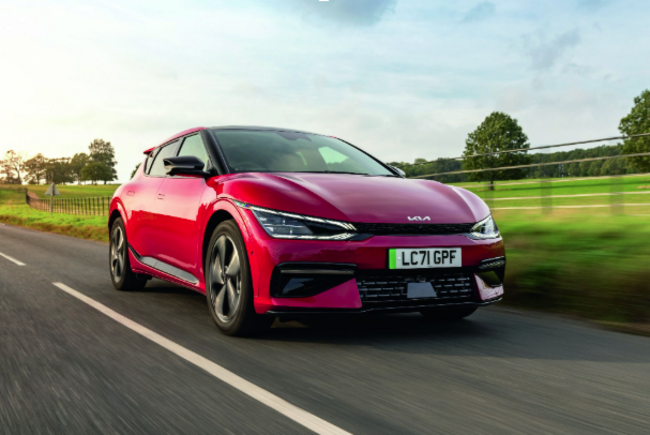
Another really good car to consider is the Kia EV6. These are holding their value very well in the used market and a 2023 model with around 70,000km will cost you closer to €30,000 but has a realistic real world range of 440km.
And you might not like the man who owns the company, but Tesla does make very good cars. A 2023 Model 3 with similar mileage can be picked up for around €28,000 currently and from talking to many technicians who work on them, they are one of the more reliable EVs.
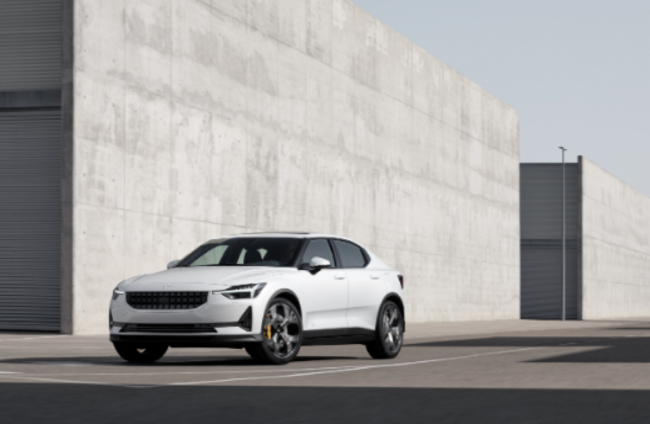
Step up to a 2023 Polestar 2 Long Range with its 78kWh pack, WLTP range around 490km, and you are looking at €28,000 to €36,000 for the single motor version, with most decent examples sitting around €30,000 to €32,000, climbing higher again if you want the extra shove of the dual motor Performance Pack.
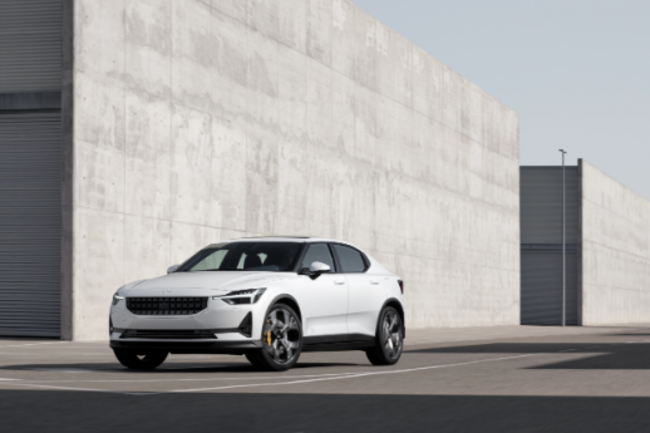
If I was buying a used EV right now, this is what I would buy.
They have a decent real world range of around 475km, have tons of equipment and drive really well. They aren’t that plentiful, but this is where I would be shopping, personally, if I wanted a good used EV.
Everyone gets very caught up about range, and you must remember that you will pay significantly more in most cases for the EVs with the larger batteries. A lot of new buyers, perhaps worried by range, opted for the larger battery models by default.
You can understand why they might do this, but they could have paid €4,000 to €5,000 more for the convenience of a little bit more range. Be honest with yourself in terms of what sort of driving you do.
If you are just going to work and back, and it is a 100km round trip, most people’s average is way less, then you may very well be fine with opting for the smaller and cheaper battery variant of any given model.
The SEAI grant that gets talked about so much applies to new electric vehicles, not used ones, so do not go looking for state money to help with a second-hand purchase.
What you get instead is depreciation working in your favour rather than against you. Someone else has already absorbed the steepest part of the value drop. That is not a consolation prize. That is the entire point of buying used.
If you can charge at home, ideally overnight on a cheap electricity plan, the running cost argument for a used EV becomes very hard to beat against an equivalent petrol car.
If you cannot, because you live in an apartment or park on the street, the calculation gets tighter and depends heavily on how reliable your local public charging is. If you depend on high-powered fast chargers then in many cases you could end up paying more than you would if you had a petrol or diesel car. Be honest with yourself about this before you buy, not after.
It is also worth being clear about what happens when an EV is not serviced properly, because it is a different list of worries to a diesel that has missed a few oil changes. The battery has its own cooling system, usually a sealed loop of coolant that keeps the pack in that sweet spot of roughly 20 to 35 degrees.
Most manufacturers say this coolant can last the life of the car under normal use, but if it does leak or degrade and nobody catches it, the consequence is not a warning light and a top up, it is a battery that runs hotter than it should on every charge and every hard pull, and heat is the single biggest enemy of long term battery health.
A pack that has spent years running warm will show up in a lower state of health reading than the mileage alone would suggest, which is exactly why that diagnostic check before you buy matters so much.
The other one that catches people out is brakes.
Regenerative braking does most of the work in an EV, which sounds like good news, and mostly it is, pads can last well beyond 100,000km.
But it means the physical brakes barely get exercised, so instead of wearing out, they can quietly rust and seize, especially on cars that spend a lot of time doing short trips in Irish weather.
A caliper that never gets a proper workout can bind, drag, or corrode, and you might not notice until an NCT tester does. If you are looking at a used EV, ask whether the brakes have ever had a proper inspection, not just a pad thickness check, because pad thickness on an EV tells you very little.
None of this is complicated once you strip away the anxiety that has built up around EVs generally.
Get the battery checked.
Understand your own charging situation.
Buy the range you actually need rather than the range you think you might need on some theoretical trip you will take twice a year.
And do not be talked out of an early Leaf or a Renault Zoe on the basis of vague stories you heard from someone who has never owned one.
My eUp will not be winning any drag races, and it will not be doing Dublin to Donegal without a stop. But it starts every morning, it costs next to nothing to run, and it has quietly become one of the better decisions I have made about a car.
Used electric motoring in Ireland has grown up. It might be worth a proper look.
Paddy Comyn is the head of automotive content and communications with DoneDeal Cars. He has been involved in the Irish motor industry for more than 25 years.
Journal Media Ltd has shareholders in common with DoneDeal Ltd
To embed this post, copy the code below on your site















have your say