Sign in. It’s quick, free and it’s up to you.
An account is an optional way to support the work we do. Find out more.
Sign in. It’s quick, free and it’s up to you.
An account is an optional way to support the work we do. Find out more.
LAST UPDATE | 29 Aug
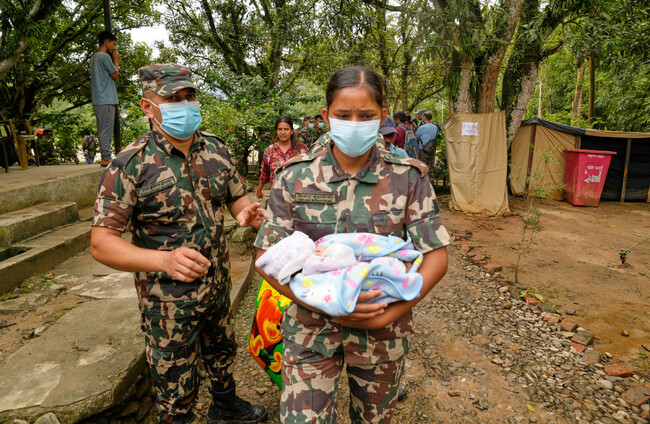
THE DEATH TOLL from the devastating floods in Nepal and Tibet has reached 682 people, as rescuers battle to locate thousands of people still missing days after a tsunami-like wall of water and debris swept through the regions, engulfing entire villages.
Nepal’s National Disaster Risk Reduction and Management Authority said today that at least 675 people had been killed the Himalayan nation.
Across the border in Tibet, which is largely inaccessible to foreign journalists, China’s Xinhua news agency reported that seven people died. This brings the total death toll to 682.
Some 554 people remain missing in Tibet while 2,426 are still unaccounted for in Nepal, including 517 foreigners.
नेपाल प्रहरी निरन्तर उद्धारमा !! pic.twitter.com/AZynmvD3v5
— Nepal Police (@NepalPoliceHQ) August 29, 2026
Two Irish citizens, 46-year-old Santosh Sahu and 18-year-old Spandan Sahu, are among the missing. They were named on a list of over 500 tourists who remain unaccounted for, which was published by Nepal’s department of tourism on Thursday.
A spokesperson for Ireland’s Department of Foreign Affairs told The Journal that it “continues to closely monitor the situation following serious flooding in Nepal and is providing consular assistance”.
“As with all consular cases, the Department does not comment on the detail of individual cases.”
The number of missing also includes 45 Nepali Army soldiers, 40 police officers, and 19 immigration and customs officers.
In India, authorities said they had recovered seven bodies from rivers flowing from Nepal, believed to be flood victims. However, they are not included in the toll.
In an area home to vast energy infrastructure projects, Nepal’s disaster authority said 933 workers on hydropower projects on the river where the torrent smashed down are also missing.
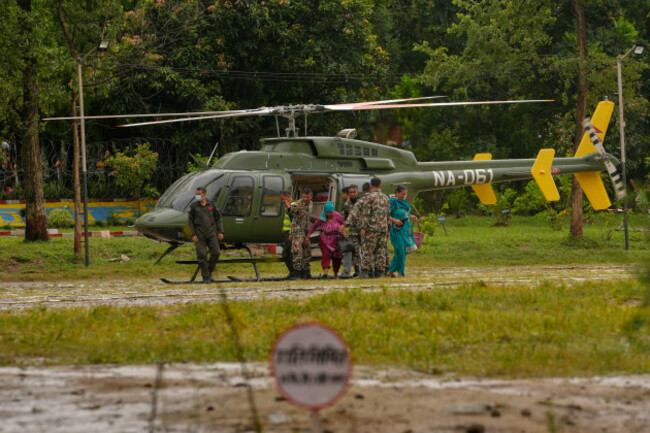
Army rescue teams are using drilling equipment in a race to rescue more than 100 people trapped inside the hydropower tunnels.
“The government has been continuing efforts… to rescue people trapped inside the tunnel of the Trishuli 3A Hydropower Project in Rasuwa,” the office of Nepal’s prime minister said in a statement.
“As part of these efforts, work to clear the tunnel entrance has been intensified since early Saturday morning.”
The agency said on Thursday that the army had already rescued 350 people under “extremely risky” conditions.
Initial reports suggested the 100 trapped were in a single location, but officials said that rescue efforts were also underway at other hydropower projects.
Minister of Energy Biraj Bhakta Shrestha said operations were also ongoing at the Trishuli 3B site “despite the adverse weather and extremely challenging circumstances”.
“Two helicopters have been dispatched, but it is challenging because it is tough to even locate the entry points of the tunnel,” army spokesman Raja Ram Basnet told AFP.
Rescue worker Kawan Koirala, from the Nepal Scout Disaster Response Team, said they were struggling in thick, leg-sucking mud.
“People want their family’s body back, either dead or alive, but we cannot find them… you can see the mud,” he told AFP, exhausted after an 18 hour shift.
“It is very traumatic for me too. It is my first time seeing these types of things. Everywhere is mud. We faced flood in Nepal before, but not like this.”
Survivors face an agonising wait to learn the fate of missing relatives, and the prospect of rebuilding their lives from nothing.
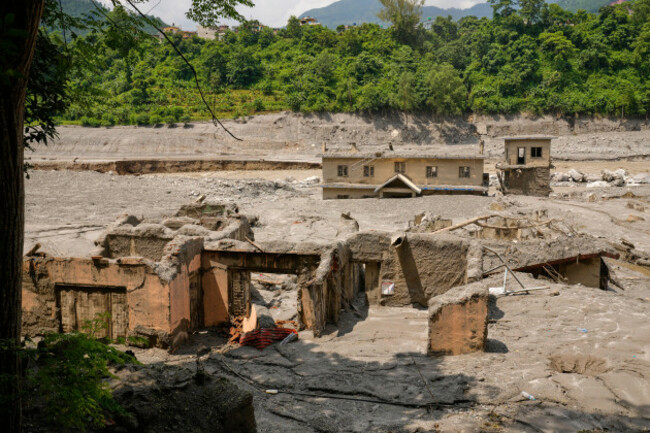
“All the settlements near the river were swept away,” Buddhi Ram Dangol told AFP in Nepal’s Nuwakot district. “There is nothing left.”
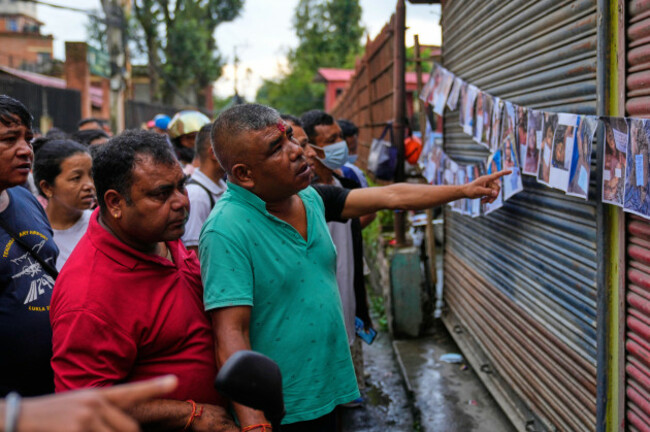
At Bidur’s army base, a key rescue hub in the same district, relatives crowded around lists of rescued people pasted on a wall.
“I have come here looking for my son,” said Kalka Sharda, scanning the list in desperation. “He was a labourer at the hydropower plant, but I can’t find his name, and the authorities are not saying anything.”
The trauma of the catastrophe has been “enormous”, and as many as 93,000 people may have been affected, the Red Cross said, with the death toll expected to rise.
Emergency teams had been racing to retrieve survivors from affected zones, where the widespread devastation meant food and water supplies were running out.
Compounding the search for the missing have been fears of further flooding in affected areas.
The deluge of ice and mud caused huge lakes to form, and one of these formations has become a direct threat to emergency workers scouring the region for survivors.
Nepal’s reconstruction bill after devastating floods could run into “billions of dollars”, Foreign Minister Shisir Khanal said today.
“The urgency is on rescue and saving lives as much as we can,” he added, appealing for specialised assistance, including heavy-lift drones and technology to help locate people who are trapped.
He also called for forensic testing kits to identify bodies and freezer units to store them, saying bodies which have been in water could decompose at a faster rate.
“Our own healthcare capacity is very limited to put these bodies in a frozen state for a long time,” he said.
Nepali police urged all rescuers to “immediately move to a safe location”, saying they had received information that “a water dam has burst again on the Tibetan side”.
In Tibet, where Chinese authorities are the only source of information, Beijing suspended its rescue operation at the hardest-hit area of Gyirong over the risk of renewed flooding, before saying the threat had eased.
State news agency Xinhua reported this morning that two villagers had been rescued in the area.
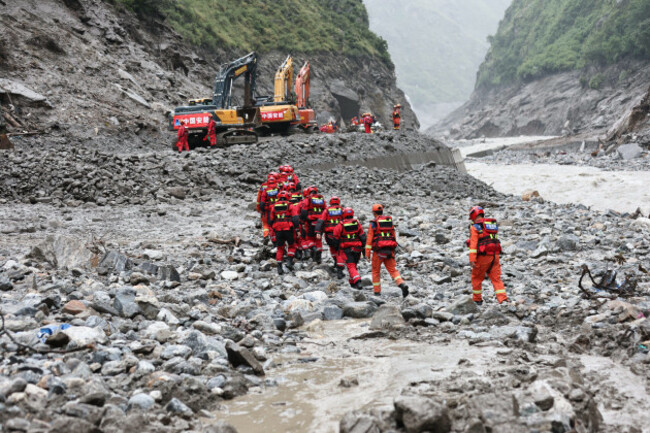
Authorities said they had evacuated 555 stranded tourists and 499 Chinese residents from Tibet.
In India, authorities said they had recovered seven bodies from rivers flowing from Nepal, believed to be flood victims.
Scores of Hindu devotees from across the world are among those missing on the border, as many were on a pilgrimage to Tibet’s Mount Kailash.
Sivaranjani Muthunathan was travelling by bus with 56 others towards the Chinese border when they became stuck in what they thought was a traffic jam.
“Then there was fog, smoke, something that seemed to suddenly engulf us,” Muthunathan, 46, told AFP on Friday, showing a phone video she recorded of a torrent surging towards her.
Around them, vehicles were swept away or buried under mud.
“One by one, we also climbed out through the driver’s side,” then scrambled up a hill, she said.
With reporting from © AFP 2026

To embed this post, copy the code below on your site














have your say