Sign in. It’s quick, free and it’s up to you.
An account is an optional way to support the work we do. Find out more.
Sign in. It’s quick, free and it’s up to you.
An account is an optional way to support the work we do. Find out more.
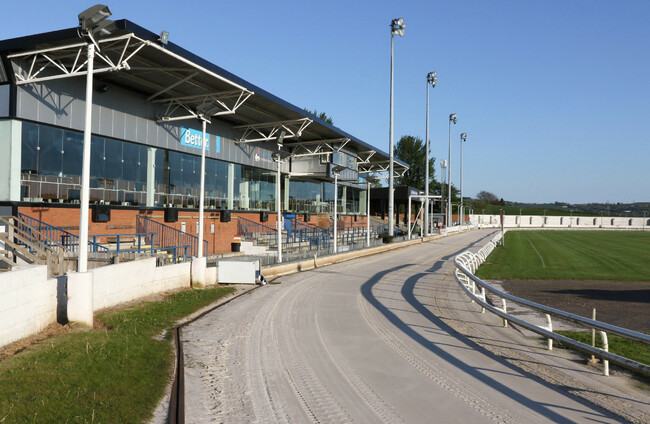
TWICE A WEEK last year at the Youghal greyhound track, an eerie ritual played out.
The stadium would open its doors for a race. Owners and trainers arrived to load the dogs into the starting traps.
The mechanical lure would whizz by and the greyhounds would tear after it, with plenty of money riding on the winners and losers.
But time and again, this entire event played out in a vacuum.
Besides owners and trainers, there was no one present to watch it. The stadium didn’t receive a single paying customer in 2025.
This is despite the fact that the government had recently just bailed out the stadium, with the facility receiving almost €763,000 in funding before that.
Greyhound Racing Ireland has said that the bi-weekly meets are held in the early evening at times “not conducive to attracting public attendance” due to a deal with a British broadcaster.
But the funding versus attendance figures at Youghal are just some of the many curious statistics around the Irish greyhound racing industry.
These numbers matter as the industry itself normally uses them as a measure of public interest in its sport. In turn, this is used to justify why the sector receives €20 million in taxpayer funding every year.
But there are questions over several of them. Let’s take a look.
Attendance
Following on from our look at Youghal, it’s worth considering attendance stats for the wider sector.
Earlier this year Greyhound Racing Ireland (GRI) published figures showing that 351,637 people attended races in Ireland in 2025. It said this “broadly maintained the 2024 level” and “reflects an ongoing strong interest in greyhound racing”.
It then used these figures to extol the virtues of the sport, which it said provides a crucial entertainment and event offering “for many across community, tourism and corporate sectors”.
The biggest piece of context here is that there has been a massive drop-off. Almost 1.4 million people attended greyhound racing in 2005, meaning that this figure has dropped by about 75% over the last two decades.
A report commissioned by GRI and published in 2021 optimistically forecast attendance levels of “630,000 by 2023”.
Instead, things have moved in the opposite direction – 379,000 attended in 2023, which dropped to 358,000 recorded in 2024, and then dipped again in 2025.
What’s more, even these figures may be somewhat flattering for the sector.
This is because officials count those involved in racing at tracks, such as owners and trainers. If the numbers involved were small, that would be one thing. But in recent years it has consistently been over 80,000. This means that non-paying attendees account for about 25% of all the people at the races.
While Youghal is the most dramatic example, the low and declining turnout means that many greyhound stadiums often record small gates during race events.
Animal welfare
One of the most controversial points, mainly because there are so many question marks. The main one being – how many dogs involved with the sector die per year?
In 2019, RTÉ reported that up to 6,000 greyhounds are killed annually for not being fast enough.
At the time the sector disputed the figures, which came from a confidential report prepared for the Irish Greyhound Board by an outside consulting firm.
The sector itself has said the level of greyhound euthanasia is “unknown”. But there are reasons to think that it is high.
About 200 dogs die at official tracks per year after suffering injuries such as heart failure and suspected broken necks.
But this accounts for just a very small portion of deaths. According to RTÉ, thousands more dogs are bred and euthanised every year.
GRI figures published for 2023 show that there were just over 45,000 registered greyhounds. It said that 2,633 dogs died, although it did not give a full breakdown on cause of death – ie, natural causes, euthanasia, or something else.
There are also concerns over the accuracy of the greyhound tracking system which officials introduced after the RTÉ documentary in 2019.
The Irish Examiner has raised multiple potential issues.
An example is how it recorded almost 2,000 dogs born in 2021 as ‘active’ older dogs over a six-week window, even though its own race management system showed that just 400 were actually involved in racing during the period. GRI has said it is “fully satisfied” with its traceability welfare system.
However, more recent figures raise further questions. About a quarter of the greyhounds born in 2021 and 2022 were dead five years later, despite the breed having a life expectancy of 10 to 14 years.
It all adds up to a picture where there are still major questions around animal welfare, with official figures perhaps not telling the full story.
Economic
Finally, there’s the business case for greyhound racing. We covered this in detail last week, so we’ll keep it brief.
At the heart of it, there are serious questions about how many jobs the Irish greyhound racing sector actually supports, with critics claiming that the sector far overstates its economic value.
It’s also worth noting that most of the figures which most people – the media, government and the sector itself – normally point to on this is the 2021 report. This is now five years old, and attendance in the sector has continued to fall since then.
A government-commissioned report published earlier this year also found that the industry is “very dependent” on state funding for prize money.
It is very possible that if the €20 million in government subsidies ended, so too would the Irish greyhound sector, at least as a commercial industry.
It is not a move which the government has said it is considering. But it is worth noting that this stance puts politicians at odds with the public, as 7 in 10 oppose the government funding given to the greyhound sector.
It also goes against the grain internationally, as Ireland is one of just three countries in the world in which commercial greyhound racing remains legal [four if some US states are counted].
While banning the activity entirely is one thing, the direct subsidy is another.
There are question marks around numerous key areas – public interest, animal welfare and value for taxpayer money. The decision to continuously hand over the State’s cash to the industry looks harder to justify by the day.

To embed this post, copy the code below on your site













have your say