Sign in. It’s quick, free and it’s up to you.
An account is an optional way to support the work we do. Find out more.
Sign in. It’s quick, free and it’s up to you.
An account is an optional way to support the work we do. Find out more.
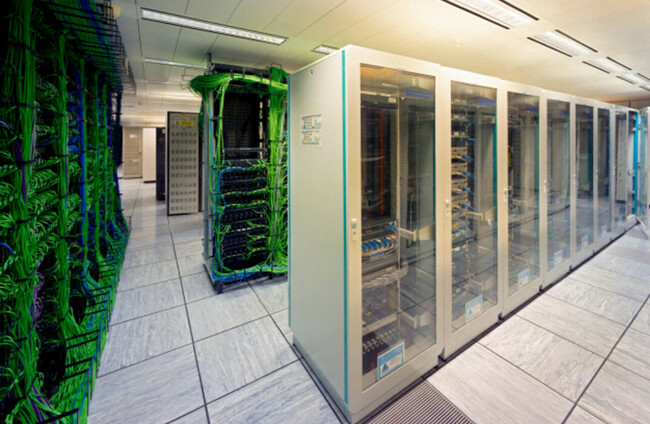
US POLITICIANS AND tech companies may be relieved to see Ireland become the base for data centre expansion, amid a growing backlash to the sector stateside, according to a former adviser to two US presidents.
Brad Setser, a fierce critic of arrangements that see Ireland netting huge profits from US companies here due to its low corporate tax rate, expects attempts by politicians over the coming years to get hold of the taxes that the US is currently missing.
However, one area where he does not expect this to happen in is data centres, which have faced increased pressure to their expansion attempts in the US this year.
“I suspect that if data centres are going to become hard to build in the US, a lot of the US tech companies will be quite happy to see them built in Ireland, and the US would prefer they’d be built in Ireland,” Setser told The Journal.
The Irish government’s Large Energy User Action Plan, published earlier this year, seeks to build more data centres across the country, particularly in regional locations where there is generation capacity.

Setser, who served in top trade roles in the Biden and Obama administrations, is a senior fellow at Washington-based think tank Council on Foreign Relations.
He is speaking in New Ross, Co Wexford this week as part of the annual Kennedy Summer School.
Almost two thirds (61%) of Americans now oppose construction of new data centres in their area, according to an Annenberg Public Policy Center survey last month.
This is up from 49% in March, but the opposition now crosses party lines – 69% of Democrats and 54% of Republicans oppose the works in their area.
The opposition is starting to bleed through to the political level too, as the Republican governor of Texas has joined moves by Democrats in New York and Pennsylvania to curb expansion.
Setser said the opposition is coming from a lack of community support, as more people increasingly view the facilities “with a bunch of computers inside and not many jobs” after their construction.
“The opposition in the US is much more tied to the pressure that data centres place on electricity, on bills,” he said.
“They push up costs without generating commensurate benefits to the local economy. Because, once the data centre is built, it is just a hulking structure with a bunch of computers inside and not many jobs.”
These pressures on local resources have also been cited by critics of data centres in Ireland.
Electricity demand has soared from 5% of national demand in 2015 to 22% in 2024 and water usage doubled during the intense heat seen this summer.
Recent research by Friends of the Earth and Beyond Fossil Fuels has found that the pressure from data centres on energy prices meant Irish households paid an average of €263 more per household.
Earlier this year, a government-commissioned report found that construction and operation of data centres collectively accounted for 19,500 jobs and €280 million in employment-related-tax during 2024.
Green Party leader Roderic O’Gorman said that Setser’s comments highlighted the risks for Ireland if opposition in the US sees it back down from expansion of data centres.
He told The Journal that he believes there have been attempts to “white wash” the impact of data centres.
“Politicians across the United States are now learning the lesson that the Green Party and others have been telling the Irish Government – that they need to be upfront with the public about the trade-offs that opening large numbers of data centres involves,” the Dublin West TD said.
Yes, data centres are an important part of modern economies, but there are real problems created by the fact that right now in Ireland, 23% of our total electricity generated is swallowed up by them. This creates higher prices for ordinary consumers… It also means less electricity connections available for new housing.”
O’Gorman added the Green Party wants a pause on opening new data centres until our “overall energy system has grown sufficiently” to meet the wider needs of the Irish economy.

To embed this post, copy the code below on your site













have your say