Sign in. It’s quick, free and it’s up to you.
An account is an optional way to support the work we do. Find out more.
Sign in. It’s quick, free and it’s up to you.
An account is an optional way to support the work we do. Find out more.
MORE THAN 350 Irish people and their dependents have had to leave Sudan as the ongoing war has become chaotic, with more than 9,000 people dead so far in the conflict.
One security expert for an Irish aid agency has warned that violence against women and tribal attacks are now taking place at a greater scale than they were, particularly in the west of the country.
Paul Westbury, who is based in Africa and is working on Sudan for GOAL, said it has become significantly difficult for aid agencies to move around the country as road networks have become unsafe and critical infrastructure has collapsed.
“Road access is becoming more and more difficult, because there’s more activity by criminal gangs,” he said. ”They are not necessarily aligned to anybody and are attacking people.”
He described tensions between different tribes coming to a boiling point, with people going through one area controlled by a tribe being attacked if they come from a different tribe.
The world woke to news footage and reports of airstrikes and large scale combat on the streets of the Sudanese capital of Khartoum on 15 April last year.
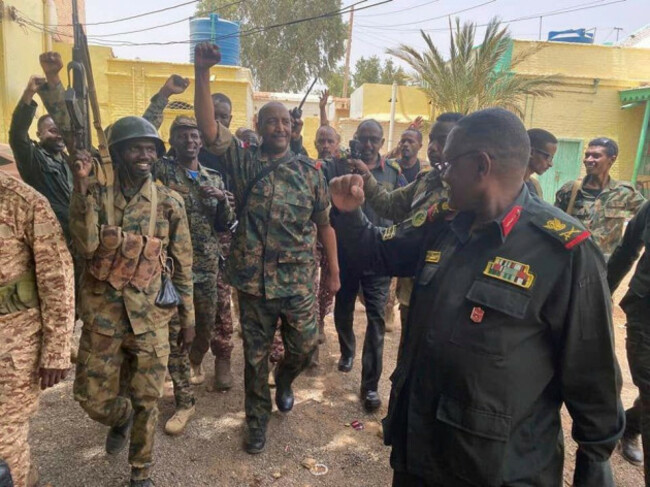
The factions involved are the Sudan Armed Forces (SAF) and the Rapid Support Forces (RSF). The RSF are a militia style organisation which has its origins in the Janjaweed – a notorious group involved in ethnic violence in the Sudanese region of Darfur.
The catalyst for the outbreak of fighting was tension between SAF leader General Abdelfattah al-Burhan and RSF leader Mohamed Hamdan Dagalo – known as Hemedti - over a decision by Sudan to have the RSF subsumed into the SAF.
Both men had jointly carried out a coup against a transitional government in October 2021 and have a long history of using military violence to solve problems.
What followed the outbreak of fighting was an international humanitarian and rescue mission to extract citizens from the country. Ireland dispatched a Department of Foreign Affairs (DFA) team accompanied by the elite Army Ranger Wing to rescue Irish citizens.
The Department confirmed to The Journal this week that more than 350 Irish citizens and their dependents have been assisted with leaving Sudan since the conflict began.
Westbury works as GOAL’s security advisor based in the region and is in daily contact with aid workers inside the country.
GOAL’s model involves employing local people in Sudan to carry out their operations and Westbury said their workers are finding it difficult, like the rest of the population, to find food and water. He said they are also finding it difficult to travel due to the risk of violence across the country.
Westbury told The Journal that reports that RSF have taken the great majority of the east African state do not mean that the violence has eased – if anything it has made it more chaotic.
There are also reports, Westbury said, that criminals have begun to operate in the country stealing aid and attacking the population.
One key issue he added was the fact that there is now a sense across Sudan that the international community has abandoned them while distracted by other conflicts.
“There is comment now coming in, particularly on the local social media groups, asking ‘is the world thinking about us – does it remember that Sudan is going through a war?’
“There were instances over the Christmas period where people were aligning themselves with Palestine on social media and saying they support their Palestinian brothers but Sudan is suffering as well.”
“So there is a bit of asking what is the international community doing to help,” he said.
The latest figures from the United Nations put the death toll since the fighting began was that 9,000 people.
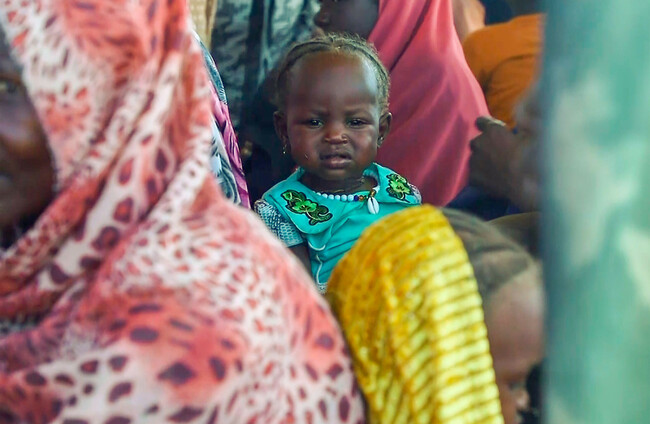
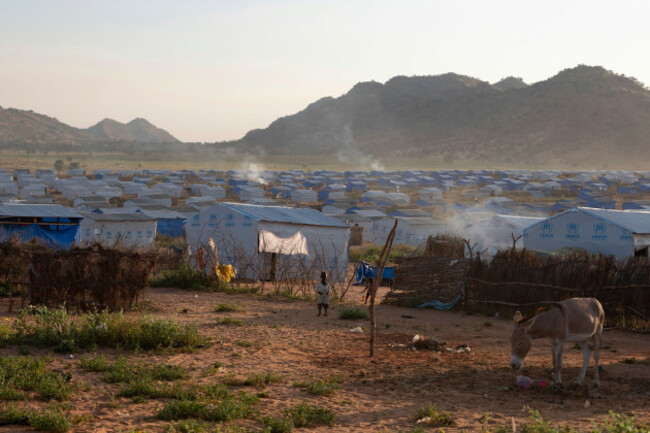
The UN states that more than 7.3 million people have fled their homes, taking refuge inside and outside the country, with children representing about half of the people displaced.
“Sudan is now the country with the largest number of displaced people and the largest child displacement crisis in the world,” the most recent UN report says.
“The total number of people displaced within Sudan has increased by an estimated 500,000 people in one month, mainly due to people newly displaced from Wad Medani and surrounding areas in Aj Jazirah State who sought safety and shelter in other states since 15 December 2023.”
Westbury said that there is also a substantial problem of looting of aid – GOAL workers have reported to him that their homes have been raided. There are also reports from the people receiving the aid, known as beneficiaries, that the same issue is happening to them.
The GOAL security advisor said that a serious problem is brewing with ethnic and tribal violence as the war destabilises the country.
“The ethnic issue is starting to become more apparent where we’ve got different tribes,” said Westbury. “Not just between Arab and African tribes but down to individual tribe disputes - we are seeing tensions festering underneath.
“We are seeing that people passing through an area controlled by a tribe are being attacked if they come from a different tribe,” he said.
Hospitals have also begun to attract attention from heavily armed criminal gangs.
“Critical infrastructure [such as] hospitals have become targets,” he added.
Grace Duffy, GOAL’s Gender Equality and Social Inclusion Advisor has also warned that there is an increase in gender-based violence (GBV) in the country.
“Amid the Sudan conflict, various forms of gender-based violence (GBV) are on the rise, affecting not only intimate partner relationships but also escalating instances of sexual and domestic violence.
“Vulnerable groups like older women, adolescent girls, individuals with disabilities, and men and boys facing increased risks due to displacement, loss of income, and limited access to basic services,” she said.
Dufy said the impact extends beyond immediate concerns, with under-reported cases contributing to lasting physical, mental, and sexual health issues.
“An estimated 4.2 million people require GBV-related support, with a concerning one million increase since 2023,” she added.
Duffy said GOAL’s Sudan team are identifying cases and supporting victims by mapping available services.
Westbury said that despite all the challenges GOAL has increased its workload in the country.
“The people reached has gone up. In the circumstances they [the GOAL team] are pushing harder with less people, because obviously some people moved out of the country for their own safety,” he added.

To embed this post, copy the code below on your site












have your say