Sign in. It’s quick, free and it’s up to you.
An account is an optional way to support the work we do. Find out more.
Sign in. It’s quick, free and it’s up to you.
An account is an optional way to support the work we do. Find out more.

NEED TO CATCH up? The Journal brings you a round-up of today’s news.
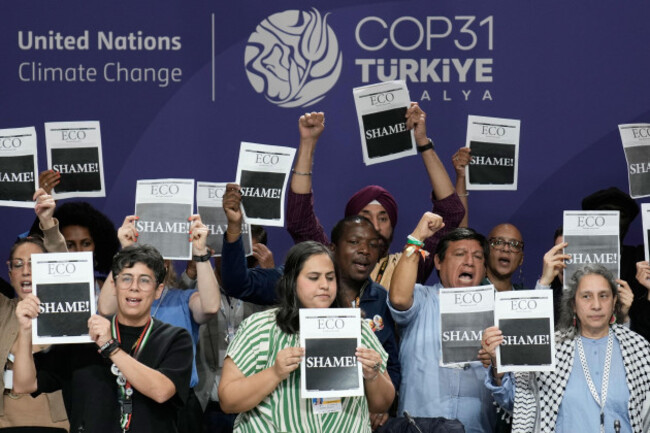
#COP31 A fight over fossil fuels has threatened to derail UN climate talks as nations push back against a proposed agreement that scraps any mention of planet-heating coal, oil and gas.
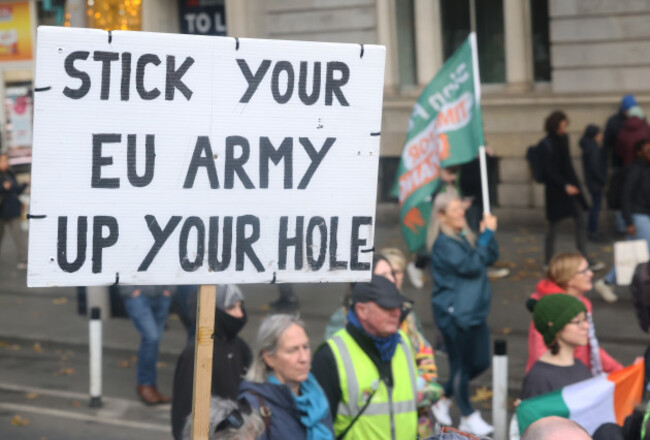
#TAKE ME BACK The potential for the UK to rejoin the European Union will be on the table as Andy Burnham begins informal talks with Brussels, UK foreign secretary Ed Miliband said.
#CARTEL CAPTURE Mexico captured the leader of a drug-trafficking group on the FBI’s list of 10 most wanted fugitives, whose group is responsible for importing “large quantities of heroin, methamphetamine, cocaine, fentanyl, and marijuana into the United States.”
#BIG TECH TAX The EU put forward plans to tax the world’s biggest digital companies to fund its next budget. The draft proposes taxing companies with an annual turnover for digital activities of at least €50 million in the EU as well as a global turnover of more than €750 million.
#ANTHROPIC Renowned mathematicians have shared their upset and unease after a researcher at an AI company said he had used a chatbot to prove an elusive maths problem – the Riemann Hypothesis.
I have just completed a three-day swim through the Strait of Hormuz to draw attention to the devastating environmental consequences of war. Just 30 minutes after I began swimming, an oil tanker was struck a few kilometres away. The explosions rocked the sea around me. Over the following days, I witnessed further attacks on commercial shipping and saw vessels engulfed in flames. War causes immense human suffering. Lives are lost, families are torn apart, and homes are destroyed. But there is another casualty that receives far too little attention: nature itself. The Strait of Hormuz is one of the most beautiful places I have ever visited. Towering mountains rise above spectacular fjords. There are coral reefs and mangrove forests, and waters home to dolphins, sea turtles and dugongs. It is one of the great natural wonders of the world. Yet this extraordinary place is now caught in the middle of a war. Oil tankers, gas carriers and other merchant ships are being attacked. The environmental consequences will last for decades. My message is simple: Stop the fighting. Open the Strait. Clean up the pollution. Please help share this message. #HormuzSwim
— Lewis Pugh (@LewisPugh) November 21, 2026
A British swimmer who swam in the Strait of Hormuz to highlight the environmental consequences of war said that vessels were “engulfed in flames” as he completed the swim.
“Just 30 minutes after I began swimming, an oil tanker was struck a few kilometres away. The explosions rocked the sea around me,” Pugh wrote in a post on X.
“Over the following days, I witnessed further attacks on commercial shipping and saw vessels engulfed in flames.”
Pugh swam a total of 15km in the body of water to raise awareness about the environmental consequences of the war.

To embed this post, copy the code below on your site














have your say