Sign in. It’s quick, free and it’s up to you.
An account is an optional way to support the work we do. Find out more.
Sign in. It’s quick, free and it’s up to you.
An account is an optional way to support the work we do. Find out more.
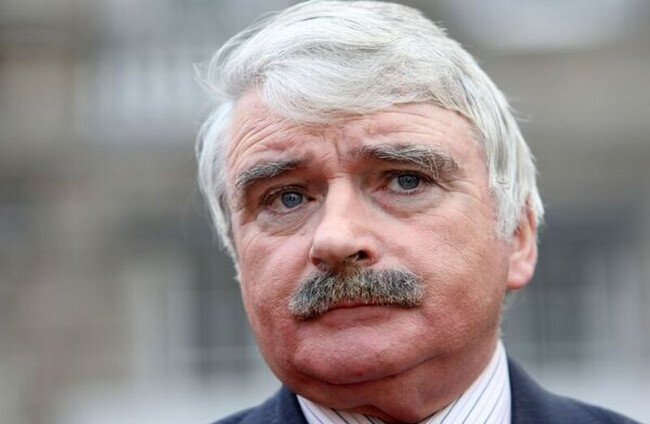
FIANNA FÁIL’S WILLIE O’Dea isn’t one to mince his words or to hold them back, for that matter.
After his party leader Micheál Martin announced that he was doing a U-turn in 2023 on his position when it comes to the triple lock, in the following years, the veteran Limerick TD didn’t shy away from his views.
Writing in a newspaper column in the Sunday Independent earlier this year, O’Dea said that people tell him they can no longer tell the difference between Fianna Fáil and Fine Gael.
“They are not being cynical. They are telling us that we have failed to explain who we are. Failed to stand up for ourselves and our values,” he said.
He went on to argue that a more open, cross-party discussion on “reforming the triple lock, not scrapping it” should take place.
“Abandoning our support for the United Nations is a Fine Gael doctrine, not a Fianna Fáil one,” he wrote in April.
Such words are not surprising. O’Dea was never a fan of Fianna Fáil going into coalition with Fine Gael.
O’Dea, who has been decades in politics, is well respected in the party, so when he does speak out, backbench TDs listen.
So when O’Dea, who is a former defence minister, decided to circulate a proposed amendment to the Defence (Amendment) Bill to his Fianna Fáil colleagues on Tuesday, it is no surprise to see that a number of his party colleagues have decided to co-sign the proposal.
The legislation to remove the triple lock, has dominated much of the debate in the Dáil this week, with the opposition accusing the government of endangering Ireland’s neutrality.
Meanwhile, the Tánaiste said the triple lock is broken, telling the Dáil on Thursday that the change is about taking back sovereignty.
The “triple lock” is a mechanism that sets out the conditions under which more than 12 Irish troops may participate in overseas peace support operations.
For troops to take part, the operation must be mandated by the United Nations; it must be approved by the government; and it must be approved by Dáil Éireann by means of a resolution.
The government is seeking to remove that mechanism through new legislation that is making its way through the Houses of the Oireachtas.
O’Dea’s amendment, which is one of over 90 that have been submitted, seeks to require the government to get a UN General Assembly resolution to allow the deployment of troops.
The amendment is co-signed by TDs Pádraig O’Sullivan, Aindrias Moynihan, Pat ‘The Cope’ Gallagher, Sean Ó Fearghail, Tom Brabazon, Cathal Crowe, John McGuinness, John Connolly and Michael Cahill.
The issue was the hot topic of discussion at this week’s Fianna Fáil parliamentary party meeting.
It is understood TD Pat the Cope Gallagher said at the meeting that the triple lock is a core value of Fianna Fáil.
The party discussion was not described as heated, but party sources said that a number of TDs said the issue was being raised by constituents with some saying they were concerned about the plan to scrap the triple lock.
Generally when things are coming up in the door it is something that piques the attention of backbenchers. They’re the ones on the ground, and who get it in the neck, when party HQ mess up or take the party in an unwanted direction.
So does it spell trouble for the Fianna Fáil party and namely, the party leader?
Social Democrats TD Sinéad Gibney said the amendment, backed by a number of Fianna Fáilers, highlights a growing unease within the government party over plans to abolish triple lock.
She’s not wrong, but it’s probably not a fatal blow.
Gibney appealed to TDs “from all sides of the Dáil to stand up for their constituents – and Ireland’s neutrality – and reject this Bill”.
That is where the real danger lies for Fianna Fáil, and the government – losing someone overboard in the vote.
What about a free vote? Is that an option for the dissenting TDs?
Absolutely not, according to Tánaiste Simon Harris.
He told reporters in Meath on Friday that just like his own party TDs, Fianna Fáilers signed up to the programme for government.
“Every Fine Gael and every Fianna Fáil TD and independent that support the government ratified the programme for government, as did our members…. this idea didn’t fall from the sky. It’s not a new idea,” he said.
Asked if she was concerned the dissent in Fianna Fáil could jeopardise the passing of the legislation, Foreign Affairs Minister Helen McEntee said she plans to have the legislation passed by the end of the year.
So, it falls back on the Fianna Fáil leader to make sure his house is in order.
It is understood that the Taoiseach has not spoken to O’Dea directly about his amendment, but the issue was discussed among the wider members at the parliamentary party meeting on Tuesday.
Minister of State Thomas Byrne is also believed to have been in touch with O’Dea and other TDs about the proposed amendment, in a bid to ensure the group row in behind the government.
But there have been strong indications that some form of the amendment wording could make its way into the legislation, with Martin stating:
I think this is something we can work on at committee stage to ensure the essence of that idea, which we don’t have a fundamental problem with, can be absorbed.
People Before Profit has said if the government does not support the amendment, that will expose the reality of the government’s plans to scrap the triple lock and show it was never about the UN Security Council veto.
But aside from the nuts and bolts of the legislation, the bigger picture, for O’Dea at least, is the damage he thinks it will inflict on the party.
That will take longer to come out in the wash.
If Gallagher and O’Dea are correct, and the triple lock is core to what the Fianna Fáil party believes, then the backlash could cause problems.
The Oireachtas defence committee will begin its debate on the amendments at the end of November.
The committee chair Sinn Féin’s Rose Conway-Walsh has indicated that she wants to give ample time to scrutinise the bill, however, the government appears to have a hard deadline of getting the legislation passed by the end of the year.
The next possible obstacle for the government will be when the legislation makes its way to President Catherine Connolly.
She is on record as saying she believes the triple lock is core to Ireland’s neutrality.
During the election campaign, when asked how she would deal with the legislation when it lands on her desk, Connolly said she would look at every piece of legislation that comes before her to see is it in compliance with the Constitution.
She went on to state she could convene the Council of State and ask it examine the constitutionality of the government’s legislation, adding that the option would also be there for the president to refer the matter to the Supreme Court for their decision, such are the powers of the Irish president.
Martin may be confident that he has the numbers to get the legislation through, but O’Dea’s intervention has reopened questions about what’s at the core of Fianna Fáil’s identity and its relationship with Fine Gael.
Unease within Fianna Fáil ranks is unlikely to disappear with the final vote. But this legislation has a few more hurdles to overcome after that point too.

To embed this post, copy the code below on your site














have your say