Sign in. It’s quick, free and it’s up to you.
An account is an optional way to support the work we do. Find out more.
Sign in. It’s quick, free and it’s up to you.
An account is an optional way to support the work we do. Find out more.
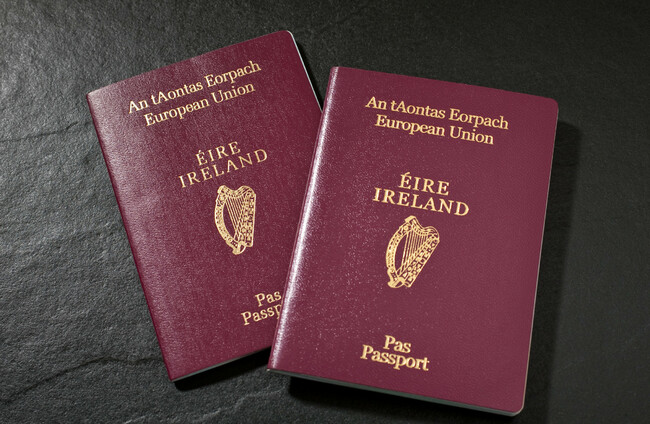
TWO MOTHERS FROM separate same-sex families have won their High Court cases against the State after it refused to recognise the women as the parents of their respective children.
Both mothers, who are recognised as the parents to their children in Australia and Spain respectively, had sought Irish citizenship for their children only to be told that the state did not recognise them as a parent in Ireland.
In what is likely to be a significant development in relation to the rights of Irish same-sex parents and their children, Ms Justice Siobhán Phelan last Friday said the state’s “failure” to recognise the two mothers resulted in the “unequal treatment” of children and stressed the need for legislation to be put in place to prevent similar cases arising.
The case arose after one of the mothers, Ms X, and her Australian wife had their application for Irish passports on behalf of their two children rejected in 2021 by the Department of Foreign Affairs.
Ms X, who is an Irish citizen, and her wife live in Australia with their two sons. Their sons’ Irish passport applications were rejected in 2021 after the department refused to recognise Ms X as a parent of her sons, despite the fact that she was named as their mother on both birth certificates.
Children born outside of Ireland are automatically Irish citizens if either one of their parents was an Irish citizen and was born on the island of Ireland.
Another Irish citizen, Ms Y, and her British wife live in Spain with their two sons. Their first son was granted an Irish passport in 2019 following the completion of an affidavit averring parental rights of their child, over three years after first applying.
Their youngest son, however, was denied a passport in 2022 as the department also refused to recognise the Irish mother as her son’s parent. This decision also created difficulty regarding the child’s European citizenship following Brexit.
In both cases, the department said it could not recognise the mothers as a parent of their children under Irish law.
The department said that a “mother”, under the Irish Nationality and Citizenship Act 1956, is understood to be the person who gave birth to or was the female adopter of the child, the mothers claimed.
All of the children in this case were conceived through in vitro fertilization (IVF) methods, using sperm donors, and Ms X’s wife and Ms Y’s wife had given birth to them.
Both women sought a joint judicial review of the department’s decision, following their rejections.
Conor Power, SC, and William McLoughlin, JC, of Gibson & Associates LLP on behalf of the women, argued that changes to the law in 2001 – which removed the words “mother” and “father” in sections relating to citizenship rights and replaced them with “either parent” – allowed them to request passports on behalf of their children.
The solicitors also argued that the mothers were legally a parent of their children in Spain and Australia, respectively, and that the state had to follow the valid birth certificates of the children.
The state maintained its decision that the definition of mother in the 1956 Act excluded both of the women from being, legally, viewed as a parent in Ireland and therefore their sons could not become Irish citizens.
Ms Justice Siobhán Phelan on Friday ruled in favour of the mothers who had taken cases against the State, which also named the Minister for Foreign Affairs and the Attorney General as respondents on the case.
Judge Phelan said she was satisfied that the Minister had “erred” in his interpretation of Section 7 of the 1956 Act. She granted both mothers declaratory relief in the case, meaning they will be recognised as parents to their children but will not receive any compensation for the case.
She added that the lack of a legislative pathway to allow the children of Irish citizens living abroad, who are recognised as a parent in their country of residence, results in the “unequal treatment” of a child.
Judge Phelan said the lack of progress also reflected a “failure on the part of the State to vindicate constitutional rights” of children to citizenship and that the Oireachtas, in its exclusive role to legislate, would have to remedy this situation through Irish law.
The judge said that future passport applications should recognise “the real life, personal and familial relationship” of the Irish citizen to the children they are applying on behalf of.

To embed this post, copy the code below on your site















have your say