Sign in. It’s quick, free and it’s up to you.
An account is an optional way to support the work we do. Find out more.
Sign in. It’s quick, free and it’s up to you.
An account is an optional way to support the work we do. Find out more.
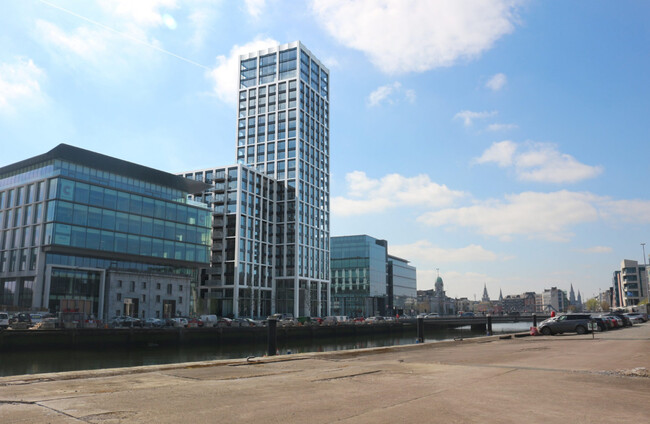
FOR A BRIEF period next year, the tallest residential building in the country will be in Cork.
The slender 25-storey Railyard development will provide 217 flats across the block at Albert Quay, a short walk across the River Lee from South Mall and the city’s busy Oliver Plunkett Street.
It opens in a year’s time and will be run by Cluid, the Approved Housing Body (AHB) and housing charity that has been providing social and public housing in partnership with local councils and builders for the past three decades.
The landmark property will tower over the city and other housing developments elsewhere, before it loses its lofty spot to the Land Development Agency’s 30-storey Parkgate Pointe near Heuston Station in 2028.
Some 99 of the flats are for social housing for Cork City Council tenants. On the lower floors, 22 of these social homes will be classed as age-friendly for older tenants, while the bulk of the apartments are Cost Rental accommodation.
Cost Rental is a relatively new type of housing that aims to provide secure accommodation for people who earn too much to qualify for social housing – in this case net annual income of €59,000 or less – but who are shut out by rising house prices.
Monthly rents in The Railyard are expected to range from €1,425 to €1,575 for one-bedroom apartments and be about €1,725 for two-beds – a significant chunk of change cheaper than the €1,900 tenants could expect to pay in Cork according to the Residential Tenancies Board.
Cost Rental prices are set at 25% below the local market rate, although Cluid says The Railyard’s rents are about 29% below due to Cork’s higher cost of renting.

Eibhlin O’Connor, Cluid’s chief commercial director, told The Journal that the high-rise development is the biggest project the charity has taken on.
However, she also doesn’t believe a similar project is currently near as feasible because of the wider turmoil in the global economy over the past two years.
“If we were going now for tender it wouldn’t be viable,” O’Connor said. While O’Connor declined to say how much The Railyard has cost, she said it was “good value for money” when works began two years ago.
“We certainly wouldn’t be able to deliver it,” she said, adding that inflation, uncertainty and interest rate hikes all add to the problems facing construction.
There has been a lot of handwringing and debate over the role of apartments and how to build them as part of Ireland’s response to the housing crisis, with the government trying to lessen regulations to soften complaints from developers.
But complaints persist from private builders, and O’Connor said this is all the more so when the wider plan is to try and take advantage of expensive prime city centre locations and building a higher density of homes on the one site.
“Apartments are more expensive just because you’re in a higher density and Railyard is on the river at an inner city site, so the land cost would have been more expensive,” she said.
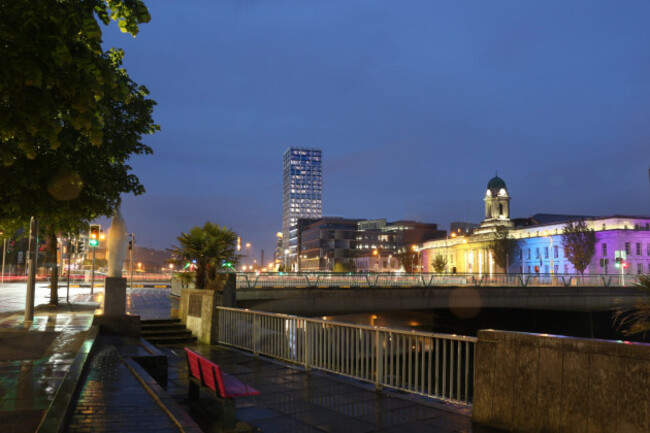
One saving has been to avoid a costly underground car park, with the tradeoff naturally being that any residents with a car will need to find spaces elsewhere. Cluid hopes that The Railyard’s 315 bike spaces and its central location will help.
Because Cluid is contracted to oversee the building and tenants for the next 50 years at least, it has been “spending that bit more upfront” on higher-quality materials.
“That limits the cost down the line and it also limits the disruption for the residents,” O’Connor said.
Previously, O’Connor said, there was a belief that Cost Rental was an “almost transitional housing” where people would use the discounted rents to save a deposit to buy a home.
Cluid could then recycle the home for another tenant.
That was the initial thought I think behind Cost Rental, but the culture is changing a little bit and people are more willing to rent longer-term, and we want to provide a home for life.
There is another prong to this, as Cluid is also relying on the rents from Cost Rental tenants to “help us pay back our debts on on taking out the loan to facilitate the construction in the first place”.
This all means The Railyard is not quite a utopian project, but O’Connor said it is part of a move towards making apartment living an attractive option.
“As long as the amenities are there people will find it attractive,” O’Connor said.
Applications will open to live in The Rail Yard in the next three months with the apartments to be occupied late next year.

To embed this post, copy the code below on your site














have your say