Sign in. It’s quick, free and it’s up to you.
An account is an optional way to support the work we do. Find out more.
Sign in. It’s quick, free and it’s up to you.
An account is an optional way to support the work we do. Find out more.
THERE HAS BEEN a considerable rise in the number of households in receipt of the state payment for housing Ukrainians, as the Government has ended the contracts for over 100 centres that were housing them so far this year.
Since January of this year an additional 3,125 payments have been made to property owners, representing a 16% rise in payments made under the Accommodation Recognition Payment (ARP) scheme since the start of the year.
Sinn Féin has called for a full review of the ARP scheme, and said that it is giving landlords “tax free” payments and reducing the rental stock in certain counties. The party has also said that the Government has ignored calls for the scheme to be “means-tested”.
At the same time, however, 109 accommodation centres that were hosting Ukrainians have returned to their original use, according to figures provided by the Department of Justice.
Agencies involved in arranging local accommodation for Ukrainians have told The Journal that hundreds of Ukrainians have sought out hosting arrangements locally due to these closures, as in many cases the alternative accommodation they are offered is far away, and they have become embedded in the local communities they’re in.
The Department of Justice has said that 16,900 hosts are currently accommodating almost 39,600 people under the scheme in over 21,800 properties.
That means that there are currently over double the amount of payment recipients that there were in January of 2024, when payments were being made in respect of 10,208 properties.
A spokesperson for the Red Cross, however, has said that their register of pledged accommodation has seen a steady decline in numbers.
Angie Gough, the CEO and founder of Helping Irish Hosts, a network that has been informing Ukrainians and hosts of their rights and obligations under the ARP scheme, told The Journal that that’s because there has been a steep rise in the number of Ukrainians that are living with “solo hosts” who have not gone through official channels.
“There is no other option for people leaving other state accommodation, apart from the private rental market.
“Increasingly people are seeking out ‘solo host’ arrangements on the internet, and that means that more people are going into unregulated arrangements, where you see a prevalence of Ukrainians being charged ‘top up’ payments and even rent,” Gough said.
Gough said that a full review of the scheme would be “welcome” with a view to introducing “stronger safeguarding”.
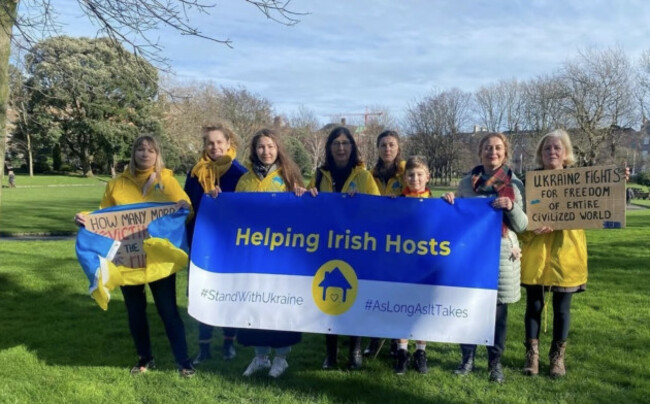
“This scheme wasn’t created to bypass tenancy obligations. Behind every figure is a person who needed shelter, and someone who offered it. Let’s not allow that core human story to be lost in political point-scoring,” she said.
Since the scheme kicked off in July 2022, over €339m has been paid to some 26,100 recipients in respect of hosting over 56,700 temporary protection beneficiaries.
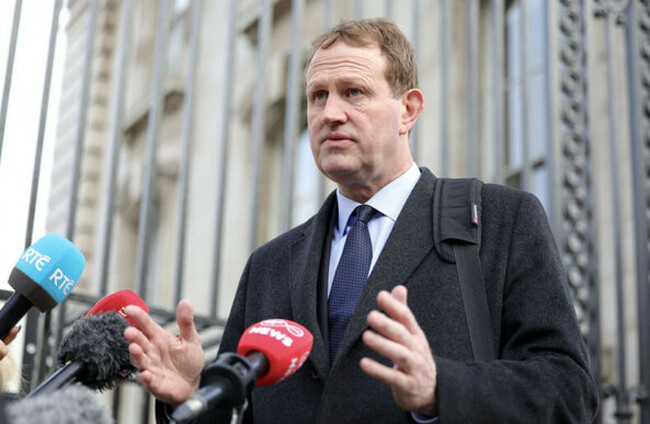
Sinn Féin’s Justice Spokesperson Matt Carthy, who requested the figures via a parliamentary question, has called for a full review of the ARP scheme.
“The number of properties in the scheme in some counties is astonishing – for example there are 2,070 properties receiving payments under the scheme in Donegal, while on Daft.ie there are only 20 properties for rent in the county this morning,” he said.
Carthy said landlords “are using this scheme because it is financially beneficial and to avoid tenancy obligations.”
He said that the scheme gives “tax free” payments to landlords, who can also get a “top up payment” from the Ukrainian tenants of the properties.
Carthy slammed the scheme as “deeply unfair” and said that it gives access to “non-means tested housing support” to one group of people “which is available to no others”.
He said that the Government has ignored calls for the scheme to be means-tested.
Social Democrats TD and Spokesperson on Justice Gary Gannon told The Journal that a survey published by the Red Cross found that of the homes where Ukrainians have been welcomed most have never been RTB registered as rentals.
“This is a system that has worked during the crisis and for families taking people in, it’s not a huge amount of money for having somebody living with you when you consider the increase to bills and all of the other aspects that go into it.
“For all these people to be placed into the IPAS system would put a huge financial strain on the system,” Gannon further said.
The Dublin Central TD added that he “absolutely” thinks the ARP scheme should be extended beyond March 2026.
“In the absence of that, we still have a huge number of people who came who are women and children, with childcare needs, and a lot of older people, who haven’t been able to access employment. I don’t think there’s this story of Ukrainians living here ‘rent free’, lots of people are renting, but there are lots of other variables for those who can’t,” Gannon said.
Justice Minister Jim O’Callaghan replied to Carthy and said that there is ongoing engagement between his department and the Department of Housing in respect of the scheme.
O’Callaghan added that the scheme has been extended until March of this year, and that the monthly contribution rate was reduced to €600 as of 1 June.
This year the Department of Justice set out a plan for closing Ukrainian accommodation centres it is funding across the country, and for 1,800 beds in the student accommodation centre to be returned to their primary use for the upcoming academic year.
In areas where this has already happened, Ukrainians have sought out accommodation in their locality, as many who work in the areas they have spent two years in some cases, and others have children attending local schools.

To embed this post, copy the code below on your site














have your say