We need your help now

Support from readers like you keeps The Journal open.

You are visiting us because we have something you value. Independent, unbiased news that tells the truth. Advertising revenue goes some way to support our mission, but this year it has not been enough.

If you've seen value in our reporting, please contribute what you can, so we can continue to produce accurate and meaningful journalism. For everyone who needs it.


The entrance to New York Times Company headquarters in New York, NY, USA. Alamy Stock Photo

Sitdown Sunday: The article Israel is suing The New York Times over

Settle down in a comfy chair with some of the week’s best longreads.

IT’S A DAY of rest, and you may be in the mood for a quiet corner and a comfy chair.

We’ve hand-picked some of the week’s best reads for you to savour.

1. The article Israel is suing The New York Times over

new-york-ny-usa-august-20-2022-the-entrance-to-new-york-times-company-headquarters-in-new-york-ny-usa The entrance to New York Times Company headquarters in New York, NY, USA. Alamy Stock Photo Alamy Stock Photo

On Monday, New York Times journalist Nicholas Kristoff reported that Israel’s prison guards, soldiers, settlers and interrogators were carrying out “widespread” sexual violence against Palestinian men, women and children. The New York Times then said claims that it would retract the article are false. Later in the week the Israeli Foreign Ministry announced that it was initiating a defamation lawsuit against The New York Times over the piece. 

(The New York Times, approx 16 mins reading time)

“It’s impossible to know how common sexual assaults against Palestinians are. My reporting for this article is based on conversations with 14 men and women who said they had been sexually assaulted by Israeli settlers or members of the security forces. I also spoke to family members, investigators, officials and others.”

2. The opioid crisis hitting the UK

an-aerial-view-of-birmingham-city-centre-west-midlands-central-england-uk An aerial view of Birmingham City Centre, West Midlands, Central England, UK. Alamy Stock Photo Alamy Stock Photo

A synthetic opioid up to 40 times more potent than fentanyl – an opioid causing thousands of deaths in the US – has begun to take lives across the UK. Dispatch Media believes the US isn’t the only country experiencing an opioid crisis. It says there is one happening in the UK too, with certain cities, such as Birmingham, worst hit – but it is largely hidden from view. 

(Dispatch Media, approx 11 mins reading time)

“The first victim, a 38-year-old labourer, was found on 7 June after collapsing at home. The second was discovered a week later; the third and fourth, the week after that. By July, the deaths had become an almost daily occurrence. Eight bodies were found over the course of just 10 days — including two on the same evening, in the same building.”

3. Maggot cheese – an illicit delicacy

casu-marzu-maggot-infested-cheese-from-sardinia-is-displayed-at-the-disgusting-food-museum-in-malmo-sweden-november-4-2018-disgusting-food-museum-invites-visitors-to-explore-the-world-of-food-and Casu marzu – maggot-infested cheese from Sardinia is displayed at the Disgusting Food Museum in Malmo. Alamy Stock Photo Alamy Stock Photo

The Sardinian cheese casu marzu – which translates to ‘rotten cheese’ – is banned across Europe. Why? Because it’s infested with maggots and viewed as unsafe. The cheese’s illicit status and unusual feature has made it an object of fascination and disgust online in recent years, but it’s an object of pride in Sardinian culture and many locals argue the ban on the cheese should be lifted.

(National Geographic, approx 11 mins reading time)

“In the soft glow of a wine-bottle lamp, the larvae were leaping. Squirming I was prepared for, having spent weeks researching and contemplating casu marzu, Sardinia’s famous maggot-infested cheese. The jumping came as a surprise. Our host, the chef at a restaurant in a Google Maps-defeating maze of medieval streets in Dorgali, a small city in the east of the island, had just produced a rough-hewn wheel of casu marzu. He carved a circle in the top and pried the thick rind off like a cap. The pungent smell of aged cheese floated through the room and, with it, a ripple of excitement. The cheese too was subtly but unmistakably rippling. And now, some of the maggots that had made it their home began abandoning ship, popping off the cheese like bubbles from a glass of ginger ale and landing in a soft pile on the wooden table.”

4. Killer seaweed

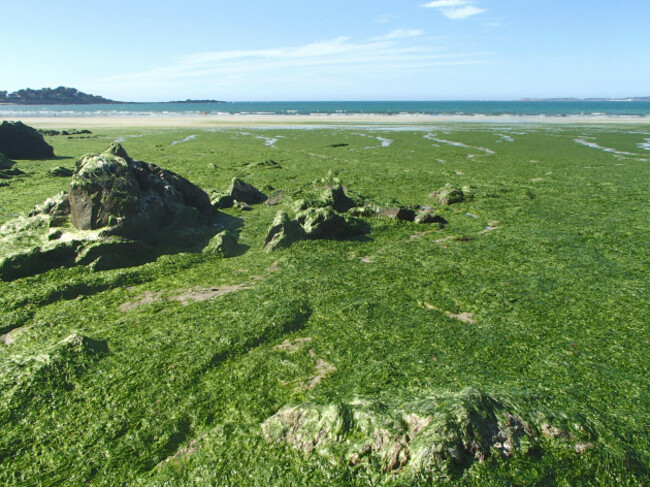
stranded-green-seaweeds-overgrowth-on-brittany-coast Seaweeds Overgrowth on Brittany Coast. Alamy Stock Photo Alamy Stock Photo

Rosy found her husband Jean-René lying dead on crusted seaweed on the coast of Brittany, France, after he went for a run. The doctor said it was a heart attack, but when more people began dying along the coast, Rosy became suspicious of the green algae polluting the area. The seaweed is caused by increased nitrate levels in the water, and the levels of hydrogen sulphide it produces when it rots may cause people to die. Last June a French court found Brittany 60% liable for the death of Jean-René for failing to keep the beaches clean, but Jean-René was found 40% liable for running in the estuary.

(The Guardian, approx 19 mins reading time)

“The Brittany coastline is famed for its green hills, rugged cliffs and miles of sandy beaches. But over the past few decades, in places, the sand has begun to disappear beneath a carpet of green goo. At certain times of year, when Ulva armoricana, a type of seaweed, blooms, banks of green mass form on the beaches, releasing hydrogen sulphide, a foul-smelling, potentially harmful gas. In recent years, red and yellow warning signs have appeared on stretches of the coastline. Occasionally, beaches are closed to the public. Over the spring and summer months, tractors work their way along the coast, raking up thousands of tonnes of seaweed and carting it away: it’s an unending task that has to be done quickly, before the seaweed starts to rot.”

5. The Ukrainian teens charged with sabotage

A Reuters article looks into the young people in Ukraine who are, often not knowingly, committing sabotage against their country. Russian actors are recruiting young Ukrainians to start fires, conduct surveillance and even build explosives. But what will happen to the teens, who seem to be largely motivated by money rather than pro-Russian sympathies?

 (Reuters, approx 19 mins reading time)

“Since Russia launched its full-scale invasion of Ukraine in 2022, more than 1,100 Ukrainians have been accused of committing arson, terrorism or sabotage in betrayal of their country, according to Ukraine’s security service, the SBU. One in five have been minors. Since the war’s start, roughly half of the minors accused of betraying their country have been convicted, while half have been acquitted, freed on bail or sentenced to community service, according to Ukraine’s justice ministry. The minors are usually recruited online by strangers using aliases, mostly assumed by Ukrainian investigators to be working for Russia’s special services.”

6. The American (desert) dream 

the-sign-at-the-city-limits-of-quartzsite-arizona-with-the-dome-rock-mountains-behind The sign at the city limits of Quartzsite, Arizona, with the Dome Rock Mountains behind. Alamy Stock Photo Alamy Stock Photo

Every winter Americans swarm to a small outpost in the Sonoran Desert called Quartzite. The Arizona town has become a haven for nomadic folk due to cheap parking. For $180 (€150) people can get a camping permit from mid-September to mid-April. Some feel like wintering in the desert in vans or RVs is the best they’ve ever lived due to the rising cost of living and renting in major cities.

(Republic, approx 19 mins reading time)

“Theresa remembers arriving in Old Yeller for the first time in 2018. She had kept her apartment in Oregon just in case van life didn’t work out. But as the desert opened around her, the contingency plan dissolved. ‘This is it,’ she remembers thinking. ‘This is the life.’ She had grown tired of paying rent and bills and having nothing left over – a treadmill she could never step off. Out here, there were no landlords to answer to. Eight years later, the desert around Quartzsite still carries that weight for her. ‘It has a magical feeling,’ she said.”

…AND A CLASSIC FROM THE ARCHIVES…

7. Parents searching for answers

This 2024 article from the New Yorker looks at the death of teen Zac Brettler, who was caught on camera jumping from a fifth-floor apartment into the Thames. After his death, his parents embarked on a mission to learn what happened to their son, and they ended up finding out some unexpected truths, including that he had been telling people he was the son of a wealthy oligarch.

(The New Yorker, approx one hour reading time)

“In the four years since Zac’s death, the family has had to confront the extent to which the boy they thought they knew had been living a double existence. Zac had always possessed a Walter Mitty quality: he’d burnish his achievements (boasting to friends about his athletic prowess and his business prospects), or play up his supposed connections to prominent people (falsely claiming, for instance, that he knew Virgil van Dijk, the captain of Liverpool Football Club). But none of the Brettlers had ever imagined that Zac might be moving about London pretending to be someone else altogether.”

Readers like you are keeping these stories free for everyone...
A mix of advertising and supporting contributions helps keep paywalls away from valuable information like this article. Over 5,000 readers like you have already stepped up and support us with a monthly payment or a once-off donation.

View 14 comments
Close
14 Comments
This is YOUR comments community. Stay civil, stay constructive, stay on topic. Please familiarise yourself with our comments policy here before taking part.
Leave a Comment
    Submit a report
    Please help us understand how this comment violates our community guidelines.
    Thank you for the feedback
    Your feedback has been sent to our team for review.

    Leave a commentcancel

     
    JournalTv
    News in 60 seconds