We need your help now

Support from readers like you keeps The Journal open.

You are visiting us because we have something you value. Independent, unbiased news that tells the truth. Advertising revenue goes some way to support our mission, but this year it has not been enough.

If you've seen value in our reporting, please contribute what you can, so we can continue to produce accurate and meaningful journalism. For everyone who needs it.

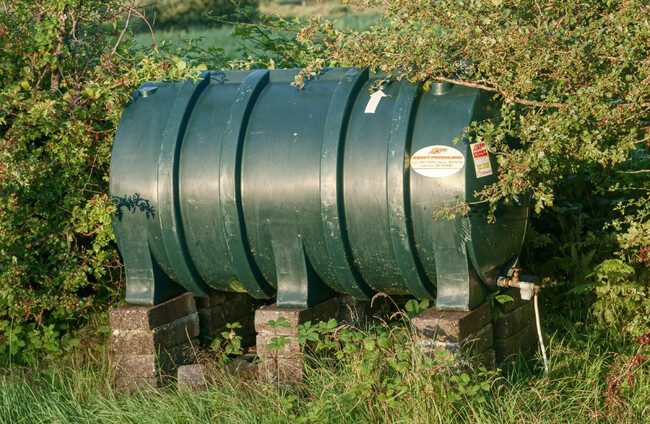
Heating accounts for a quarter of Irish greenhouse gas emissions. Alamy Stock Photo

Ireland needs to set a point after which no new gas and oil boilers can be installed - SEAI

A ‘phase-out’ is needed – but it ‘may not necessarily be a ban’.

IRELAND NEEDS TO set a date after which no new gas and oil boilers can be installed, the Susainable Energy Authority of Ireland (SEAI) has said.

Margie McCarthy, director of research at the SEAI, told The Journal that there “has to be a phase-out” on gas and oil boilers but “it may not necessarily be a ban”. If the alternatives are “affordable and attractive”, people are likely to take them up, McCarthy said.

Phase-out dates for polluting technologies can provide market certainty and drive behavioural change, but can also meet significant push-back. The UK planned to ban new fossil fuel boilers after 2035 but scrapped this policy in favour of a “carrots not sticks” approach last year following a consumer backlash.

Three years ago, the EU set a deadline of 2035 after which no new petrol and diesel cars could be sold. However, this was watered down late last year in response to lobbying from carmakers.

Fossil fuel dependence

The SEAI has published a new paper on how Ireland can almost fully decarbonise its heating and cooling sector for both homes and businesses by 2055. Heating in Ireland is currently 90% dependent on fossil fuels and heating accounts for a quarter of the country’s greenhouse gas emissions.

The modelling in the paper for an alternative scenario in which Ireland manages to fully decarbonise heating by 2055 assumed it would not be possible for industries to purchase a new fossil fuel boiler after 2030 or for homeowners to do so after 2035, SEAI officials explained.

Any deadline for phasing out fossil fuel boilers will need to be accompanied by financial supports, the SEAI said.

Ireland needs to “provide clear timelines after which point no new fossil fuel boilers can be installed, accompanied by a suite of targeted financial supports and access to affordable alternatives, ensuring a fair and just transition for all households and businesses”.

Delaying the ultimate phase-out of oil and gas boilers from the heating sector will increase costs and emissions and increase the risk of “lock-in” to fossil fuels. A new boiler could have a lifespan of between 15 and 20 years.

Ireland needs to look closely at electricity pricing to make it cheaper for people to switch to heat pumps, the SEAI said.

However, the first step must be to improve energy efficiency and reduce demand for heating.

District heating – whereby large numbers of buildings are heated from a joint source – should be “rapidly scaled”, the SEAI added. There is currently only one district heating scheme in Ireland, in Tallaght in Dublin, but it is mainstream in many other countries.

Large amounts of Ireland’s heating needs could be met more cost effectively using district heating networks than individual heat pumps for each building.

Cost to consumers

Decarbonising heat will save Ireland money – but it will carry costs for consumers. These will comprise both upfront investment costs and the ongoing price of their energy bills, even as these switch from oil or gas to electricity. 

That means grants, tax incentives and – in particular – electricity price reforms will be needed to support consumers, the SEAI said. The high price of electricity is currently the biggest barrier to uptake of heat pumps. Ireland has some of the highest electricity prices in Europe.

New policies are needed to decarbonise the heating sector because existing policies would leave Ireland heavily reliant on fossil fuels well into the middle of the century.

The SEAI didn’t look at cooling systems such as air conditioning for the residential sector as this is unusual in Ireland at the moment. However, demand for cooling systems may grow due to the risk of overheating in homes with high levels of insulation and airtightness when the sun shines in during the summer months.

Decarbonising heat will help Ireland to avoid future energy shocks and price volatility, the SEAI said. The current Iran War has caused massive spikes in the prices of oil and gas.

The SEAI paper was based on Ireland’s latest National Comprehensive Heating and Cooling Assessment, a piece of analysis required under the EU Energy Efficiency Directive. This assessment identifies an economically optimal and feasible scenario for decarbonising the heat sector and where more action is required to meet Ireland’s climate and energy security goals.

Readers like you are keeping these stories free for everyone...
A mix of advertising and supporting contributions helps keep paywalls away from valuable information like this article. Over 5,000 readers like you have already stepped up and support us with a monthly payment or a once-off donation.

Close
4 Comments
This is YOUR comments community. Stay civil, stay constructive, stay on topic. Please familiarise yourself with our comments policy here before taking part.
Leave a Comment
    Submit a report
    Please help us understand how this comment violates our community guidelines.
    Thank you for the feedback
    Your feedback has been sent to our team for review.

    Leave a commentcancel

     
    JournalTv
    News in 60 seconds