Sign in. It’s quick, free and it’s up to you.
An account is an optional way to support the work we do. Find out more.
Sign in. It’s quick, free and it’s up to you.
An account is an optional way to support the work we do. Find out more.
IT’S OFFICIAL: THIS summer is the hottest one Ireland has seen across 127 years of weather records.
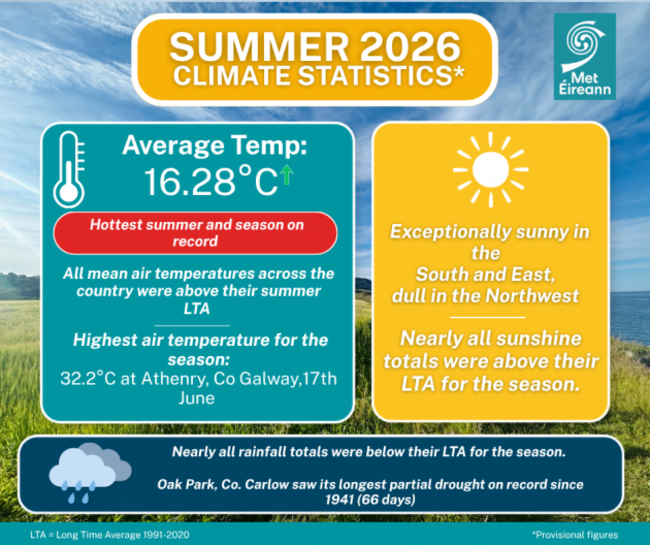
Summer 2026 has narrowly surpassed the record-breaking temperatures of summer 2025 – yet another signal of how the climate crisis is changing Ireland’s weather conditions.
The highest temperature of the season was set on 25 June in Athenry, Co Galway, where locals experienced heat of 32.2 degrees Celsius.
The details published in Met Éireann’s newly released summer climate statement track the heat, sunshine, rainfall and wind seen around the country from June to August.
The national average temperature this summer was 16.28 degrees Celsius.
That level of heat was “exceptionally warm” compared with what would have previously been considered normal for Ireland’s climate, according to Met Éireann.
Taking all 127 years of Ireland’s weather records, six of the top 10 hottest summers have occurred since 2021.
In contrast, looking at Ireland’s 10 coolest summers on record, none of them occurred in the last 25 years.
Shifting weather patterns around the world and successive record-breaking conditions are evidence of climate change, which is being caused by human activities that create excessive greenhouse gas emissions, trapping heat inside the atmosphere.
The World Meteorological Organisation said yesterday that global temperatures are set to rise above the 1.5 degree ‘safe’ threshold set by the 2015 Paris Agreement – but it’s still not too late to prevent the climate crisis from escalating to absolute worst-case scenarios, if countries seriously get their act together to limit emissions.
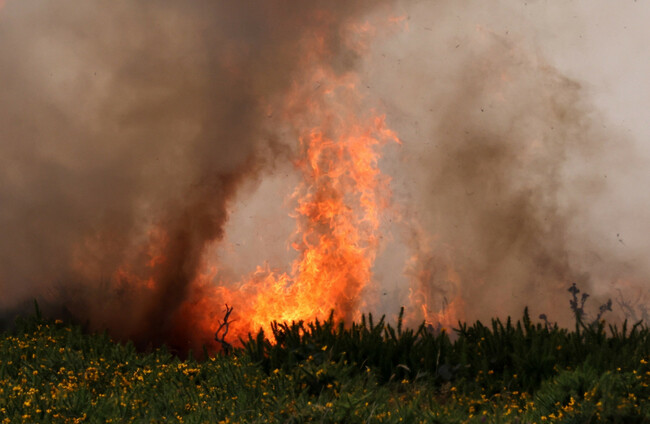
At first, the idea of less rain and more sun during the summer might seem like a welcome prospect on the surface, but the changes Ireland’s climate is experiencing have a slew of negative impacts. We saw several of them play out this summer: drought, wildfires, sweltering homes, increased fodder costs for farmers, and more.
Every weather station around the country had a higher average air temperature this summer than its long-term average.
Eight stations experienced their highest daily maximum temperature on record, while 10 stations saw their daily minimum temperature remain warmer than it ever had before.
Similarly, nearly all rainfall totals were below their long-term average, and all 25 weather stations recorded dry spells between 1 July and 2 August, lasting between 19 and 33 days.
20 stations, mostly in the midlands, south and east, reported absolute droughts during July lasting between 15 and 27 days.

To embed this post, copy the code below on your site















have your say