Sign in. It’s quick, free and it’s up to you.
An account is an optional way to support the work we do. Find out more.
Sign in. It’s quick, free and it’s up to you.
An account is an optional way to support the work we do. Find out more.
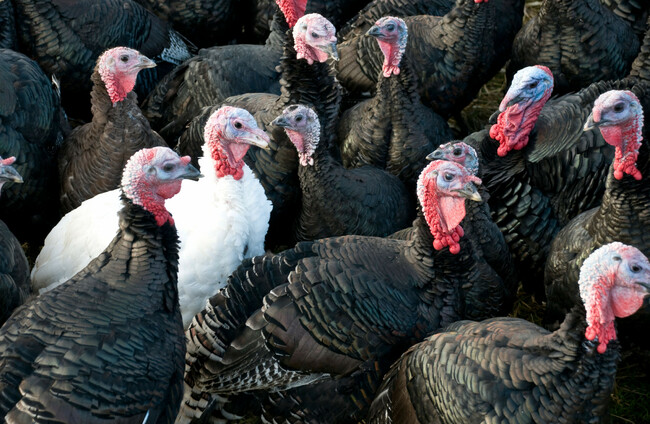
A COMMERCIAL TURKEY flock in Co Carlow has got bird flu, the Department of Agriculture has confirmed.
Restriction zones have been put in place around the holding to protect other flocks from the outbreak.
This is the first outbreak of bird flu in a commercial poultry flock since 2023. However, more than 40 wild birds have been infected in Ireland this year, including 12 at Fota Wildlife Park recently, which prompted the attraction to close temporarily.
Outbreaks of highly pathogenic avian influenza, also known as bird flu, have also been identified in poultry flocks in several European countries and the United Kingdom this year.
Agriculture Minister Martin Heydon said: “Strict biosecurity is the best defence we have against the threat of avian influenza.
“Thankfully, the disease poses no food safety risk to consumers of well-cooked poultry products, including eggs.”
The biosecurity order from the Department put a 3km protection zone around the farm, as well as a 10km surveillance zone.
Although bird flu can be very contagious between birds, the HSE and the European Centre for Disease Control say the risk to public health from this particular strain of bird flu is very low.
However, members of the public shouldn’t handle sick or dead wild birds, and they should report any sick or dead wild birds to the Department’s special app called AvianCheck.
Nigel Sweetman, chair of the Irish Farmers’ Association (IFA) poultry committee, said it’s unlikely that the price of turkeys will be affected by the outbreak in the lead up to Christmas.
There would have to be more outbreaks for there to be an impact on prices, he said.
Nevertheless it’s a worrying time for poultry farmers and Sweetman said biosecurity measures remain extremely important.
Today, the IFA called on the government to issue an order for poultry to be housed. A similar order will come into force in the UK and Northern Ireland on Thursday.
The spread of bird flu has followed a different pattern than usual this year, affecting areas across Europe, the UK and Ireland where it is not normally detected, Sweetman said.
Changing weather patterns are likely to be a factor.
Like some other viruses, different variants of bird flu circulate each year, and this year’s variant leaves birds sicker for longer – increasing the risk of the disease spreading, Sweetman added.
The IFA is particularly worried that small flocks of hens kept outdoors by amateurs could become “reservoirs of infection”, Sweetman said.
The Department continues to urge all flock owners, regardless of flock size, to remain vigilant for signs of disease, implement and maintain strict biosecurity measures, and report any suspicion of disease to their local Regional Veterinary Office or if outside business hours, to contact the National Disease Emergency Hotline on 01 492 8026.
To embed this post, copy the code below on your site
















have your say