Sign in. It’s quick, free and it’s up to you.
An account is an optional way to support the work we do. Find out more.
Sign in. It’s quick, free and it’s up to you.
An account is an optional way to support the work we do. Find out more.
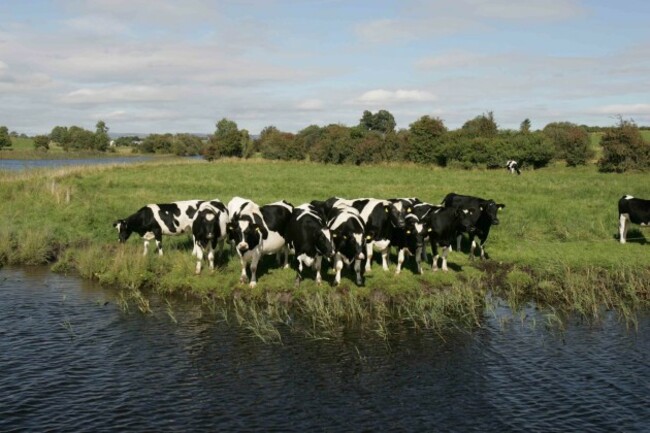
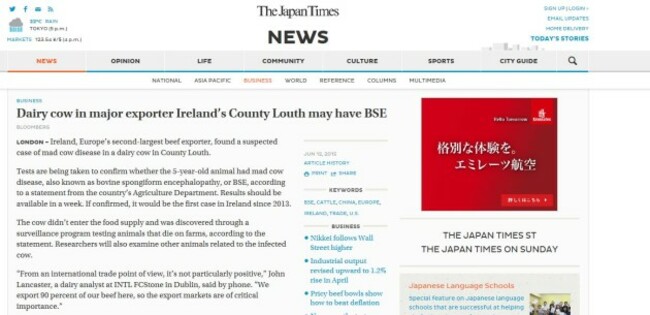
A CASE OF BSE has been confirmed in a five-year-old dairy cow on an Irish farm.
The story dominated newspaper headlines and broadcast news bulletins when it first broke on 11 June.
Confirmed this evening, it is the first BSE case found in Ireland since 2013.
So what is BSE – or Mad Cow Disease? And why is this case generating such attention?
Your questions, answered…
BSE… What is it?
Bovine Spongiform Encephalopathy (BSE) is a disease that affects adult cattle.
It attacks the brain and central nervous system of the animal – and eventually causes death.
Commonly known as Mad-Cow Disease, it has a long incubation period, meaning that it usually takes four to six years for infected cattle to show signs of the disease.
Symptoms include disorientation, clumsiness – and, occasionally, aggressive behaviour towards other animals and humans.
What happened in the 1990s?
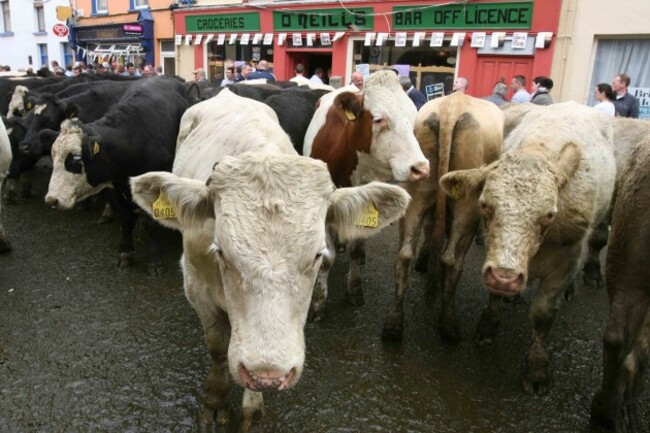
The BSE crisis, which reached its peak in Ireland the mid-1990s, was hugely damaging to the industry.
The Irish Farmers Association estimated back in 1996, when the crisis was at its worst, that it had knocked over £1 billion (in punts) off the value of the cattle herd.
Tens of thousands of cattle were culled in response.
Where does BSE come from?
BSE was first confirmed in cattle in the UK in 1986.
The first case in Ireland was confirmed in 1989 – when there were 15 cases confirmed.
The brain disease ‘Scrapie’ was first recorded in sheep way back in 1732 – and was first discovered in a cow in France 1883.
It’s believed it reappeared in cattle between the 1970s and 80s when changes in the ‘rendering’ process meant it ‘jumped species’ (see below).
How does it spread?
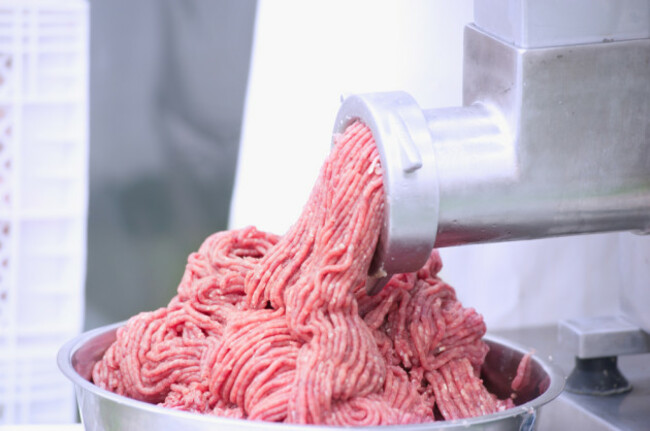
Most experts agree that BSE was most likely spread by cattle eating feed that contained contaminated Meat and Bone Meal (MBM) – produced in a process called rendering (where otherwise unused animal products are taken from the carcass and are cooked for a long time).
MBM was incorporated into cattle feed until it was banned in the 1990s.
Experiments have shown that cattle can contract BSE if they are fed infected brain tissue. This seems to support the idea that BSE was transmitted to cattle through their animal feed.
What controls have been put in place?
The practice of feeding Meat and Bone Meal to cattle has been banned in Ireland since 1990.
Controls on MBM were strengthened in 1996 -1997.
Due to the BSE crises in other member states, a ban was introduced throughout the EU on feeding MBM to all farm animals in 2001.
(Note: More detail on controls available from the FSAI and Department of Agriculture)
What is the danger to people?
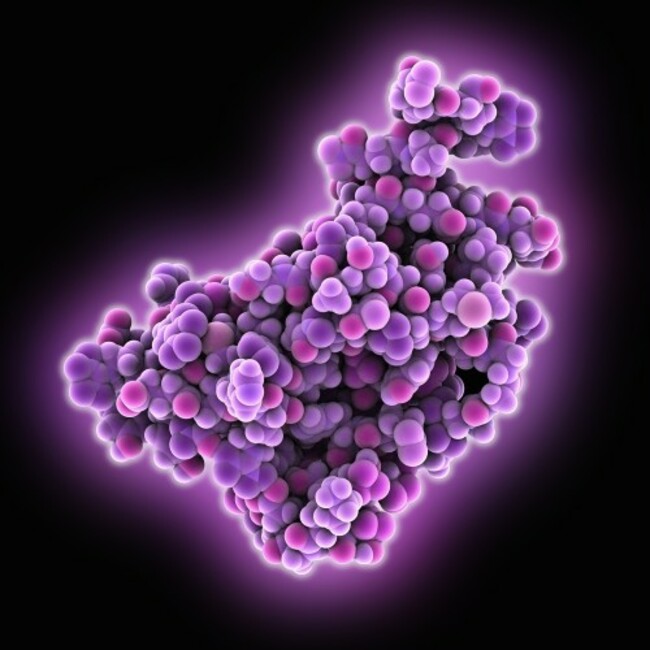
BSE only develops in cattle – but it belongs to a family of prion diseases, several of which can affect humans.
The most commonly known disease in this group among humans is Creutzfeldt-Jakob Disease (CJD) – a rare and fatal form of dementia that normally occurs in people aged between 40 and 80.
CJD is not a new disease among humans – but in 1996, scientists discovered a new strain of CJD that occurs predominantly in younger people.
Evidence has shown that the protein that accumulates in the brains of patients with this new form of CJD is similar to the protein found in cattle infected with BSE, rather than that found in classical CJD.
Because of this discovery, the new illness in humans is known as variant CJD or vCJD.
What’s the link?
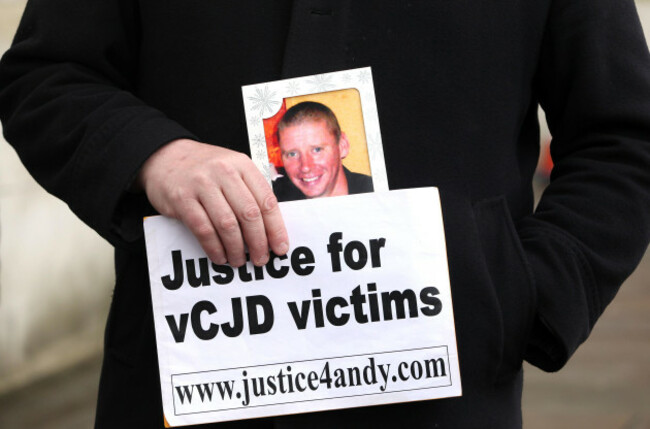
The occurrence of the new form of CJD in the UK , where there was a high incidence of BSE, suggested that there might be a direct link between BSE and vCJD.
Some people who had developed vCJD were known to have eaten potentially BSE-infected meat products.
Researchers concluded that the most likely origin of the new disease was human exposure to the BSE agent.
Like BSE in cattle, vCJD is always fatal in people.
So is there any risk here?
The Food Safety Authority of Ireland were quick to point out that, as the animal didn’t enter the food chain, there is no risk to humans.
Agriculture Minister Simon Coveney and other senior government officials have also been stressing that beef is perfectly safe. “Absolutely no risk,” Coveney said in a radio interview.
So why is this case generating such attention?
Beef is huge business in Ireland – and the suspected BSE case doesn’t do us any favours on the publicity front.
The OIE (World Organisation for Animal Health) last week put Ireland on ‘clear’ status regarding our beef after 11 years of being seen as a controlled risk.
The Department of Agriculture conceded that the new case will likely see Ireland’s international beef status downgraded.
In 2014, Ireland exported an estimated 524,000 tonnes of beef – worth approximately €2.27 billion, along with live exports worth €172 million.
So, obviously, we could do without international news stories like this…
And what are farmers saying?
The IFA is satisfied that export and domestic markets reacted in a ‘calm and balanced manner’.
President Eddie Downey said consumers can be reassured about the “robustness of the food safety controls in place in Ireland”.
Meat Industry Ireland also said that international markets remained unaffected by the incident.
“Following the initial announcement, member companies have maintained close contact with customers in Ireland and abroad and have reported business as usual in international markets,” the group said in a statement.

[Sources: FSAI, Department of Agriculture, Bord Bia, IFA, TheJournal.ie, Guardian]

To embed this post, copy the code below on your site













have your say