Sign in. It’s quick, free and it’s up to you.
An account is an optional way to support the work we do. Find out more.
Sign in. It’s quick, free and it’s up to you.
An account is an optional way to support the work we do. Find out more.
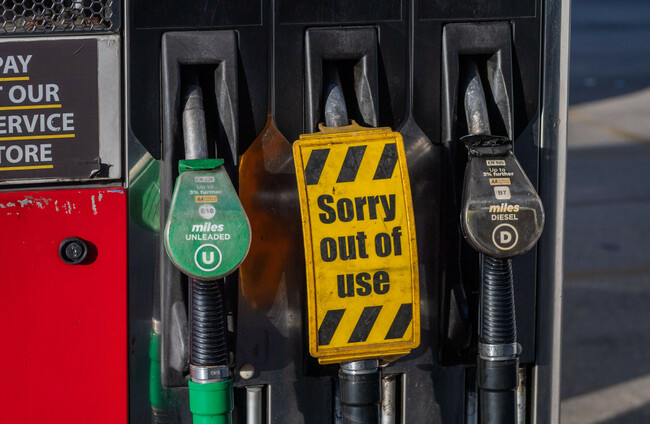
MOTORIST WILL PAY more for fuel at the pumps from midnight and there are further increases to come in January.
To support the Government’s climate policy, the Finance Act 2020 legislated for an annual increase in the carbon tax until 2030.
This year’s scheduled increase, which will bring the tax to €71 per tonne of CO2 emitted, will be applied to diesel and petrol from midnight.
This increase will apply to all other fuels from 1 May 2026.
In his Budget speech, Finance Minister Paschal Donohoe said that the additional revenue arising from this tax increase is estimated at €121 million in 2026.
Donohoe added that the revenues will be “ring-fenced to ensure that the carbon tax policy is progressive”.
He said the additional revenues will be spent on social welfare measures and other measures to prevent fuel poverty and to “ensure a just transition”.
This will include a “socially progressive national retrofitting programme” and funding to incentivise farmers to farm in a “greener and more sustainable way”.
The CEO of Fuels for Ireland, Kevin McPartlan, said that the carbon tax increase means that from midnight, motorists will pay 2.5 cents more per litre.
Fuels for Ireland is the association representing companies that provide more than half of Ireland’s total energy supply.
McPartlan added that on 1 January, changes to the Renewable Transport Fuels Obligation (RTFO) Scheme will add a further 2–3 cents per litre.
The RTFO aims to accelerate Ireland’s transition to greener transport.
McPartlan said he is “deeply disappointed that the Minister has not yet announced the establishment of an expert group to examine how taxation and other State policies are driving up fuel prices”.
He added that he “remains hopeful that such a group will be convened very soon”.
“Irish motorists and businesses deserve a fair, honest look at why they are paying some of the highest fuel costs in Europe,” said McPartlan.
“And that is because the Government has chosen to make them pay more.”
Elsewhere, in its pre-Budget submission, Friends of the Earth called for electric vehicle subsidies to rural drivers who have fewer options.
Today, Donohoe announced that in order to increase the number of electric vehicles on Irish roads, he is extending the €5,000 VRT relief for electric vehicles for a further one year until 31 December 2026.
Friends of the Earth had also called for a carbon levy on shipping, a new tax on private jet flights and the removal of excise and VAT exemptions on aviation fuel.
Meanwhile, the government increased the weekly Fuel Allowance rate by €5 to €38.
Public Expenditure Minister Jack Chambers also extended the Fuel Allowance eligibility to all households in receipt of the Working Family Payment, which he said will “help protect around 50,000 families from energy poverty”.
However, Energy Efficiency Ireland described the Budget as a “missed opportunity”.
It pointed to price hikes by electricity providers and criticised the decision to end energy credits.
Energy Efficiency Ireland said people has become to work these energy credits into their own budgets and had “come to rely on it rather than seeing it as a once-off benefit”.
“This now ending will be an extremely difficult pill for people to swallow in a year that has seen inflation hit hard, with the cost of living worsening across the board,” said Brian Kelly of Energy Efficiency Ireland.
“For some homeowners, the combination of the credit ending and electricity prices increasing could mean dishing out hundreds of euro extra per year in the middle of a cost of living and housing crisis.”

To embed this post, copy the code below on your site















have your say