Sign in. It’s quick, free and it’s up to you.
An account is an optional way to support the work we do. Find out more.
Sign in. It’s quick, free and it’s up to you.
An account is an optional way to support the work we do. Find out more.
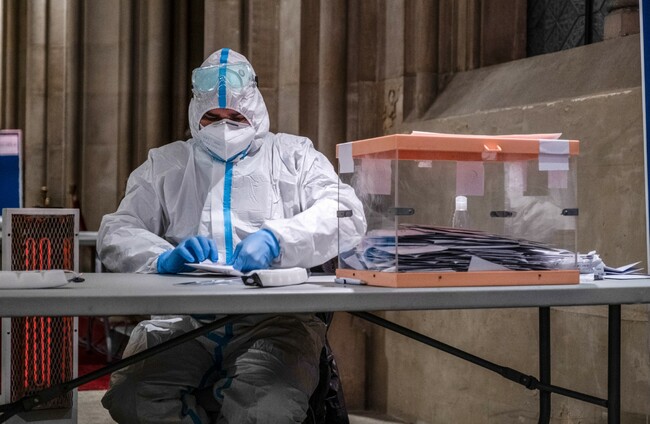
CATALAN SEPARATIST PARTIES increased their majority in Catalonia’s regional parliament in an election yesterday.
With roughly 75% of votes counted, Prime Minister Pedro Sanchez’s Socialists captured the most votes but the three separatist parties were set to get 74 seats in the 135-seat assembly, which would allow them to continue to govern the wealthy northeastern region.
That is up from 70 seats won in the last election in December 2017, just months after Catalonia’s failed secession bid which led to the jailing of several separatist leaders.
The Socialists were set to win 33 seats, up from 17 in the last election when it finished fourth.
But as separatist parties agreed in writing last week not to reach any post-election agreements with the Socialist candidate, former health minister Salvadore Illa, the party has no path to govern.
Sanchez had hoped the election — the fifth in the region in a decade — would end separatist rule in the region which accounts for 20% of Spain’s economy.
The Socialists fielded Illa as the party’s candidate in the hope that his high profile in the fight against the pandemic would help win votes.
The region is currently governed by a coalition of Catalonia’s two main separatist parties — the hardline Together for Catalonia (JxC) and the more moderate Republican Left of Catalonia (ERC) — supported by radical separatist party, Popular Unity Candidacy (CUP).
Yesterday, the ERC captured 33 seats, JxC won 32 and the CUP captured nine in an election marked by low turnout with strict measures in place to stop the spread of the coronavirus.

To embed this post, copy the code below on your site















have your say