Sign in. It’s quick, free and it’s up to you.
An account is an optional way to support the work we do. Find out more.
Sign in. It’s quick, free and it’s up to you.
An account is an optional way to support the work we do. Find out more.
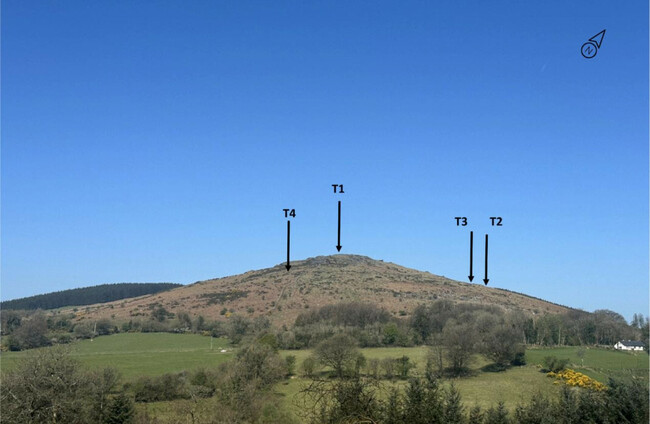
A HILLFORT IN Co Wicklow has been declared the largest and most nucleated settlement in prehistoric Ireland and Britain by researchers at Queen’s University Belfast.
The study also claims that the site is Ireland’s earliest proto-town – a large and densely populated Neolithic settlement that existed before true towns – and that it predates Viking towns that have so far been considered Ireland’s earliest urban settlements by two millennia.
The site is in the Wicklow mountains, just south of Dublin. Further research is ongoing to determine the presence of a possible water cistern at the site, which would be the first known feature of its kind from an Irish hillfort.
The ‘Baltinglass hillfort cluster’, as it is described, features a ‘necklace’ of up to 13 hilltop forts as well as other enclosures spanning the early Neolithic to late Bronze Age (c. 3700-800 BC), near the town of Baltinglass.
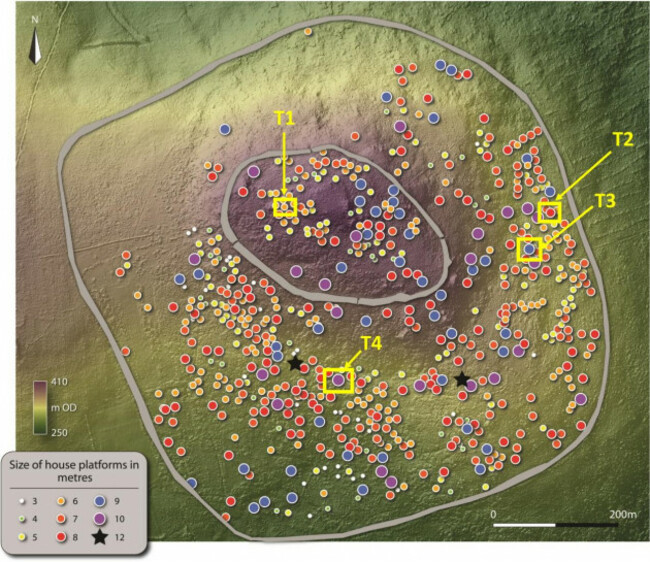
Within the cluster of hillforts, Brusselstown Ring has been previously identified as one of the largest in Ireland. It covers an area of 41.9 hectares and comprises two large ramparts on neighbouring hill summits.
“Terrestrial survey work carried out within the past decade at Brusselstown Ring had detected 288 potential hut sites, but aerial surveys from 2017 and 2022 identified more than 600 topographical anomalies consistent with prehistoric house platforms,” the research team said of their study.
Lead author of the research project, Dr Dirk Brandherm from Queen’s University Belfast, said that if the presence of a water cistern is confirmed, it will be a “major discovery”.
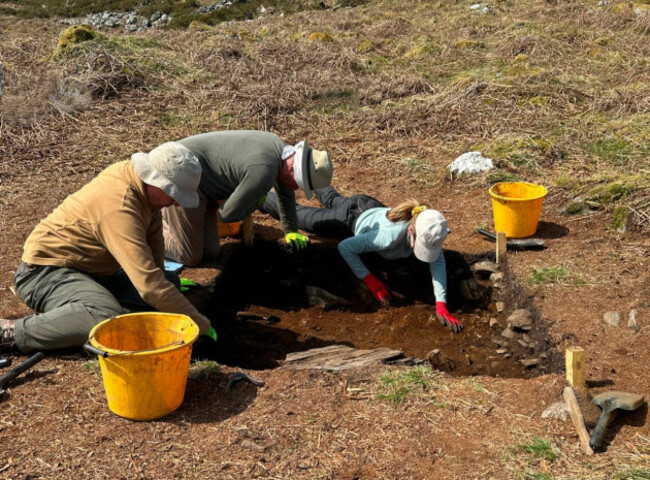
“There has been extensive survey work at the site over the past two decades, but critical questions regarding the date, development and function of both the enclosing elements and the internal settlement remained unanswered, which is why we embarked on this new series of excavations,” Brandherm said.
“Our discoveries challenge previous conceptions of prehistoric settlement organization, showing a level of social complexity, community cohesion, and regional importance not fully recognised before.”
He added that he hopes the new information gleaned by the research team will allow for the preservation of Brusselstown Ring as a site of “major national and international heritage importance”.
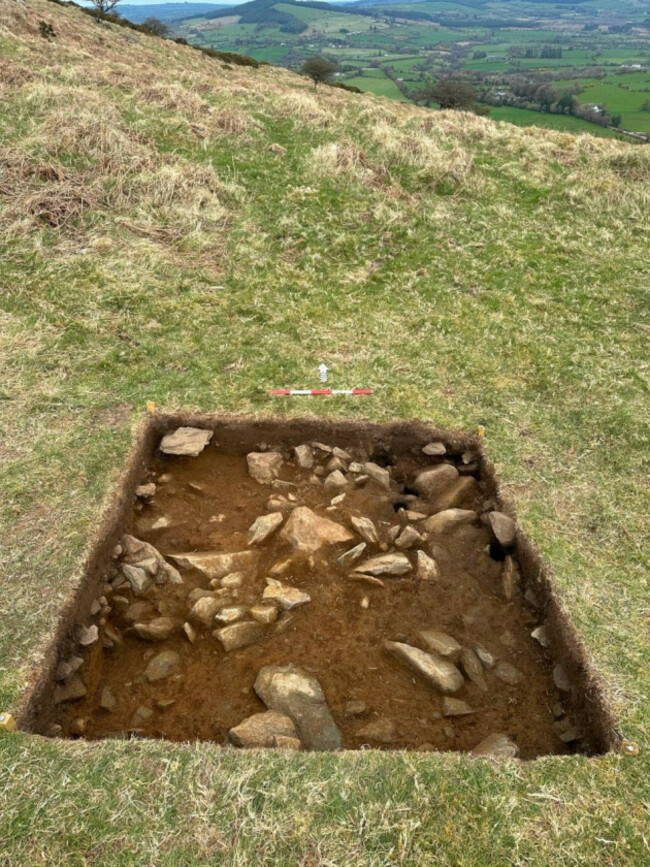
The Queen’s-led study carried out radiocarbon dating which suggested occupation at Brusselstown Ring during the Late Bronze Age, between c.1210 and 780 BC.
This is many centuries before the Vikings, normally credited with having founded the first towns in Ireland, arrived on the island – with continued use or re-use of some house platforms up to the Early Iron Age (c.750–400 BC).

To embed this post, copy the code below on your site
















have your say