Sign in. It’s quick, free and it’s up to you.
An account is an optional way to support the work we do. Find out more.
Sign in. It’s quick, free and it’s up to you.
An account is an optional way to support the work we do. Find out more.
LAST UPDATE | 1 hr ago
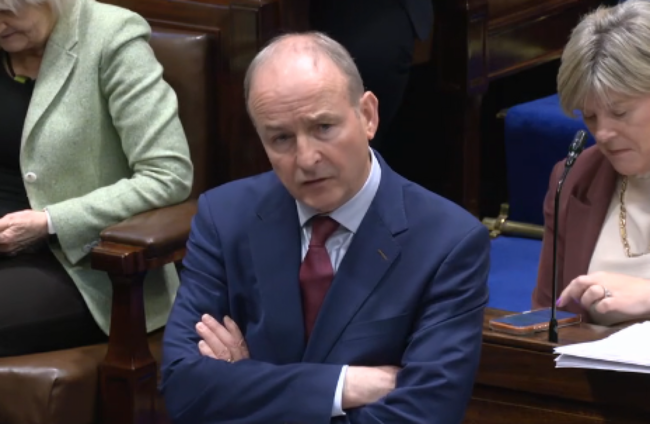
THE DÁIL HAS returned from its mid-term break with the impending strike action by unions next week dominating proceedings during Leaders’ Questions.
Unions representing public sector workers announced on Monday that they are planning another 24-hour strike for next Thursday, as their dispute over pay has not been resolved.
The strike would coincide with the European Political Community (EPC) Summit in Dublin on 12 November, and could be significantly impacted by civil servants being on strike.
It follows an impasse in talks with the government, which concluded late on Friday night.
The opposition rounded on the Taoiseach on Tuesday afternoon, with Sinn Féin’s Mary Lou McDonald stating that the government “dithered and delayed” by allowing the current pay agreement to expire before talks began with the unions.
Social Democrats deputy leader Cian O’Callaghan said the pay offer, which is reported to be 7.75% over two and a half years, is below inflation.
He said the government owes it to the people who are delivering public services to make a credible pay offer, adding:
Get on with this.
Micheál Martin described some of the language by the opposition parties today as “over the top”.
Martin said no small offers were made to the unions, adding that the union groups had, agreed to a template to the talks.
“There is sustainability involved here for government,” he said, adding that the government has responsibilities when it comes to a sustainable pay agreement.
“There is no need for a strike,” said the Taoiseach.
“The government wants a national pay agreement. Where there is a will, there’s a way,” he added, saying that he doesn’t believe there is any reason for strike action.
McDonald told the Taoiseach that the public now faces the prospect of more industrial action, which will bring more disruption and hardship.
“That is on you. I am asking you now to change that approach, to come to the table in real good faith, with real honesty, recognising that inflation and the cost of living has literally devoured the salaries of public sector workers,” she said.
On his way into cabinet this morning, Tánaiste Simon Harris said he wanted to find a resolution to the public sector pay dispute so that next week’s strike, which lands on the day of a major EU event in Dublin, can be stopped.
Harris said the next few days are a “window of opportunity” to reach a deal with workers.
The European Political Community (EPC) Summit on Thursday 12 November will see around 50 heads of state meet informally in Dublin to discuss shared challenges such as competitiveness, energy security and global conflicts.
It not only coincides with the 24-hour strike planned by public sector workers, but also plans by gardaí to adopt a work-to-rule position, meaning they’ll refuse to do overtime that would otherwise be expected for major events.
The Tánaiste said that if an agreement with both groups isn’t reached by then, he is still confident that there are “very robust security plans in place”.
“There are nine days to go until that EPC. There are nine days to go until the next strike action,” he said.
“Rather than people kind of fixating and planning the strike or planning the protest or planning the march, let’s plan the solution.”
Hundreds of thousands of public sector workers participated in a nationwide strike in October.
It forced the closure of schools, the rescheduling of thousands of non-emergency hospital appointments, and the cancellation of driving tests and most court hearings.
The public sector workers – including nurses, doctors, teachers and civil servants – launched the national strike after first engaging in work-to-rule action.
Unions had demanded that pay should be top of the agenda in the talks, with the government saying it would be discussed as a priority.
Harris today said that the government “wants to increase the pay”.
“We passionately believe work should always pay, and that should include obviously those working in the public service and carrying out really important functions right across our country.
“But I don’t think anyone wants to see any more disruption to public services. I don’t think public sector workers want to see that either.”
With reporting by Christina Finn

To embed this post, copy the code below on your site













have your say