Sign in. It’s quick, free and it’s up to you.
An account is an optional way to support the work we do. Find out more.
Sign in. It’s quick, free and it’s up to you.
An account is an optional way to support the work we do. Find out more.
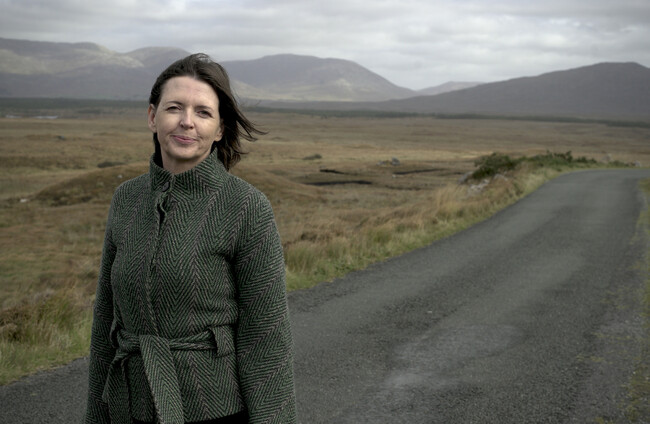
(This article is produced by our Gaeltacht team. You can read an English version of this piece here)
RTÉ RAIDIÓ NA GAELTACHTA broadcaster Gormfhlaith Ní Thuairisg is among six well-known personalities who were given a preview of the 1926 Census records, and they are sharing what they discovered and the impact it had on them in a new documentary series to be broadcast on television this coming weekend.
The first of two programmes in the series ‘Come to Your Census’ will air this Sunday on RTÉ 1. The other personalities taking part in the series include trade unionist Mick Lynch, architect Dermot Bannon, actor Eileen Walsh, writer Joseph O’Connor and RTÉ Radio 1 broadcaster Louise Duffy.
In the first programme, the RTÉ Raidió na Gaeltachta broadcaster tells the story of her family, who were living in Connemara in 1926, alongside Lynch who takes a trip down memory lane to Cork where his family came from, and Bannon who shares the story of his family who lived in Cappoquin in County Waterford.
Speaking to The Journal, Gormfhlaith explained that she had not been keen to take part in the programme at first, as she did not believe there was “anything exceptional or different or, honestly, all that interesting about my family, compared to anyone else’s, you know?”
“We were just like any other family in Connemara, now and at that time.”
But she wanted, as she says during the programme, to find out whether the life her ancestors had led on the Lochán Beag in the Cois Fharraige area of Connemara — a place often associated with poverty and emigration — was exceptional, and whether it differed from the lives of other communities across Connemara.
Around the time of the census, her family had moved to Bóthar an Rí, which was close enough to the Lochán Beag. Her grandfather, Seáinín Beag, was living there with his wife and they had three children. His wife died of tuberculosis and he married again, and they had five more children, including Gormfhlaith’s father. Then Seán Beag’s second wife died, this time of pneumonia, when her father was just three years old. Another brother had died some time before that.
He had been working on the shore, came home saying he had a headache, and died. His name was Seán.
During this part of the programme, Gormfhlaith is speaking with her own brother Lochlainn, and together they discuss some of the circumstances of the era. Speaking about these tragedies, Gormfhlaith has this to say:
“I think I didn’t really have a proper understanding of just how common death was.”
“It was. Death and poverty. Life was very harsh,” came her brother’s reply.
Around that time and from the end of the 19th century, it was well recognised that the whole of Connemara was overcrowded. Too many people were living there to be able to sustain themselves, and the close proximity in which they lived gave diseases like tuberculosis every opportunity to spread.
“When they moved out of those houses things started to improve,” said Lochlainn.
As she looked at the Oireachtas records of the time — the Dáil debates — she came to understand that the politicians had no remedy for the situation. “You’d think it was seen as a kind of ‘lost cause’,” she said.
“Things in the west are bad, but things in the west are always bad.
“I don’t know if there was any sense that things here could be improved.”
The three children Seáinín had with his first wife Máire, and the five he had with his second wife, all emigrated in search of a better life — and they did have a better life, said Gormfhlaith.
The other reason the broadcaster had for taking part in the programme was to explore the state of the Irish language at the time.
“I would be curious about Irish because this is the first census since the State was founded, so Irish had a certain kind of status, Irish was woven into the national project.”
It surprised her that her grandfather, Seán Beag, had filled in the census form in Irish. Not many people filled in the 1926 census form in Irish — roughly one in every hundred forms was completed in the language.
It moved her greatly that the Ó Tuairisc family had filled in the form in Irish.
This is a programme in which viewers will gain a unique insight into life as it was in the Gaeltacht in 1926, through the understanding Gormfhlaith gained from examining the census forms and discussing them with relatives and others during the programme.
Speaking to The Journal, she said that her participation in the programme and her examination of the old documents caused her to stop and look back when she had previously always been looking forward.
“No great earth-shattering stories leapt out that we didn’t already know — it was simply that I took the time to study where my family were at that particular point in history, a hundred years ago, that I gained a much deeper understanding of them, of their lives and of where that has brought us today.
“It had a profound effect on me.”
The first programme in the short series Coming to Our Census airs this Sunday at 6.30pm on RTÉ 1.
The Journal’s Gaeltacht initiative is supported by the Local Democracy Reporting Scheme.
This article was originally written in the reporter’s native Irish and has been translated to English here. AI was used as part of the translation process before final edits.

To embed this post, copy the code below on your site











have your say