Sign in. It’s quick, free and it’s up to you.
An account is an optional way to support the work we do. Find out more.
Sign in. It’s quick, free and it’s up to you.
An account is an optional way to support the work we do. Find out more.
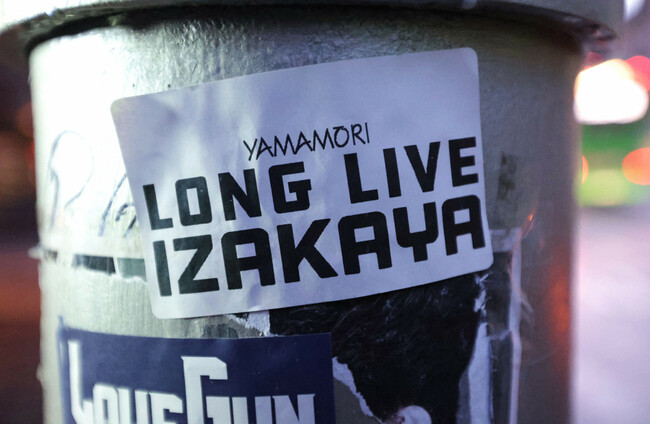
ON SUNDAY MORNING next week, the music will stop at Yamamori Izakaya.
After months of protests and a High Court dispute over noise complaints, the venue beneath the Japanese restaurant on South Great George’s Street will host its final weekend of DJ nights next week (a last-minute week extension has been agreed), bringing to an end a 15-year run as one of Dublin’s best-known late-night spots.
For generations of DJs, though, Izakaya was more than somewhere to play records.
Down a flight of stairs beneath the restaurant, Izakaya never quite looked like a conventional nightclub.
It was stylish rather than industrial, with Japanese-inspired interiors, warm lighting, an eye-catching ceiling installation and a Funktion-One sound system that could be felt as much as heard.
“It grew into this institution,” said DJ Aoife Nic Canna, who played the venue’s very first late-night set in 2011.
“It was just a very reliable place in the city centre.”
Long before it became known for packed dance floors and marathon DJ sets, the late founder Derek Ryan had already changed Dublin’s food scene by opening the first Yamamori restaurant in 1995.
Inspired by trips to Japan, Ryan opened Izakaya in 2011 as a late-night space where people could eat, drink and socialise. Following his death in 2022, the family-run business has continued under his children, Graham and Julie Ryan.
Nic Canna remembered meeting Derek Ryan before the venue opened.
“He said to me, ‘I’m a businessman. I know nothing about music. But whatever you did in Rí Rá, I’d like you to do something like that.’”
She said Ryan had invested in the best sound system, turntables and CDJs (equipment used to play music) from the beginning, even though “I don’t think it was his ambition to turn it into a dark, sweaty nightclub”.
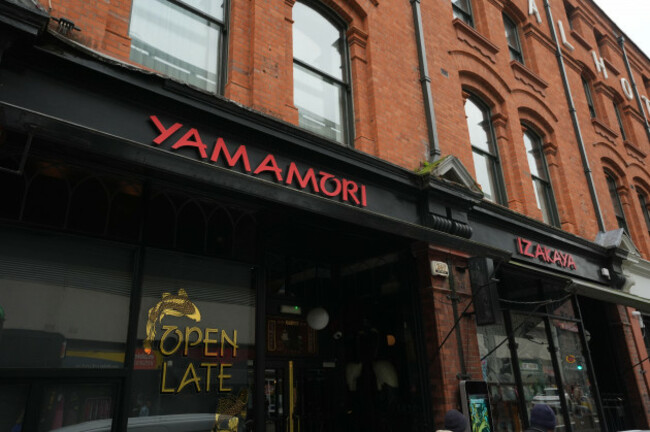
“There was no makeshift setup. There was a great sound system put in there straight away. Beautiful equipment, it always looked really nice, and made our work easier.”
“I know he wanted somewhere that he wanted to go to for a drink after work,” Nic Canna explained.
It really didn’t take long to take off.
“Within a year, it had made itself a nice home there.”
For Dublin-based DJ Nevan Jio, its biggest legacy was what it did for local talent.
“It was one of the most important platforms for local and emerging DJs,” Jio said.
“It was at the time the only spot in town that afforded a local DJ the space to play all night – four hours – in a club environment.”
Unlike most bar gigs, he said, DJs had to think about how a night unfolded.
You had to treat a set there like you were performing a proper club set.
“You had to learn how to warm up a room from doors when it’s empty to peak time when it’s packed, and pace a set accordingly so you’re not peaking the energy too early.
“No other place in the city back then afforded you this responsibility and freedom to experiment.”
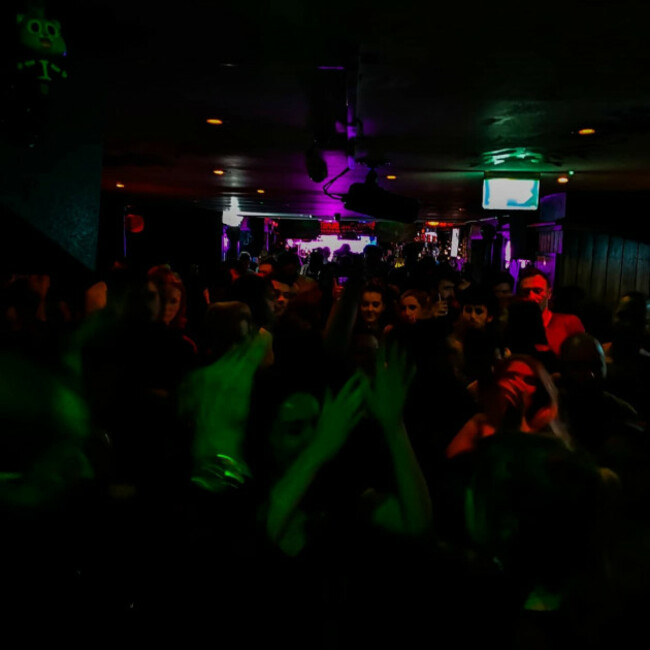
Its free-entry policy also made it unlike any other venue in Dublin.
“It was unique,” Jio said.
“Due to the free entry and reputation of the space, it was a haven for all sorts.”
Jio added that Izakaya had become a place where people could “get a late-night drink after pubs closed” and “flirt with the idea of possibly going for a dance without the intense commitment of going on a proper night out”.
“It was a destination point for such a diverse array of people.”
Nic Canna said that sense of community extended well beyond the dance floor.
One story, she said, captured the spirit of the place.
A visiting Brazilian DJ had arrived to play another venue nearby, only to discover the equipment wasn’t suitable.
Nic Canna walked into Izakaya and asked Julie Ryan if she could borrow a pair of CDJs.
“Julie Ryan just told me, ‘Yes, of course you can have them.’”
“The Brazilian girl turned around to me and said, ‘My God, Eva, that would never happen in Brazil.’ Even if they could help you, they wouldn’t because you’re competition.”
“It was different at Izakaya though, it just an Irish family,” Nic Canna said. “They contributed so much to the community.”
“I played in Pawn Shop a few weeks ago and people go back and forth between Pawn Shop and Izakaya. They benefited each other, as the former Rí Rá and Izakaya had benefited each other.
“If visitors were looking for somewhere to go, I’d send them to Izakaya as a late bar,” Nic Canna added.
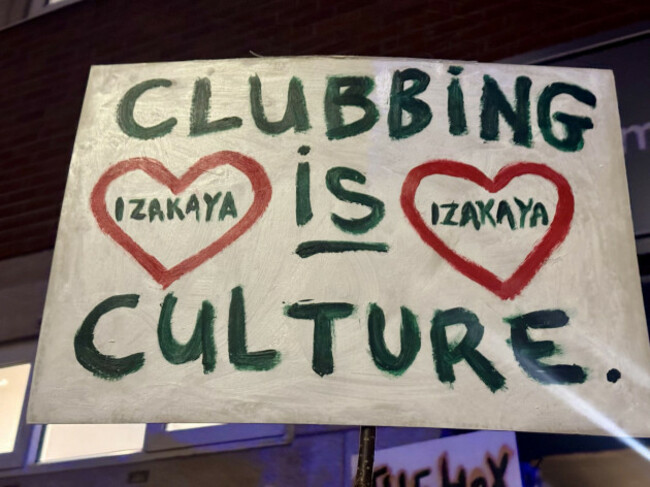
The site announced in a post on social media last month that it would be ending all nightclub and DJ events after the venue and owners of the adjoining Hoxton Hotel reached an agreement following a High Court dispute over noise.
Trinity Hospitality sought an injunction against Izakaya in February, claiming late-night music from the site forced the hotel to close 31 rooms and to incur up to €300,000 in losses.
For both DJs, Izakaya’s closure comes at a difficult moment for Dublin nightlife. There’s now less than 25 nightclubs in the entire county of Dublin – that’s down from around 100 nightclubs in the year 2000.
“It’s a massive loss,” Jio said.
“With so few spaces left to play in it’s meant the competition for slots and sets at clubs like Tengu and Wigwam are at an all-time high.
There aren’t many opportunities for local DJs to play regularly in a proper club environment.
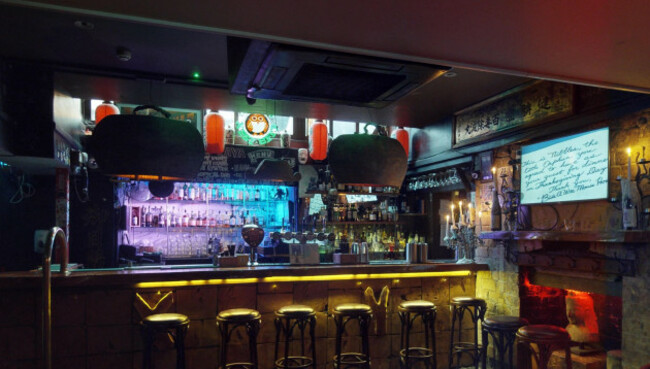
Nic Canna, who has DJ-ed in Dublin since the early 1990s, said Izakaya had become part of a much wider nightlife community centred around South Great George’s Street and Dame Lane.
“That area has always been really important,” she said.
“It’s where Sides DC was, then Rí Rá, then Ukiyo.
“That area has always been a place for Dubliners to go for a late night out.”
She added that the end of Izakaya’s nightclub and DJ events was “the last thing we needed”.
“That area has always been a pocket of little nightclubs and bars.
“And where are we going to go now?”

To embed this post, copy the code below on your site














have your say