Sign in. It’s quick, free and it’s up to you.
An account is an optional way to support the work we do. Find out more.
Sign in. It’s quick, free and it’s up to you.
An account is an optional way to support the work we do. Find out more.
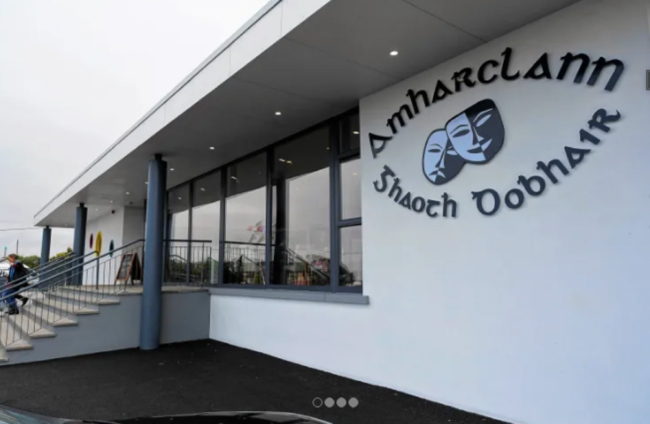
(Seo alt ónár bhfoireann Gaeltachta. Is féidir an bunleagan as Gaeilge a léamh anseo)
TOM A’BHUNGALÓ – “Tom of the Bungalow” – is the nickname the people of Gaoth Dóbhair gave to Tomás Mac Giolla Bhríghde, because he lived in a single-storey house at a time when such a thing was unheard of in the area. And that is the name given to a new book written and self-published by his neighbour about the Gaeltacht pioneer.
According to Noel Ó Gallchóir, author of ‘Tom A’Bhungaló’, Mac Giolla Bhríghde – who died at the age of 90 in 2013 – left a significant mark on the Gaoth Dóbhair area through the role he played in establishing an industrial estate in the area and, more importantly still, in founding and developing Amharclann Ghaoth Dóbhair over the years.
The self-published book was launched recently in that same theatre and, since then, it has been shortlisted for the Oireachtas Publishing Awards. The awards will be presented at an event during Oireachtas na Samhna in Killarney.
Speaking about his book, Ó Gallchóir said there were chapters in the work about Mac Giolla Bhríghde as an actor, a producer, an author and a writer and, in addition to that, as a community activist – all of which reflected, in his view, the many-sided nature of the man.
“A Gaelic activist, a visionary entrepreneur and a wizard of drama,” was the author’s description of Mac Giolla Bhríghde.
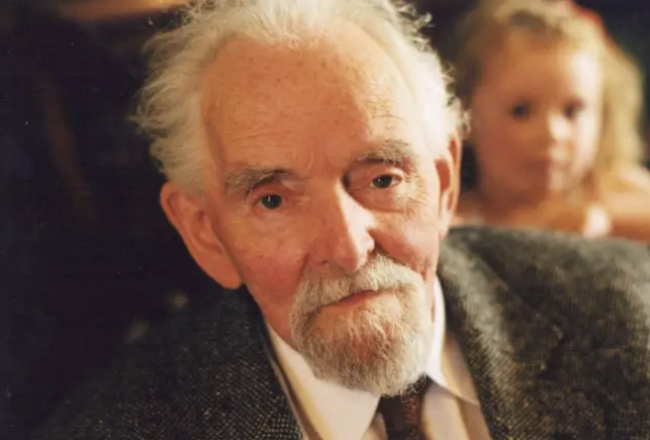
“I don’t think the Gaoth Dóbhair Industrial Estate would be there on the Screabán — where one and a half thousand people worked – I don’t think it would be there without him.
“It was he and four other businessmen who bought the land on which the Screabán stands and gave it to Gaeltarra Éireann (the forerunner of Údarás na Gaeltachta),” said Ó Gallchóir, recalling that this donation to the State by four Gaeltacht men was a gesture to mark the golden jubilee of the Easter Rising in 1966.
“That Industrial Estate served Gaoth Dóbhair, na Rosann and Cloich Chionn Fhaola and provided a great deal of employment in the area over many long years.”
Mac Giolla Bhríghde was a chartered accountant and was “enormously active” in movements such as the Credit Union and with Comharchumann Forbartha Ghaoth Dóbhair.
“He gave financial advice to local cooperatives and to Gaoth Dóbhair Credit Union.”
There is a chapter in the book that gives friends and acquaintances the opportunity to pay tribute to Mac Giolla Bhríghde, among them the poet and novelist Cathal Ó Searcaigh, who describes Mac Giolla Bhríghde as ‘Daddy-Ó of the Theatre.’
“I knew Tom a’Bhungaló by sight long before I got to know him personally,” he said in his piece.
“Whether as an actor or as a director, his name was constantly associated with the plays I saw in the theatre as a wide-eyed teenager, full of wonder and enjoying the inspiring shows brought to life on the stage,” he said.
“I was into my eighties and had established some standing as an Irish language writer before Tom really got to know me properly.
“He was that kind of man – he would judge a person on merit.
“He had considerable respect for the power of the word, for the resonance of sound in language, and he told me he had heard the effect of melody in some of my early poems.
“In addition to that, recitation always appealed to him — poetry delivered aloud through the medium of the voice.”
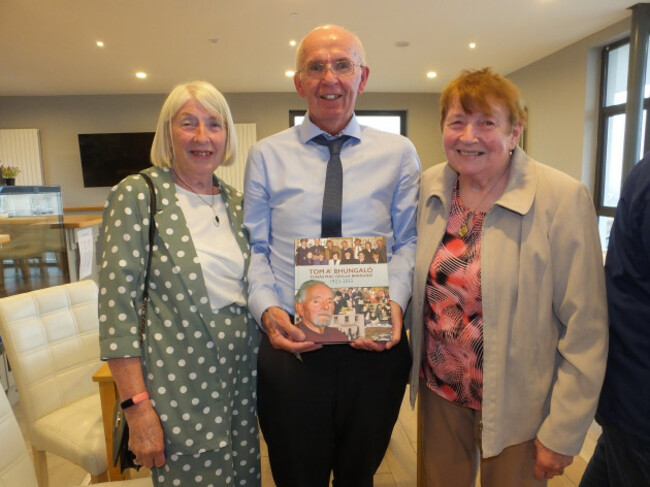
The book describes the many productions in which Mac Giolla Bhríghde took part as an actor, wrote as a dramatist and directed as a director, stretching from his first part in 1938, An Papa sa Choilidh Bheag, right through to the plays he directed in the final months of 2013.
“He was involved with the Players for 75 years, from 1938 to 2013. He wrote plays – the most celebrated play he wrote was An Pháis – Shoilsigh Solas sa Dorchadas (The Passion – A Light Shone in the Darkness).
“In Tom’s time it was staged four times and once more after his death, in 2018.”
Amharclann Ghaoth Dóbhair was out of use for a number of years before the building was renovated and reopened in 2017. It is still in use as a theatre and as a venue for community events – among them Scoil Gheimhridh Ghaoth Dóbhair and the festival in memory of Rónán Mac Aodha Bhuí, Dorn san Aer, which will be held again next month.
The Journal’s Gaeltacht initiative is supported by the Local Democracy Reporting Scheme.
This article was originally written in the reporter’s native Irish and has been translated to English here. AI was used as part of the translation process before final edits.

To embed this post, copy the code below on your site











have your say