Sign in. It’s quick, free and it’s up to you.
An account is an optional way to support the work we do. Find out more.
Sign in. It’s quick, free and it’s up to you.
An account is an optional way to support the work we do. Find out more.
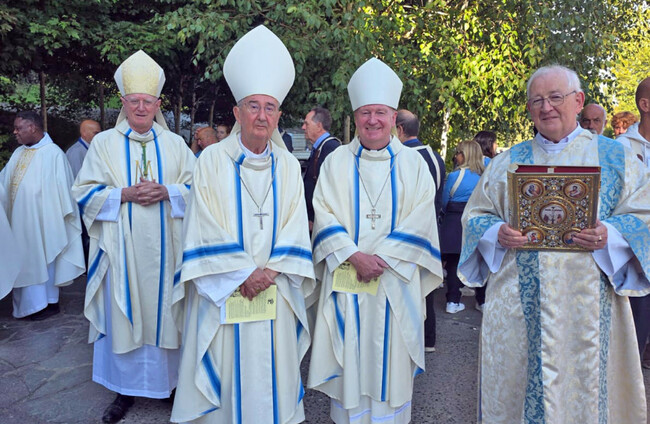
THE ARCHBISHOP OF Dublin has said that “young people have all but given up the hope of having a home of their own”.
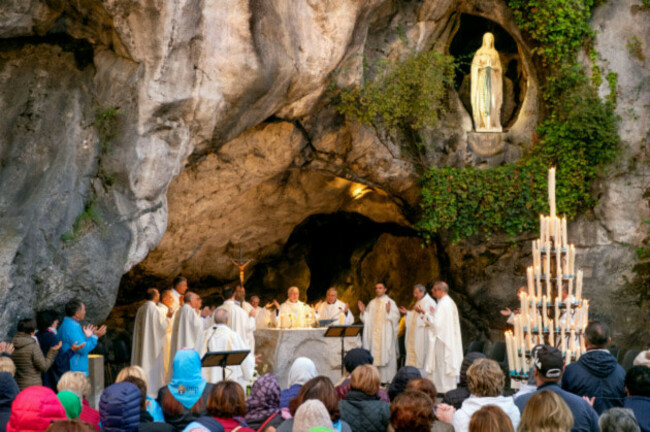
Archbishop Dermot Farrell made the remarks in a homily delivered at the Grotto in Lourdes, France.
He also called on people to question their own role in the housing crisis, such as a vote for a party that won’t allocate resources to the most needy or a “silent sympathy for those who submit planning objections”.
The Archdiocese of Dublin’s pilgrimage to Lourdes departed on Thursday with around 1,500 pilgrims.
Archbishop Farrell is leading the five-day pilgrimage to Lourdes, which includes around 250 young people.
During a homily delivered this morning at the Grotto in Lourdes, Farrell remarked that in order to “break free of that status quo, we need to see things as they truly are, not as others would have us see them”.
“An obvious example of something which has been normalised to the point where we are no longer exercised about it, is the housing crisis, especially in our capital city,” added Farrell.
“Is it not extraordinary that almost a whole generation of young people have all but given up the hope of having a home of their own?
“Living with parents long after the time when people would expect to live independently, seems often to be the only alternative to emigration.
“And those who do find their own place often experience unrelenting financial pressure in paying their rent or mortgage.”
Farrell also called out the “ubiquitousness” of “hidden homelessness” in Dublin and across Ireland.
“How visible are the young adults who live with relations, or the increasing numbers of families with children who rely on emergency accommodation?”
While Farrell said the “situation is complex” and that increased housing supply “cannot be achieved overnight”, he asked: “Can we really say that the crisis which is blighting the lives of so many, is an overriding concern in our society?”
He said “vested interests” are not being challenged and added:
Are property rights, and other rights, being reconsidered in the face of such gross denial of people’s basic right to housing?
“And what about the exploitation of those who are vulnerable through their precarious housing situation?”
He remarked that it is “not a law of nature that requires landlords to extract the highest possible rent from their tenants”.
He also warned that some landlords are “exploiting the desperate by packing them into disgraceful living conditions, overcrowded, ignoring basic standards, and which have the renter pay dearly for this ‘privilege’”.
But while Farrell called for the government, international investors, and planners or developers to be challenged, he added that individuals must also challenge themselves in relation to the housing crisis.
“If we own our homes, might we secretly be hoping that the crisis continues so that property values remain high?
If we enjoy a pleasant environment with many amenities, does that increase our silent sympathy for those who submit planning objections?
“When it comes to election time, do we support those we think will allocate resources that benefit us, rather than to those whose needs, including housing, are the most urgent?”
Farrell remarked that this “examination of conscience is for us all” and that “we are all called to reflect anew on our use of resources, our property, and our land”.
Quoting the late Pope Francis’s 2015 encyclical Laudato Sì, Farrell said that “the Earth is essentially a shared inheritance, whose fruits are meant to benefit everyone”.
Lourdes is a famous Catholic pilgrimage site and it is said that the Virgin Mary appeared to Saint Bernadette Soubirous there in 1858.
Some 17 further such apparitions said to have occurred.
St Bernadette said that the Virgin Mary herself proclaimed “I am the Immaculate Conception” during one apparition.
The Immaculate Conception is the Catholic doctrine that Mary was conceived without original sin.
It was during the ninth apparition when Our Lady of Lourdes was said to have directed Bernadette to a place where she discovered a spring.
That spring is the central focus of a pilgrimage to Lourdes and many people have claimed to have been cured by drinking or bathing in it.
There have also been 70 such cases recognised as miracles by the Catholic Church.
The Catholic Church defines a miracle as a “sign or wonder such as a healing, or control of nature, which can only be attributed to divine power”.
For something to be formally recognised by the Church as a miracle, two-thirds of a medical board consisting of at least six doctors are required to sign a statement affirming that the supposed miraculous event cannot be explained by natural causes.
Thousands of pilgrims make the visit to Lourdes from Ireland every year and there are Lourdes shrines and grottos across Ireland.
It was also Irish Catholics who gifted the Gold Crown to the Basilica of Our Lady of the Rosary at Lourdes in 1924.
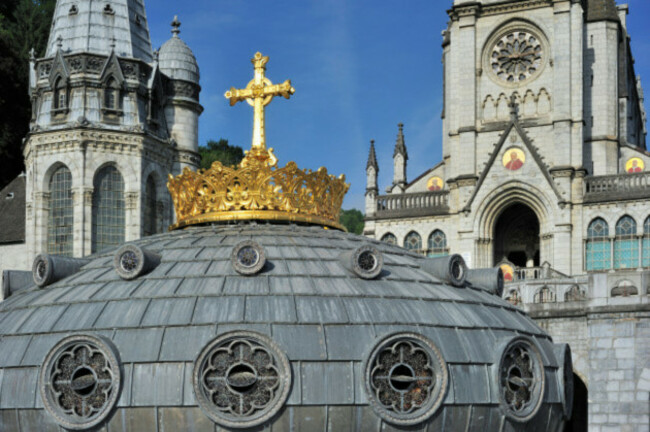
It is said that some people donated their only items of value, their wedding rings, to enable the construction of the Gold Crown.

To embed this post, copy the code below on your site








have your say