Sign in. It’s quick, free and it’s up to you.
An account is an optional way to support the work we do. Find out more.
Sign in. It’s quick, free and it’s up to you.
An account is an optional way to support the work we do. Find out more.
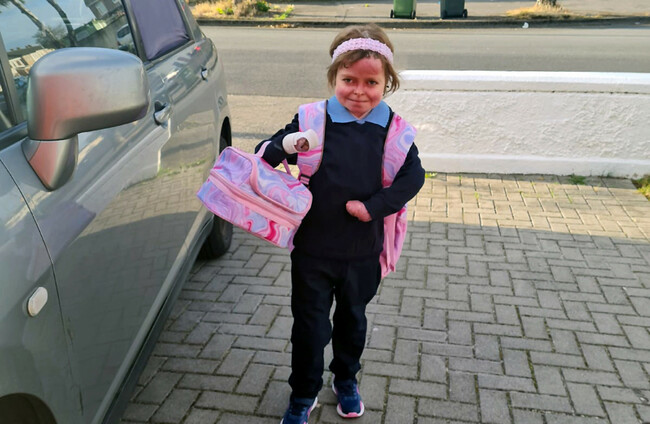
A DUBLIN SCHOOLGIRL with the most severe form of a genetic skin condition is preparing to begin secondary school.
Clondalkin 12-year-old, Casey Connors, has a “daily battle” with recessive dystrophic epidermolysis bullosa (EB). The condition is caused by the absence of essential proteins that bind the skin layers together.
EB is sometimes referred to as “butterfly skin” due to the fragility of the skin.
Casey goes through painful bandage changes that can last three hours at a time but which are needed to protect her skin, 70% of which is covered in open wounds.
Now she is preparing for the move from primary to secondary school later this year.
Ahead of Rare Disease Day this Friday, Debra, the national charity which helps the on average 300 people with EB, is highlighting how routine steps in life are huge leaps for people living with the agonising condition.
“Casey is excited for this next step and feels completely ready, without seeing the challenges ahead as obstacles,” said her mum Rachel Connors.
“It’s an enormous milestone in any child’s life, starting secondary school, let alone for someone living with EB.”
Rachel previously abseiled from the roof of Croke Park to raise funds for the charity. In October last year, actor Colin Farrell joined forces with his friend Emma Fogarty who suffers with EB, to run the Dublin marathon to raise hundreds of thousands of euro for Debra.
Debra has been working with Casey’s primary school, St Ronan’s NS, and secondary school since last year to make the transition as smooth as possible.
It means all staff and pupils will be informed about EB ahead of Casey’s arrival.
This has involved meetings with Casey’s teachers, SNAs, Community Nurse, Occupational Therapist and healthcare professionals from Crumlin Hospital, the charity said.
Well wishes from the public have already flooded in.
Head of Communications at Debra, Alejandra Livschitz, said that while it may seem premature to speak about Casey’s move six months prior, planning began last year.
“Our Family Support Team has been collaborating with her family, school and medical team to ensure that Casey has a strong support system in place as she enters first year.”
Casey and her family have decided not to reveal the secondary school’s name, so that she can introduce herself and her genetic condition to her classmates on her own terms with the help of Debra.
As part of introducing her to her classmates, a two-minute animated video will explain in simple language what EB is and how it affects Casey’s life. If this pilot video is successful, it will give Debra another resource to help other children with EB to ease into secondary school.
Over 300 million people worldwide and some 300,000 in Ireland live with a rare disease, including EB.

To embed this post, copy the code below on your site













have your say