Sign in. It’s quick, free and it’s up to you.
An account is an optional way to support the work we do. Find out more.
Sign in. It’s quick, free and it’s up to you.
An account is an optional way to support the work we do. Find out more.
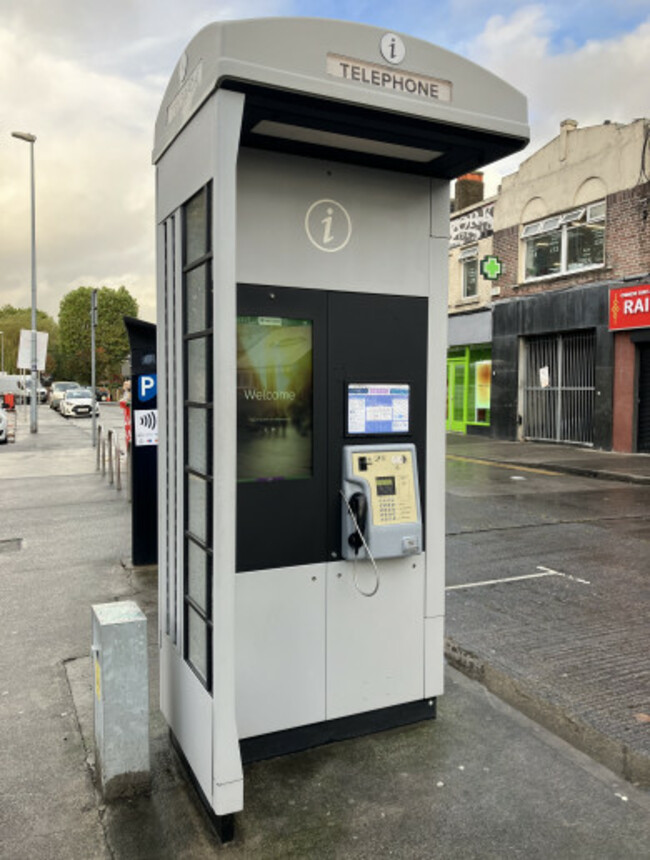
JUST OVER 500 phone calls have been made to date on each of 63 so-called “digital kiosks” Eir installed since 2021 to replace older phone boxes – and to support large LED advertising screens.
At least a third of the “digital kiosks” have been in place for over three years now, with the remainder installed since.
Eir told The Journal that 33,000 calls had been made on the kiosks as of the end of September – an average of 524 per kiosk to date.
While the total number of calls is low, some calls are likely to be important. Eir reported that 40% of calls were to emergency numbers or 1800 freephone numbers, including crisis lines and helplines.
The state stopped requiring to Eir to provide payphones in 2020, following a steady and steep decline in usage.
Eir had argued at that stage that there was “simply no justification for an intrusive regulatory intervention in the form of a payphone universal service obligation (USO)”. By 2020, only nine payphones in the country met the usage threshold above which phone boxes had to be retained under the old USO.
In the late 2010s, that threshold was an average of one minute usage per day over the previous six months, including 30 seconds to emergency and freephone numbers.
At that time, Women’s Aid was among organisations arguing that phone boxes still had value and the USO should be kept. It said some women who called its helpline used payphones, and may not have any other private space to make such a call.
Eir’s new kiosks hold payphones and a touchscreen showing a map of the local area and some local information, particularly aimed at tourists, with the outside of the kiosk comprising a large LED advertising screen.
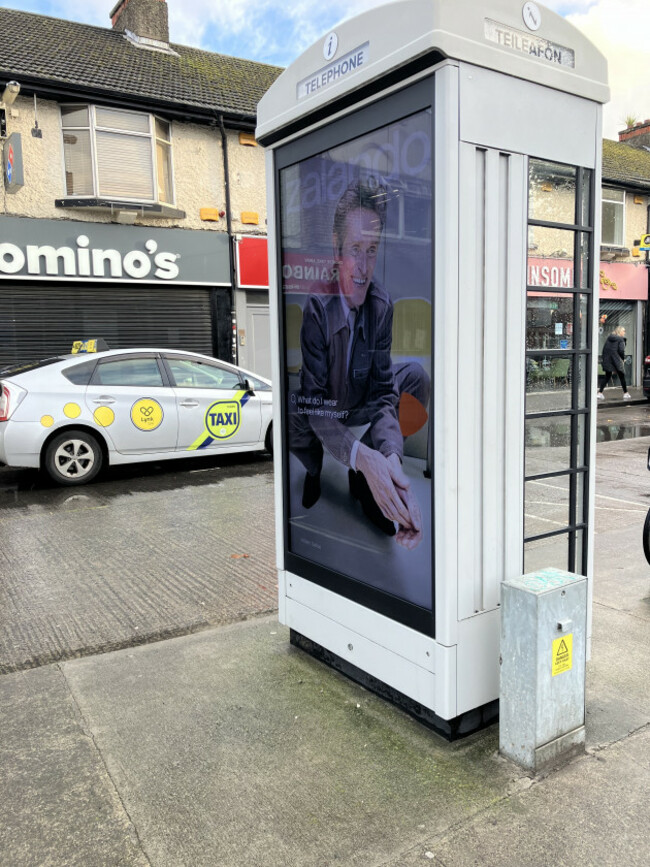
Clear Channel, the outdoor advertising firm which operates the screens, tells potential clients they provide “strong vehicle and pedestrian audiences while also targeting key communter routes as well as city and town main streets”.
Major brands such as Zalando and AIB, as well as state agencies including the Environmental Protection Agency, currently advertise on the screens.
In a statement, Eir said the kiosk touchscreens provided “public information” and allow councils provide links to “local information such as event guides”.
When The Journal visited one kiosk on the northside of Dublin earlier this month its event guide featured events that were already over, including the Dublin Fringe Festival and the Phoenix Park Biodiversity Festival. Some events, such as Music in Monkstown, were both over and located on the opposite side of the city.
Feljin Jose, a Green Party councillor on Dublin City Council, has described the kiosks as a “land grab for ad space” and questioned their overall value to citizens, relative to their value to private companies as a source of advertising revenue.
He said kiosks clutter footpaths, including in city centre areas with high pedestrian footfall.
LED advertising screens which must be bright enough to grab people’s attention both day and night use a large amount energy, he added.
Jose noted that the kiosks have been positioned with their widest elevation spanning the footpath. This makes the LED advertising screen fully visible to oncoming traffic, but leaves less passing distance for pedestrians than if they were turned 90 degrees.
He added that the Dublin kiosks are accompanied by unsightly utility boxes which could have been located under the ground and were not included on drawings provided to the council when planning permission was sought.
“I think there’s some value to having public phones in some locations that people could use,” Jose said, adding that with over 20 across the city now this public requirement has now been met.
“I don’t see why [public phones] need to be given over to private companies and take so much public space away for their own advertising,” he added.
“The one on Mary Street [pictured below last year] blocks up most of the footpath – a phone doesn’t need to take up half the footpath,” he said.
“What’s the city council getting out of it? Why are we just giving away space to any private company that asks?”
Last year, I went through 22 planning applications for these eir 'telephone kiosks' which are primarily just advertising units. This week, I made 7 planning enforcement complaints to Dublin City Council and hope to submit several more. pic.twitter.com/ZIAkPCHed4
— Feljin Jose (@Feljin_J) March 3, 2023
Similar concerns have been raised by members of the public. One objection filed to an application for planning permission for a kiosk on Mount Street in Dublin last year by a woman who walks that way to work in the city centre stated: “Our footpaths are already incredibly cluttered and removing this clutter should be a priority”.
Dublin City Council did not respond to a request for comment.
Decisions by the city’s planners to grant permission for the kiosks have noted that they are located where old phone boxes used to be, and that while there are supposed to be restrictions on advertising in residential and certain urban areas, the particular nature of these screens was not deemed to have an “undue negative impact”.
In its decision on Mount Street last year, the planning department noted that “kiosks are used to contact free phone numbers such as crisis and help agencies and therefore also provide a critical function and service”.

To embed this post, copy the code below on your site














have your say