We need your help now

Support from readers like you keeps The Journal open.

You are visiting us because we have something you value. Independent, unbiased news that tells the truth. Advertising revenue goes some way to support our mission, but this year it has not been enough.

If you've seen value in our reporting, please contribute what you can, so we can continue to produce accurate and meaningful journalism. For everyone who needs it.

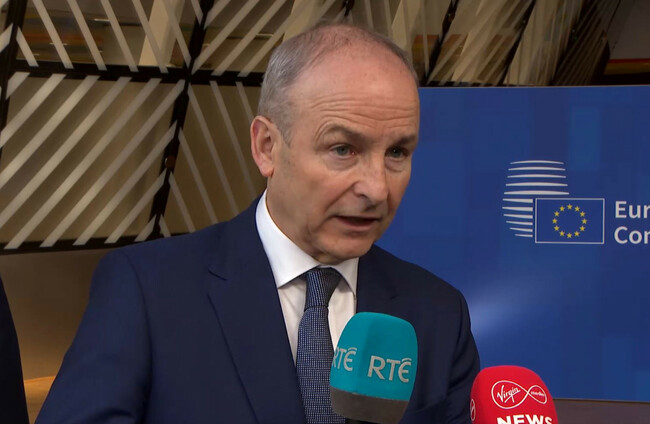
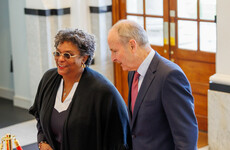
Taoiseach Micheál Martin speaking as he arrived in Brussels. European Council

Taoiseach hints at energy supports as he condemns 'unacceptable' attack on Iranian gas field

Micheál Martin said the government must ensure that any supports don’t create “secondary effects in terms of inflation”.

LAST UPDATE | 19 Mar

TAOISEACH MICHEÁL MARTIN has described Israel’s attack on Iran’s South Pars gas field as “unacceptable”. 

He was speaking as he arrived for a meeting of EU leaders to discuss the bloc’s response to the escalating war in Iran in Brussels, with soaring fuel costs very high on the agenda.

“I think any further attacks on energy infrastructure in the Middle East is unacceptable. It will have long-term repercussions for the energy market and all sides need to desist on such attacks on energy infrastructure,” Martin said. 

Iran has threatened to target regional energy infrastructure in retaliation for an Israeli strike on a site serving its massive South Pars field, which it shares with Qatar.

US President Donald Trump has said Israel will carry out no further strikes on the gas field. He has also made clear that he is disappointed in his Nato allies for failing to send warships to escort tankers through the Iran-controlled Strait of Hormuz.

Asked what actions the EU should take towards getting the Strait reopened, Martin said the most effective way “is a de-escalation of this conflict”.

“The Iranians have responsibilities. Their reckless and irresponsible attacks on the Gulf are absolutely unacceptable. They’re threatening EU citizens by those attacks, endangering them and people who have no involvement in this. That has to stop,” he said. 

“But I think in all conflict situations, all actors have a role in terms of enabling a de-escalation and an end to the conflict, and I think that it something that everybody has to focus on.

“I think Europe has channels, and I think Europe will be ready to play a constructive role in endeavouring to resolve those outstanding issues.”

Energy costs

Tánaiste Simon Harris confirmed yesterday that the government will finalise “an appropriate intervention” to rising fuel and energy prices next week. 

Asked about this today, Micheál Martin said the government has “instruments within social protection” which could be used to support people.

“We will look at the full gamut of areas where we can give some support to people, but again, we will examine that,” he said.

“What’s important is to point out the volatility of all of this. We’ve just had a significant escalation this morning in terms of gas prices because of further action in Qatar and elsewhere, so we’re very conscious of the volatility of this.”

Martin said there would be a short and medium-term dimension to the response.

We’ve got to look at the broader potential implications over the rest of the year. It is a very serious situation, and we’re very conscious of the impact this can have.

“Our immediate priority is to try and alleviate pressures on people, on families in particular, and then to make sure that we can do it in a way that doesn’t do any damage to the economy or doesn’t create any secondary effects in terms of inflation.”

EU response

EU member states – already funding Ukraine’s war effort and now struggling domestically with rocketing energy prices caused by the Middle East war – have been less than enthusiastic about getting involved in a conflict on which the US did not consult them and which does not have a clearly defined objective or exit strategy.  

Even German Chancellor Friedrich Merz – who had earlier signalled support for the US, or at any rate for toppling the brutal Tehran regime – has become more critical. He said this week the US war against Iran is not a Nato matter, nor will Berlin join the war or get involved in ensuring free passage in the Strait of Hormuz.

Iran has effectively closed the crucial shipping lane through which much of the world’s oil supply normally passes, sending prices sky high. Iran has given no indication that it intends to surrender despite the onslaught of airstrikes by the US and Israel.

France’s President Emmanuel Macron too has said his country will not take part in operations to open the Strait of Hormuz at the current high level of hostilities.

“We are not a party to the conflict,” Macron said on Tuesday. 

“Once the situation is calmer, meaning once the core of the bombings has stopped, we are ready, along with other nations, to take responsibility for the escort system.”

The current isolation of the US is in stark contrast with the Iraq war over 20 years ago, which was preceded by then president George W Bush building up a so-called “coalition of the willing” of more than 40 countries to back the US.

Nato chief Mark Rutte said yesterday that the military alliance – which include 23 of the EU’s member states – was “discussing…the best way” to open the Strait of Hormuz.

EU leaders may agree at the Brussels summit to send more naval ships to the Middle East but only within the parameters of missions that pre-date the war in Iran, Politico reported yesterday. These missions were in response to Houthi militant attacks on commercial shipping in the Red Sea and against piracy off the east coast of Africa.

Heads of state and government from the 27 member states will thrash out an updated joint position on the war, which is likely to focus on how Europe could contribute to deescalating the conflict.

To date, the EU has called for restraint, protection of civilians and “full respect of international law”. With United Nations secretary general António Guterres set to attend the summit to discuss the deteriorating international situation – and the sorry state of multilateralism  – it’s likely that a similar call will be reissued.

Ahead of the summit, Micheál Martin described the regime in Iran as a “malign force, suppressing its own people spreading terrorism and chaos”.

Iran must “never” have a nuclear weapon, Martin said.

However, the war is causing “untold suffering” and having a bad effect on Europe economically, he added.

Ireland’s homework

This summit was supposed to be entirely focused on the EU’s economic competitiveness – but US President Donald Trump’s war on Iran will inevitably overshadow proceedings.

Nevertheless, leaders will agree a political direction for improving Europe’s economic performance – and that will set Ireland’s homework for when the country hosts the rotating EU presidency for six months, beginning in July.

That’s because some of the positions leaders are set to agree will include deadlines for the end of this year.

This includes work on harmonising consumer protection rules across the bloc, as well as on simplification and reducing the administrative burden on businesses – Brussels jargon for deregulation.  Ireland also has to usher through the next EU budget – and that’s something leaders are also set to discuss.

But the biggest focus from a competitiveness perspective will be energy prices. It’s expected that leaders will ask the European Commission to urgently bring forward new proposals for bringing down energy costs.

The Taoiseach, fresh from meeting Trump in the White House, will be on hand to hear what work Ireland will be charged with completing this year on the EU’s behalf.

Back at home, prices are rising at the pumps – and that’s never good news.

The government has committed to intervening to address rising fuel prices next week.

With Ireland’s energy costs among the highest in the EU, and rising faster than anywhere else for crucial products such as home heating oil, Martin will be hoping the bloc has a plan that can help to ease the pressure on his government.

With reporting from Jane Moore and AFP.

Readers like you are keeping these stories free for everyone...
A mix of advertising and supporting contributions helps keep paywalls away from valuable information like this article. Over 5,000 readers like you have already stepped up and support us with a monthly payment or a once-off donation.

Close
63 Comments
This is YOUR comments community. Stay civil, stay constructive, stay on topic. Please familiarise yourself with our comments policy here before taking part.
Leave a Comment
    Submit a report
    Please help us understand how this comment violates our community guidelines.
    Thank you for the feedback
    Your feedback has been sent to our team for review.

    Leave a commentcancel

     
    JournalTv
    News in 60 seconds