Sign in. It’s quick, free and it’s up to you.
An account is an optional way to support the work we do. Find out more.
Sign in. It’s quick, free and it’s up to you.
An account is an optional way to support the work we do. Find out more.
In Calling 353, bestselling Motherfoclóir author and podcaster Darach Ó Séaghdha casts a linguistic eye on how we talk about what it means to be Irish, the signs we post to each other about Irishness – and what really lies beneath it all.
DONOGH O’MALLEY was the first TD to say “hoor” in a Dáil debate. But that’s probably not what you remember him for. It’s more likely that you associate his name with the introduction of free secondary school education in the Republic of Ireland, which all began sixty years ago this week.
O’Malley’s announcement of this policy is one of a vanishingly small number of cheer-able moments in Irish politics, and his decision to just plough ahead with his idea against the wishes of his advisors and senior party colleagues is seen as a rare moment of political bravery.
Other Education ministers in the Republic had tried to introduce some form of universal secondary education ever since the North got it in 1947. Not all of them were keen on the idea – in 1951, then-Minister Seán Moylan declared, “I do not agree with this idea of equal opportunities for all, the pursuit of happiness, and so forth”. But ministers such as Richard Mulcahy, George Colley and Patrick Hillery all tried to introduce a similar policy but met with vested interests or needed to first introduce other reforms that would make free secondary education possible.
Given that those of us born since Free Secondary, who have never known any other way, accept the policy to be fair and enlightened and an entirely justifiable investment in the children of the nation, it is startling to see some of the objections to the scheme. Not just the objections prior to its introduction when commentators fretted over the unknown cost, but in the early days of its implementation when it was already creating new opportunities for young people.
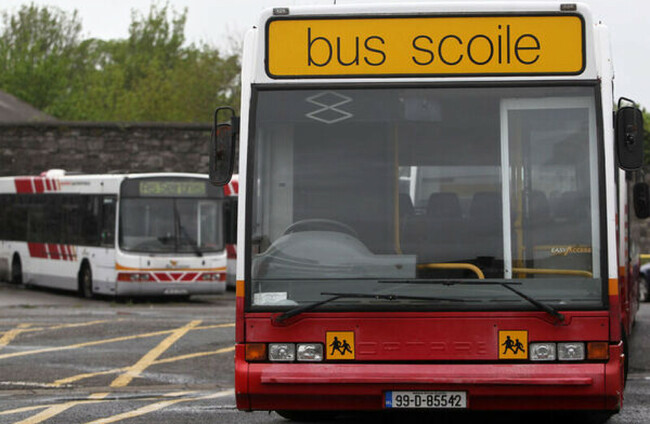
Part of the O’Malley scheme was to transport children from rural areas without a school to more densely-populated places with the facilities to educate them. Prior to free secondary education, schools with fifty pupils or fewer had 21% of all teachers but 11.5% of all students. And yet fixing this glaring problem by making it easier for students to go to a school that could accommodate them was bafflingly controversial.
Patrick Lindsey, a Fine Gael TD for Mayo North, lamented how school buses – although fine on paper – would deprive schoolchildren of the free learning that was presented by nature, saying in the Dáil “as they walk along to school they should be able, instead of being crammed in a van… to see the changes of spring, summer and autumn. They should be able to watch bird-life, the crops growing and everything coming to fruition and… even be able to watch the frogs coming out on the roads after rain”.
He would later regret giving his opponents such a visual reference and came to resent O’Malley and others asking him “how are your frogs getting along” and the like.
The evils of school transport were also a concern for the Club Secretary of Coolaney GAA, who told the Sligo Champion in 1972 that Gaelic sports were on the decline in the county because free education was taking children straight to and from school on buses when they might otherwise be playing impromptu matches on the way home.
And what might decent country schoolchildren be exposed to on the bus to school in the town? Soccer. Free education brought in by a President of the FAI – coincidence? (Donogh O’Malley did indeed serve as President of the FAI, although he had no background in the game and his interest in it was driven entirely by his soccer-mad son).
Free secondary education arrived at roughly the same time as a heap of other modernising measures – the lifting of the GAA’s ban on foreign games, the lifting of censorship restrictions on thousands of books, and Catholics being allowed to attend Trinity without a dispensation from the bishop.
With all this change in the air, it was only a matter of time before someone stepped up to bravely say that they didn’t like it.
In 1972, the Careers Officer at UCD made a startling announcement: that a young person leaving that university with a degree in their paw might not just walk into a job. This remark was widely reported at the time, with opinion pieces suggesting that other people’s children would be better off going to a vocational school and learning a trade than taking an academic path. Some even said that if O’Malley was still around, he would regret his decision to move ahead so rashly.
This would become an enduring complaint – that education beyond practical learning required a leap of faith, and that such faith was hard to publicly admit to as one economic calamity followed another. Some critics suggested that the implementation of free education was picking at the scab of Irish snobbery, encouraging unsuitable families to foolishly allow their children to be educated instead of given the bare minimum practical instruction to work in a field or a factory that was for fitting for their background.
Yes, the people who said this thought that the other people were snobs.
As I said above, the story of free secondary education began a generation earlier in 1947, and by the late sixties a generation of writers and activists from working-class backgrounds began to emerge who would go on to excel in a range of fields globally, even to become Nobel laureates.
In 1977 – the tenth anniversary of the policy in the Republic – unemployment in Ireland stood at record levels, with youth unemployment particularly high among the first generation of Irish people to have had a complete primary and secondary education provided for them by the State. But the seeds were sown for big changes, and the people who have benefitted from free education in Ireland have achieved things far greater than an okay job straight after leaving school.
School is about more than preparing a young person for a job – who even knows what kind of jobs the schoolkids of today will be doing when they get out. And one of the most important lessons we can learn from the saga of free education in Ireland is that some things, even if they are done quickly, can take a bit of time to deliver on their promise.
Darach will be back next Sunday with more thoughts on the words and Irish cultural phenomena that unite us.
To embed this post, copy the code below on your site










have your say