Sign in. It’s quick, free and it’s up to you.
An account is an optional way to support the work we do. Find out more.
Sign in. It’s quick, free and it’s up to you.
An account is an optional way to support the work we do. Find out more.
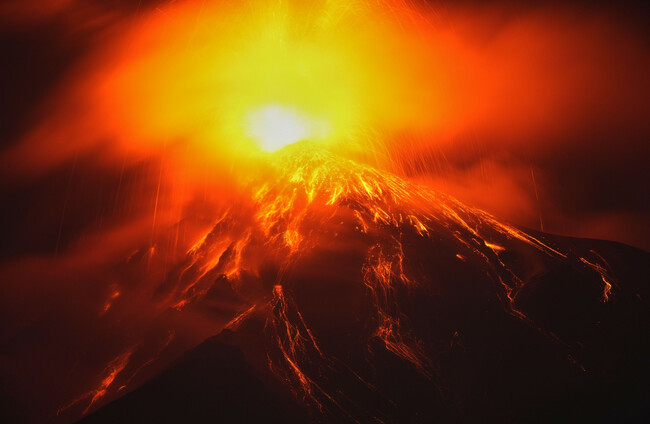
HUNDREDS OF PEOPLE living on the slopes of Guatemala’s Fuego volcano have been evacuated after a major eruption sent lava flowing down its slopes and ash billowing into the sky.
Guatemalan authorities raised the alert level today from orange to red, the highest danger warning, for the departments of Sacatepéquez, Chimaltenango and Escuintla as the eruption intensified.
Central America’s most active volcano began erupting on Monday morning, with conditions worsening overnight.
Rivers of lava streamed down the 3,763-metre volcano located less than 100 kilometres from Guatemala City, while ash rose some six kilometres into the red sky.
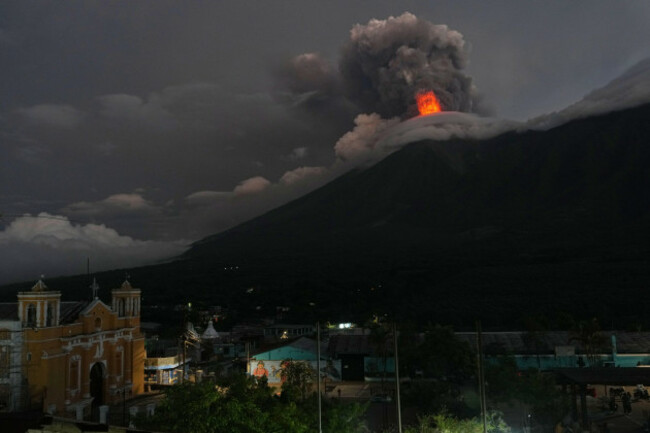
“Since early morning it was active. That night, the alarm was raised that we needed to evacuate,” local resident Alejandro Garcia (68) told AFP.
Villagers left of their own accord out of fear, Garcia said, describing terrifying scenes of lava tumbling down the mountainside.
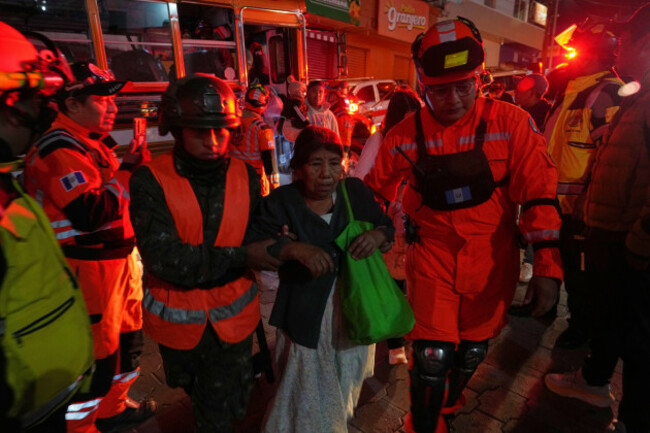
Firefighters said they transported at least 350 residents of the El Porvenir and Las Lajitas villages to the eastward San Juan Alotenango municipality.
Evacuees are staying in a community hall where makeshift beds have been set up, while the number of people taken to other nearby towns remains unknown.
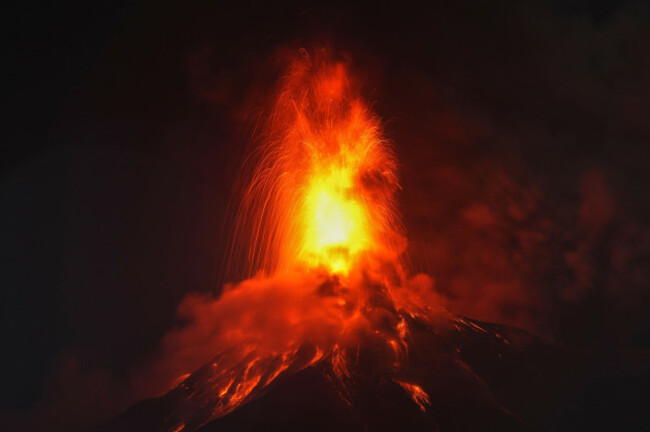
“If there were any chance of moving to a different house, it would be better, because you’re always afraid since the volcano doesn’t give any warning,” Lidia Ortiz (40) told AFP at the shelter.
Escuintla to the south was sheltering dozens more families, including children, local authorities reported.
“If an evacuation is ordered or conditions pose a risk to your life, follow the principle of self-evacuation,” Conred spokesperson Valeria Urizar said in a video posted on social media.
The country’s Institute of Volcanology warned of hot volcanic debris flows down Fuego’s slopes, with communities on the western and southern flanks at the greatest risk.
Fuego had been erupting for 23 hours straight by Tuesday morning, it said, although the intensity was easing slightly.
“We’ve already gotten used to having the volcano constantly active, but this time it was really too much,” 50-year-old resident Sonia Vasquez told AFP.
Guatemalan authorities urged “precautions with air traffic,” but there has so far been no impact on the capital’s international airport.
The education ministry ordered the suspension of face-to-face classes in communities within two municipalities near the volcano.
NEW: Powerful eruption of Fuego volcano recorded by hikers 🌋 pic.twitter.com/BAZ06OIRXY
— Insider Paper (@TheInsiderPaper) August 4, 2026
Traffic police also closed a road encircling the mountain range that connects the south coast with the colonial city of Antigua, the country’s main tourist destination and a Unesco World Heritage site.
Guatemala lies on the Pacific “Ring of Fire” and experiences frequent seismic and volcanic activity.
There have been several such mass evacuations in recent years because Fuego erupted.
Authorities evacuated more than 500 people last year after Fuego spurted out gas and ash, with residents moved to shelters from communities near the crater.
Another eruption in 2023 pushed around 1,200 people to evacuate.
In 2018, 215 people were killed and a similar number left missing when rivers of lava poured down Fuego’s slopes and destroyed a village.

To embed this post, copy the code below on your site















have your say