Sign in. It’s quick, free and it’s up to you.
An account is an optional way to support the work we do. Find out more.
Sign in. It’s quick, free and it’s up to you.
An account is an optional way to support the work we do. Find out more.
LAST UPDATE | 18 Feb 2025
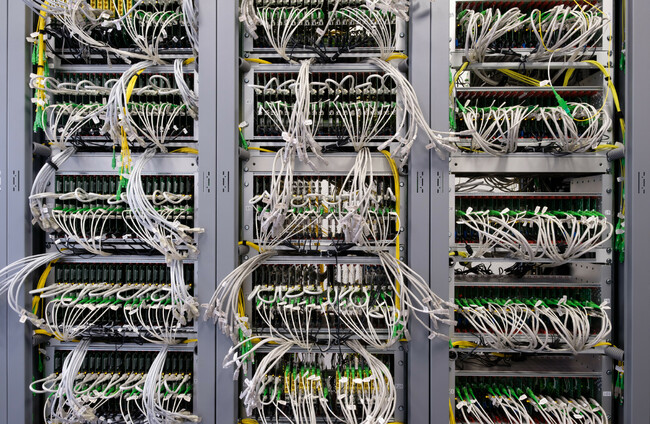
NEW DATA CENTRES will be required to have generators or storage, either on-site or nearby, that can match its level of demand as a backup.
This is in an effort to ensure that new data centres won’t put additional pressure on existing electricity supplies.
Last year, The Journal Investigates found that backup and emergency generators attached to data centres in Ireland are releasing huge quantities of carbon dioxide emissions.
Our investigation found that over 135,000 tonnes of CO2 was emitted from these centres in the last five years from generators not on the electricity grid.
This amount of CO2 is comparable to running roughly 33,750 cars for a year in terms of the climate pollution produced.
The proposed new rules for the industry will be published today by the Commission for Regulation of Utilities (CRU).
The CRU said data centre demand growth to date has been heavily concentrated around the Dublin area, which has contributed to creating localised pressure on the electricity network.
New data centres seeking to connect to the grid will also be required to participate in the market and provide power to homes and businesses.
And while future data centres will be required to report on their emissions and the use of renewable energy, data centres will be allowed to use fossil-fuels.
The CRU said it is “trying to strike a balance between a number of competing demands and issues”.
“We are providing clarity to the sector on how it can connect to the grid over the coming years,” CRU Commissioner Dr Tanya Harrington told RTÉ’s Morning Ireland.
Harrington added that the CRU is asking ESB and EirGrid to collate data in order to show where the grid is constrained, “so that those investing will have a clear picture of where they can easily connect to the system or where there are constraints”.
She added that the draft decision is “working towards the government’s twin objectives of decarbonisation and digitalisation”.
However, Harrington said that it is a “matter for the data centres themselves to choose how they fuel and power themselves”.
“We’re requiring them to participate in the market, and that means that the most efficient plant, the cleanest plant, gets dispatched first,” she added.
“So there’s a number of incentives to try and incentivise the data centres who are constructing to do it in the greenest fashion possible.”
Research from University College Cork in December found that electricity demand from data centres has grown at an annual rate of almost 23% since 2015.
Electricity demand of other sectors, including transport, residential and commercial, and public services, grew by less than 0.5% over the same period.
It’s estimated that the data centre sector will continue to grow in the coming years, with demand from contracted data centres projected to increase from 21% of national electricity demand in 2023 to 30% by 2032.
Harrington said she understands these concerns but added that “our climate objectives are very ambitious, and we are working to develop an abundant source of renewable energy off the west coast of Ireland and bring that onshore”.
However, she said this will “take some time because we have to build the infrastructure to do that, which is why investment in the grid is so important”.
She added that progressing “both onshore and grid reinforcement supports will leave us in a situation where we have a greater abundance of renewable energy”.
Harrington further remarked that the draft decision “tries to meet our emissions targets and ensure there’s a continued investment in what is the enabling infrastructure for a knowledge rich economy”.
The CRU said it has “engaged heavily with stakeholders”.
“This is a draft decision, so it’s out for public consultation for six weeks, and we very much look forward to receiving the feedback from the industry,” said Harrington.
Unsure of what exactly is happening with the earth’s climate? Check out our FactCheck Knowledge Bank for essential reads and guides to finding good information online.

To embed this post, copy the code below on your site












have your say