Sign in. It’s quick, free and it’s up to you.
An account is an optional way to support the work we do. Find out more.
Sign in. It’s quick, free and it’s up to you.
An account is an optional way to support the work we do. Find out more.
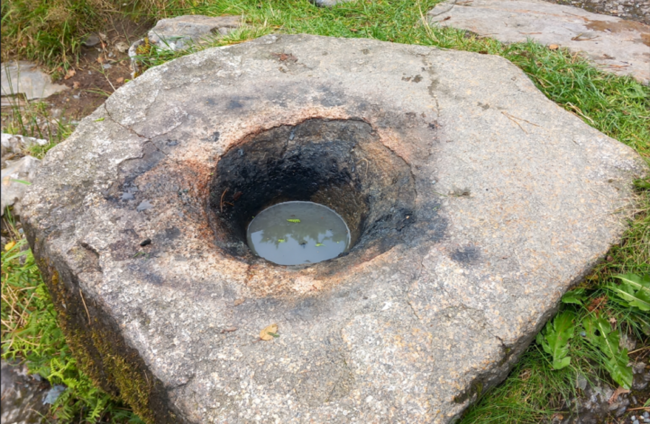
THE DEER STONE monument in Glendalough, a more than 1,000-year-old bullaun stone at the heart of the national park in the Wicklow mountains, has been damaged by fire in what appears to be an act of vandalism.
The granite stone with a hollow depression at its centre, which is linked to a legend about St Kevin involving deer, was found burnt and cracked by Pat Reid of the Glendalough Heritage Forum after he heard there might have been a fire at the site last week.
The extent of the damage is not yet fully known and a report has been compiled by the National Monuments Service, which has responsibility for national monuments, according to Reid who spoke to The Journal today.
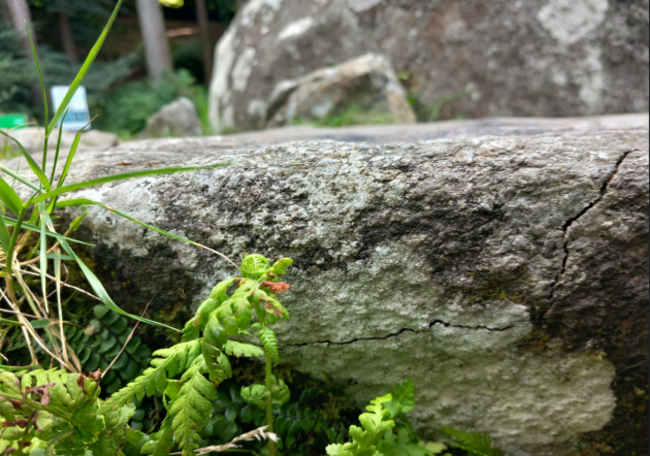
The fire is believed to have been lit last Thursday night. Reid heard about the fire on Sunday after an Office of Public Works (OPW) staff member discovered the damage.
“The manager of the OPW here mentioned to me that they thought they had a fire in it prior to the weekend but she hadn’t really had time to look at it so I went out and had a look and discovered the cracks in it and the extent of the damage,” he said.
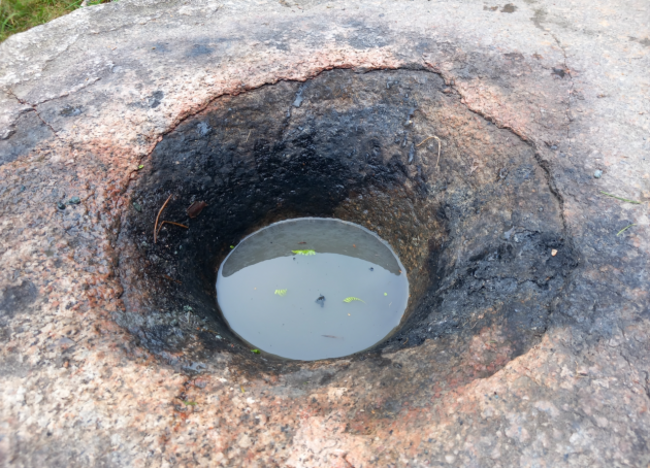
Asked if it looked as if there was evidence of a campfire, such as rubbish and debris, Reid said that it seemed more likely that the culprits were using the stone to cook.
“In fact there’s very little ash that would be associated with a campfire. So the thinking now is maybe they were using it to cook a barbeque very late at night because nobody seems to have seen it. Or that they just put accelerants into it, maybe petrol or something like that and et fire to it.”
Reid says the site is not exactly “session-orientated”.
“It’s not the kind of place that you would sit around, you know it’s just not comfortable. It’s not set up that way.”
“There seems to be no motivation for it. That’s the thing. It just seems like senseless vandalism.”
Reid says that maybe people were trying to cook on the stone because the temperature needed to put three large cracks in a granite boulder is very high.
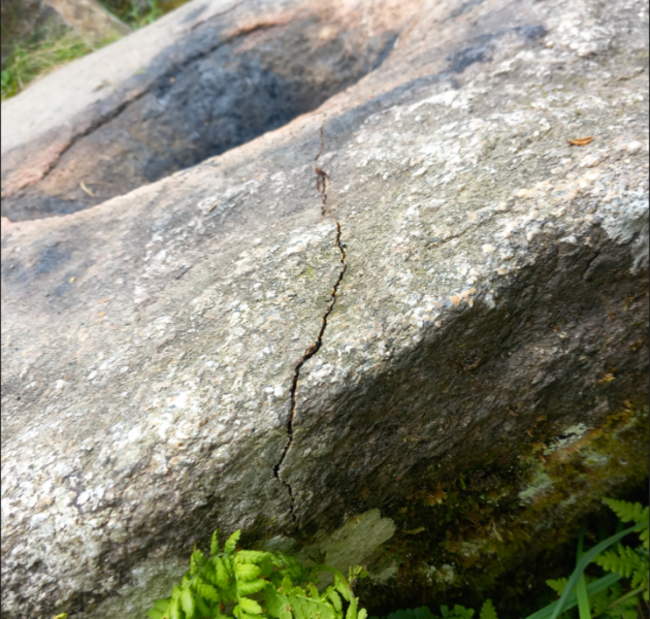
“I find it hard that people would do such a thing on purpose,” he says. “I think it’s just complete and utter disrespect, disregard for our national heritage.”
There have been other incidents in which heritage sites have been damaged in recent years, such as the graffiti scratched into a Neolithic burial monument in Co Meath in April 2021 and the spray painted graffiti left on the Lia Fáil standing stone monument in on the Hill of Tara, Co Meath in February of this year.
Pointing to those examples, and the fact that Heritage Week is coming up this Saturday, Reid says that public education is a necessity if these incidents of vandalism are to be prevented.
“It’s a good time to remind people that we need to protect, not take for granted our heritage, be it built, cultural or natural heritage. This can’t be sustained, we need to stop this.”
The concern now that the damage has been done is the effects of the coming winter, when low nighttime temperatures will cause freeze-thaw action and widen the cracks.
Read more here on how to support a major Noteworthy project to examine if Ireland’s historic sites are at risk of disappearing.

To embed this post, copy the code below on your site















have your say