Sign in. It’s quick, free and it’s up to you.
An account is an optional way to support the work we do. Find out more.
Sign in. It’s quick, free and it’s up to you.
An account is an optional way to support the work we do. Find out more.
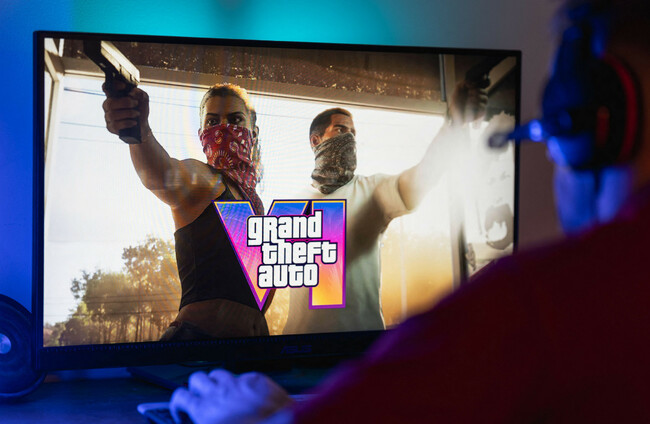

SOMETHING STRANGE HAPPENED on Netflix on Thursday.
The games developer Rockstar gave the streaming service a six-hour exclusive window on an extended look at Grand Theft Auto VI, before releasing exactly the same material free on YouTube. In other words, Netflix subscribers are getting early access to an ad.
And the gaming community loved it. So much so, they broke the internet.
IShowSpeed’s YouTube reaction to the event was interrupted by technical difficulties on Netflix. Gaming network Twitch suffered from an outage due to the high levels of traffic.
I asked a teenage Irish GTA fan why it was such a big deal. He said: “It’s like a movie series that used to release a film every couple of years.
“It has a huge fan base, and everyone would be anticipating the next one. Since the last release was so big, maybe the next one would be even BIGGER! But after a couple of years with no news, you start to wonder if it will ever come back, and the hype slowly dies out. Then, ten years later, it’s finally announced, and everyone suddenly remembers how good it is and looks forward to the next one.”
Watch Grand Theft Auto VI: An Extended Look. Now on @netflix: https://t.co/n7rgIvngtU pic.twitter.com/tyDK8Mctcc
— Rockstar Games (@RockstarGames) August 27, 2026
GTA is one of the few entertainment properties with a global fan base capable of turning a trailer into an event.
After 13 years waiting for a successor to GTA V, some fans will inevitably subscribe rather than endure six hours watching everyone else discuss it online. Asking them to wait is like telling a five-year-old that Christmas has been postponed until Saint Stephens Day.
How much is Rockstar paying for this exclusive ad? Nothing.
In fact, some industry insiders have reported Netflix is paying nearly $100 million US dollars (€85.8 million) for the rights to stream the trailer exclusively before it goes up on YouTube and everywhere else.
That tells us a lot about the economic power of Grand Theft Auto in particular, and gaming versus streaming in general.
For the uninitiated, GTA is a series of games in which players roam enormous fictional American cities, stealing cars, committing crimes and generally behaving in a variety of antisocial ways.
The first appeared in 1997. Since then, the franchise has sold nearly 475 million copies. To put that number in perspective, there are about 452 million people in the European Union. Rockstar has effectively sold more copies of GTA than there are EU citizens.
When Grand Theft Auto V arrived in September 2013, it generated $800 million (€687 million) on its first day and $1 billion (€859 million) within three days. But the game isn’t just a commercial juggernaut of one-off purchases.
It’s also a virtual location that keeps players coming back and paying for more. GTA Online appeared a month after Grand Theft Auto V.
It allowed millions of players to continue inhabiting fictional worlds that had already been expensively constructed. They could buy cars, weapons and properties and spend money on upgrades.
Rockstar could keep adding things for them to do – and things for them to buy. Selling a single video game is like selling a ticket to Disneyland. GTA Online is more like giving ticket holders pay to play access to Disneyland whenever they want at zero cost to the theme park.
A traditional entertainment product has a familiar financial trajectory. Spend a fortune in planning and production, spend another fortune marketing it, launch it, collect the money and then manage and extend the decline in sales.
Hollywood has lived with this problem for a century. Gaming has cracked it.
GTA Online has productised a virtual location that had already been built. These online games are closer to the economics of Facebook than the economics of Hollywood. And it helps explain why Grand Theft Auto VI, which finally arrives on 19 November, is such an unusual commercial event.
It isn’t simply the long-awaited sequel to a successful game. It is the replacement for one of the most profitable pieces of entertainment infrastructure ever constructed.
That said, there won’t be an online mode for GTA VI initially. But that doesn’t seem to bother the fans.
“There won’t be an online mode on release, and we don’t expect GTA 6 Online until mid-2027. But I think the story and experience of the base version of GTA 6 will be miles better than GTA Online”, my teenage GTA fan informed me.
Fans have been able to pre-order the game since June. An estimated 4.38 million copies have been sold, amounting to around $429 million (€368 million) revenue. Not bad for something that isn’t out yet.
But it shouldn’t come as a surprise. Consumers spent $202 billion (€173 billion) on video games worldwide last year. The equivalent figure for the music industry was $31.7 billion (€27.2 billion).
The global streaming market size for 2025 was estimated as somewhere between $124 billion and $160 billion (€137 billion), depending on who you listen to. So gaming is bigger than music and streaming combined.
But gaming doesn’t yet get the cultural respect its economic performance deserves.
Maybe it’s because games are a strange combination of multimedia and commercial offerings.
The GTA franchise, for example, is simultaneously a series of software products with high price points, a set of compelling narratives with well-defined characters and cinematic moments, a social network and a recurring-revenue generating virtual platform. And in an attention economy, GTA Online offers a destination that users want to visit frequently and for long periods of time. And they spend there.
So it’s no wonder that Netflix wants to create a sense of itself as a premium destination for this audience.
And no wonder that Rockstar Games saw the opportunity to increase the marketing reach of a game that’s bound to be a success. Mind you, Grand Theft Auto VI is estimated to have cost between $1 and $2 billion (€1.72 billion) to develop, market, and support.
So it’s still a big commercial swing. But what started out as a two-dimensional game about stealing cars, has ended up stealing the crown as the biggest cultural release of the year. Mission passed. Respect +.
Steve Dempsey is a media and technology expert and commentator.
To embed this post, copy the code below on your site















have your say