Sign in. It’s quick, free and it’s up to you.
An account is an optional way to support the work we do. Find out more.
Sign in. It’s quick, free and it’s up to you.
An account is an optional way to support the work we do. Find out more.

In Calling 353, bestselling Motherfoclóir author and podcaster Darach Ó Séaghdha casts a linguistic eye on how we talk about what it means to be Irish, the signs we post to each other about Irishness – and what really lies beneath it all.
THIS WEEK, MET Éireann – along with the UK Met Office and KNMI in the Netherlands – presented the list of storm names for the coming autumn and winter. The practice of naming storms is now in its eleventh year, and follows the precedent of hurricanes being given human names.
This year, we can expect to hear names like Olaf and Dano in the weather report, with many names chosen in response to suggestions from the public. Many people have taken the time to suggest the names of their children for storms, and two of the names chosen for this year’s list were suggested in honour of pets: a cat called Theo and a dog called Ivy.
The practice of naming hurricanes only with female names dates back to 1953 in the United States. Prior to this, it was a custom to name hurricanes and severe storms after the saint whose feast day was celebrated when it struck.
So while some people try to dismiss or absolve the practice of giving hurricanes female names by saying “that it was just how things were in the bad old days”, it’s worth remembering that this system was introduced to replace a practice that used male names too – it began ten years after the iconic “We Can Do It” poster celebrating women keeping the American economy going in World War II.
In fact, from 1953 to 1979 the fellas at the US Weather Bureau would often name hurricanes after ex-wives, ex-girlfriends and unacceptably ambitious female colleagues.
In 2014, one year before the current storm-naming practice began, the PNAS (Proceedings of the National Academy of Sciences) released a study arguing that storms with female names were more deadly than male-named ones. Not because they just happened to be more powerful storms, but because people didn’t take them as seriously and didn’t prepare as well for them.
Nowadays, not only do we have male names for storms but we have a wide spread of name cultures represented in the mix, as befits the names a person might encounter in the areas affected by the weather event in question.
One of the names on this year’s storm list is Phelim, which was taken from public submissions to Met Éireann.
Intentional or otherwise, I was immediately reminded of the Donegal song Fheilimí (Feilim’s Little Boat), which tells of a lad called Feilim who takes his boat to Tory Island where it sadly breaks. While the weather is not blamed specifically in the song for the breaking of the boat, we cannot rule it out given what we know about conditions in the northwest of Ireland. I certainly wouldn’t recommend taking a boat to Tory Island when Storm Phelim strikes.
Is it a good thing or a bad thing to be named after a storm or a hurricane? I know a Caitríona who chose to go by “Kate” on her J1 because Hurricane Katrina was so recent in the memories of people in America and she didn’t care to be associated with it. Ophelia has grown in popularity as a given name in England since Hurricane Ophelia struck – it hasn’t caught on to the same extent in Ireland, where the hurricane caused significantly more damage. But a meteorologist would baulk at drawing conclusions from such an unscientific example.
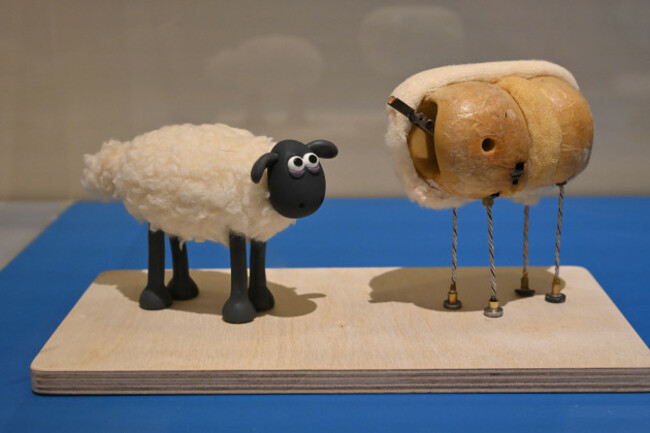
One of the names chosen for this year is Shaun, an intentional and planned nod to the children’s TV character Shaun the Sheep. The woolly stop-motion mischief-maker was chosen on foot of the Met Office’s collaboration with Aardman Studios to raise awareness of the name selection process.
Irish people are often surprised to learn that Shaun’s name is a pun, because sheep are shorn and people from certain regions of England don’t pronounce the r when they say “shorn”. So although Shaun is a spelling variant of Seán, this name came out of the UK’s share of names rather than the Irish one (Met Éireann chose to honour major figures in that organisation’s 90-year history this year).
I mentioned above that storms and hurricanes used to be named for the saint’s day or other religious feast day celebrated when they were first identified.
And when I said “storm” and “Seán”, no doubt your mind immediately rushed to the great Irish poet Seán Ó Ríordáin and his poem Oíche Nollaig na mBan, concerning an especially powerful storm which struck Cork on Women’s Christmas.
The poem itself isn’t about the Irish tradition of giving women a day off on the Feast of the Epiphany, it’s about the poet being impressed by the power of the storm and hoping that such a storm rolls on the day he dies so that he doesn’t even notice the end coming.
Some literary critics – many of them teenage Leaving Cert students with filthy minds – have noted how Ó Ríordáin talks about “ag filleadh abhaile ó rince an tsaoil” (coming home from the dance of life) and “an ghluaisteáin ag stad” (the car coming to a stop) and concluded that the poet was comparing the power of the storm to giving a girl a lift home after a céilí and pulling over somewhere discreet for a romantic encounter. It is a fine poem and it supports many interpretations, including this one.
One way or another, when some people are taking shelter from Storm Shaun I will be reflecting on Storm Seán and his enduringly evocative description of a storm.
Darach will be back next Sunday with more thoughts on the words and Irish cultural phenomena that unite us.
To embed this post, copy the code below on your site










have your say