Sign in. It’s quick, free and it’s up to you.
An account is an optional way to support the work we do. Find out more.
Sign in. It’s quick, free and it’s up to you.
An account is an optional way to support the work we do. Find out more.
IT’S A DAY of rest, and you may be in the mood for a quiet corner and a comfy chair.
We’ve hand-picked some of the week’s best reads for you to savour.

The growth of AI and online bots is making it increasingly difficult to tell whether someone on the internet is actually human. It focuses on the Orb, a device that scans a person’s iris to provide a “Proof of Humanity,” while also raising concerns about privacy and the collection of personal information. Will proving that we are human will become necessary in the future?
(The New Yorker, approx. 35 mins reading time)
“Nevertheless, the Orb may be coming soon to a coffee shop, sidewalk, or shopping mall near you. “We have about forty million people on the network with some level of verification and about half of those, eighteen million, at the highest level of verification—the Orb verification,” Sada told me. “But right now we are really focussed on the U.S.” During the Biden Administration, the S.E.C. wasn’t inclined to look favorably on people being paid in crypto for having their eyeballs scanned. That changed when Donald Trump returned to office, and since the spring of 2025 it has been possible to secure a Proof of Humanity from an Orb within the land of the free and the home of the brave”.
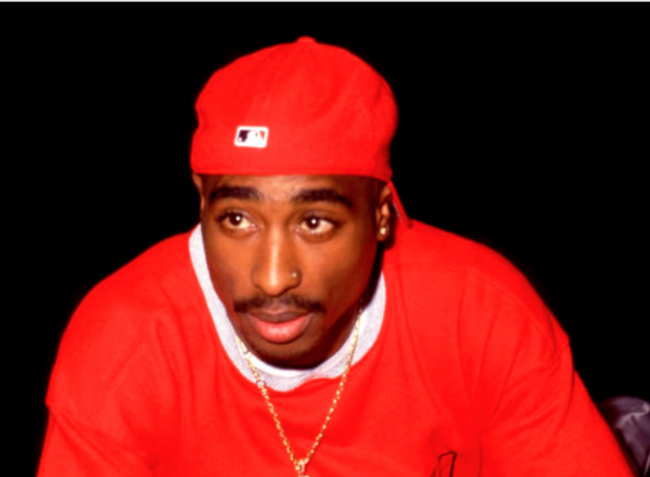
Duane “Keefe D” Davis’s conviction for the murder of Tupac Shakur is a major development after nearly 30 years of mystery surrounding the case. However, the guilty verdict does not fully explain who ordered or planned the killing. This article explores the uncertainty and conspiracy theories that remain around the rapper’s death.
(The Hollywood Reporter, approx. 35 mins reading time)
“It was then that Davis claimed that he pulled out the .40-caliber Glock and passed it to the backseat for someone to take aim. In some interviews, Davis was cagey and refused to name the shooter. In others, he stated that Anderson delivered the four fatal shots into Knight’s 750-series BMW. In one statement, Davis admitted that he would’ve been willing to shoot had the Cadillac approached from a different angle. Then he diagrammed their getaway. The gun was never found. He claimed they parked the rental car at a nearby hotel and hid it atop one of the tires. When they returned the next morning it was gone”.

The New Yorker follows a West Virginia custody battle centred on the parents’ opposing views over vaccines and their children’s medical care. It also explores how the MAHA or “Make America Healthy Again” movement and online communities have intensified vaccine scepticism.
(The New Yorker, approx. 50 mins reading time)
“Know better, do better” is a popular MAHA mantra, another way of saying D.Y.O.R., or “do your own research.” This means turning to the internet to learn about red dyes, additives, food as medicine, essential oils, and when to apply a garlic poultice to the bottom of your feet. It also means knowing how to read vaccine inserts, the technical fine print on vaccine packaging. On parenting forums, mothers remind one another that no one cares about your child more than you do. On Facebook, discussion groups foster the feeling of a countercultural underground. Pages are shut down for promoting misinformation, then reappear under new names. Conversation takes place under the veil of coded language: vaccines are referred to as “vak seens” or, more commonly, with a cupcake emoji”.
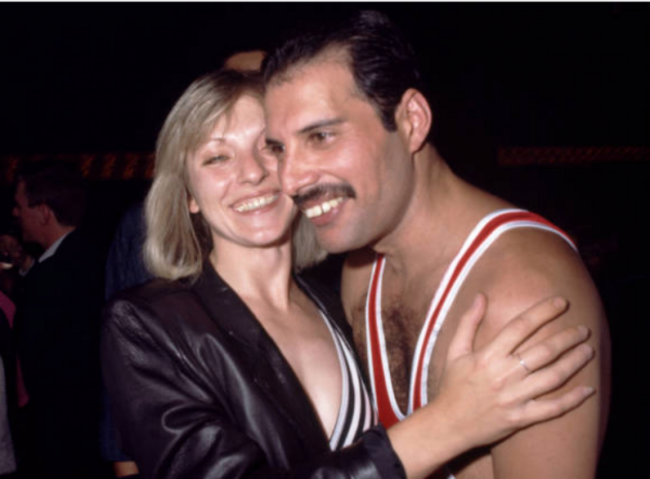
Mary Austin had a lifelong connection to Freddie Mercury, that began as a romantic relationship. She remained one of the most important and trusted people in his life, even after their relationship changed. After the singer’s death, Austin inherited his home and part of his estate. The article reflects on their lasting bond and Austin’s role in preserving Mercury’s memory.
(The Guardian, approx. 40 mins reading time)
“A couple of years before Mercury died, when Austin was almost 40, she had her first son Richard with her then partner. Mercury became Richard’s godfather. I ask if he doted on him. “Well, he knew he had Aids, and he felt he should never touch Richard, go near him, because there was so little known about the virus at the time.” She didn’t share the anxiety, she says. When Mercury was dying, Austin was pregnant with her second son, Jamie. “I was there next to his bed, I was holding his hand, I was doing whatever I needed to do.”

There are only 6,600 African wild dogs left in the world. The Endangered Wildlife Trust’s African wild dog range expansion program has made it their mission to protect the dwindling species.
(Smithsonian magazine, approx. 14 mins reading time)
“Wild dogs are the most successful hunters in Africa, with a kill rate of 80 percent. Lions, by comparison, kill just 30 percent of what they hunt. The dogs’ superpower is also part of the reason they are so threatened.”
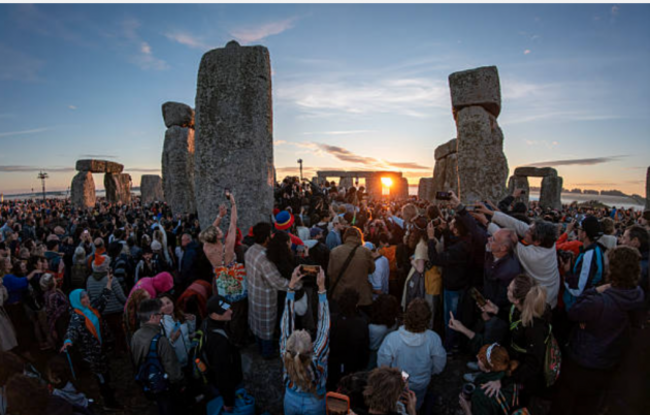
In the 1960s, scientist Gerald Hawkins’s developed a theory that Stonehenge was actually a prehistoric computer capable of predicting eclipses.
(BBC, approx. five mins reading time)
“If this were true, Stonehenge was ‘a device that priest-rulers could have used to enhance their power’, argued a 1965 article in Time magazine. ‘On the day or night that their stone computer predicted an eclipse, they might well have summoned their subjects to Salisbury Plain to observe a spectacle that terrorised most ancient peoples. When the eclipse started, the priests probably intoned the prayers that enabled the Sun or Moon to escape the blackness.’”
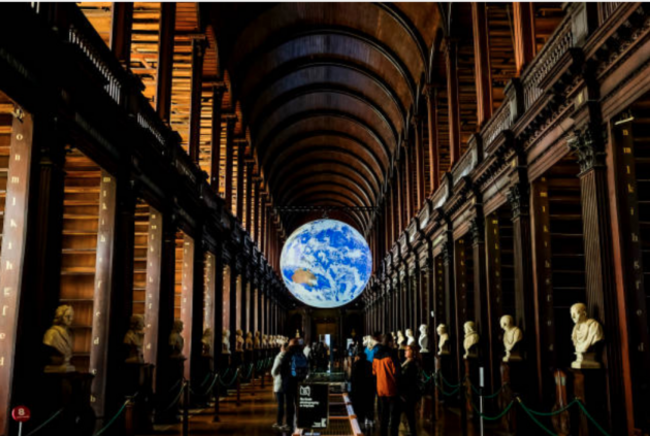
Through its independent bookshops, historic libraries and pubs, Dublin has maintained a strong literary culture. Here the New York Times explores those spaces that help to keep the tradition alive.
(The New York Times approx. twenty mins reading time)
“To get to the bookstores and libraries (and everything else), you must walk past the pubs. We hit many of the best and most venerable, including the Davy Byrnes, founded in 1889. It has a cosmopolitan Art Deco interior and frescoes of Joyce-era Dublin. Davy Byrnes is where Leopold Bloom, in Joyce’s “Ulysses,” partook of a “gorgonzola sandwich and a glass of Burgundy.” The sandwich, still on the menu, is a punch in the taste buds. It takes you back to culinary basics, in the best way possible.”
To embed this post, copy the code below on your site












have your say