Sign in. It’s quick, free and it’s up to you.
An account is an optional way to support the work we do. Find out more.
Sign in. It’s quick, free and it’s up to you.
An account is an optional way to support the work we do. Find out more.
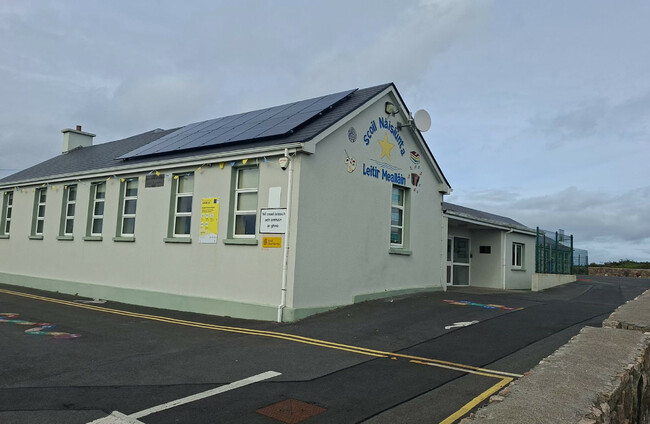
LETTERMULLAN NATIONAL SCHOOL is one of the most westerly schools in the country, 50 kilometres from Galway city, and is reached by narrow and winding bridges, as it is located on a small island in the Connemara Gaeltacht island archipelago.
Principal Bríd Ní Liatháin started the academic year this week with an additional, unexpected challenge: the school suddenly and without explanation lost its hot school meals programme.
A week on, and following a focus on the story in the media, there’s still no indication from the Department of Social Protection as to what is being done to rectify the issues caused by the eve of opening changes in the scheme.
Twenty-five pupils attend the school but the day before they were due back, the principal received news from the supplier that the hot meals were to be cut. They had been left with no choice due to new conditions of the scheme.
“He called me and was upset,” Ní Liatháin told The Journal. “I believe he did not profit from our small school this past year but he stayed with us because he understood the value of the service to our students – now it is impossible due to the new criteria.
The changes to the scheme mean no teacher or student can be involved in the delivery of hot meals. As Leitir Mealláin National School is a small school, the cold meals would be cooked in a stove in a neighbouring, larger school and then delivered. The process was called ‘piggy-backing’ but this is no longer allowed.
Leitir Mealláin National School was not the only one this provider was calling with the bad news. He had to contact 100 other schools to share the bad news that they would also be losing the service. As the principal explained:
That’s just one provider – how many other schools across the country are losing their hot meals, how many more children will be left out?”
The schools had begun a tender process for the meals contract before the summer holidays, in accordance with the criteria at that time. They were notified of the news approach in a circular from the Social Inclusion Unit of the Department of Social Protection the day before school started.
“We had no time to prepare, there was no alternative, there was no support, there was no solution,” Ní Liatháin said.
The new requirements mean larger schools can no longer reheat meals for smaller schools so all schools, regardless of size, must install industrial kitchen equipment. In addition, each school must employ a staff member to use this equipment – but there is no funding or guidance for this. All uneaten food must also be kept on site until collected by the supplier.
“This is not possible – we don’t have the space for the ovens or the money to employ someone to operate them and it’s crazy to expect the supplier to come back to rural areas to collect leftover food.”
Ní Liatháin also pointed out that the supplier has lost work and income.
“She lost her income overnight,” she explained. “One day she was supporting our schools and doing meaningful and useful work – the next day her job was gone.”
A school for special needs pupils near Leitir Mealláin was also hit. The school has a capacity of 20 pupils and although upgraded last year, it has failed to meet the Department’s new standards.
“There was no plan, no timeline, no hint that there would be additional funding for other upgrades – there was just silence,” added Ní Liatháin.
In the meantime, children have been left without access to a service they are entitled to.
“This is not about children being left hungry – this is about these children being included, they have entitlements and all children should be treated equally, no matter where they live.”
Leitir Mealláin is part of the DEIS scheme and the School Completion Programme, initiatives which support disadvantaged communities.
“When every child sits down with the same hot meal in front of them, there is no comparison, there is no stigma, no child asks why their meal looks different – that is what inclusion looks like and we had that – but now we have lost it,” continued Ní Liatháin.
The Department of Social Protection nor the Social Inclusion Unit have contacted the school directly to offer solutions or support, according to the principal.
“No, there was no phone call, no one asked what was going on, there was not even an acknowledgement and it is up to us to explain this to our families, our colleagues and, more importantly, our children.”
She said that an email did come on Thursday from the Department stating that only a tender from one supplier would be required for hot meals in future – but as the principal explained, this is not helpful as no supplier is able to meet the conditions sought by the Department.
In response to questions sent by The Journal to the Department of Social Protection, a spokesperson had this to say:
“There are no changes to the requirements for hot meals for schools currently under contract,” the spokesperson said.
“The recent refinements to the procurement system, which underpins the programme, strengthens it by ensuring consistent standards across all participating schools.
They also reflect the combined input of several Government Departments and State agencies, ensuring that schools and providers operate safely and compliantly across areas such as food safety, health and safety, fire safety, and building regulations.”
The statement also said that schools whose provider had withdrawn the service had been sent “interim solutions” on 4 September and that these messages included options for the school “ensure they have access to the school meals programme”.
Ní Liatháin is still speaking to other schools in the area, parent groups and the local media in an attempt to draw attention to what is happening.
“This is not just a problem for our school – if one provider had to cut 100 schools, how many other children across the country are affected by this, how many other children are missing out?”
Her story is the same as that of many principals in rural and island schools.
“We don’t want special attention, we just want fair play – the system worked last year and it could still work, if those in charge would listen.”
Her question is simple and is one that principals in schools across the country are echoing.
“How is this just?”
The Journal’s Gaeltacht initiative is supported by the Local Democracy Reporting Scheme

To embed this post, copy the code below on your site














have your say